
Found 139 Results
Page 4 of 14
Page 4 of 14
Page 4 of 14
Cost Effective Temperature Measurement in Infrared Heaters using Compact Pyrometers
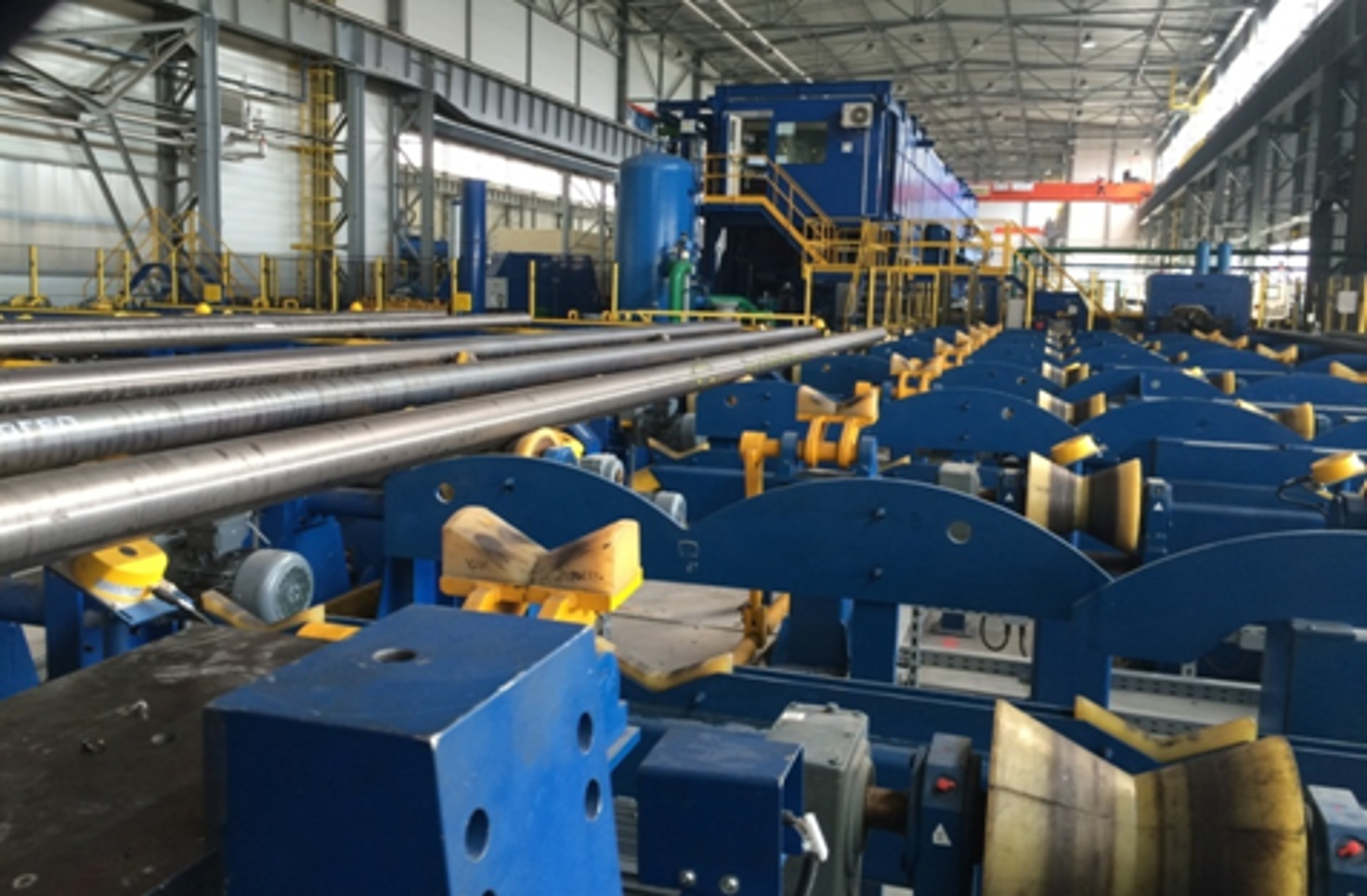
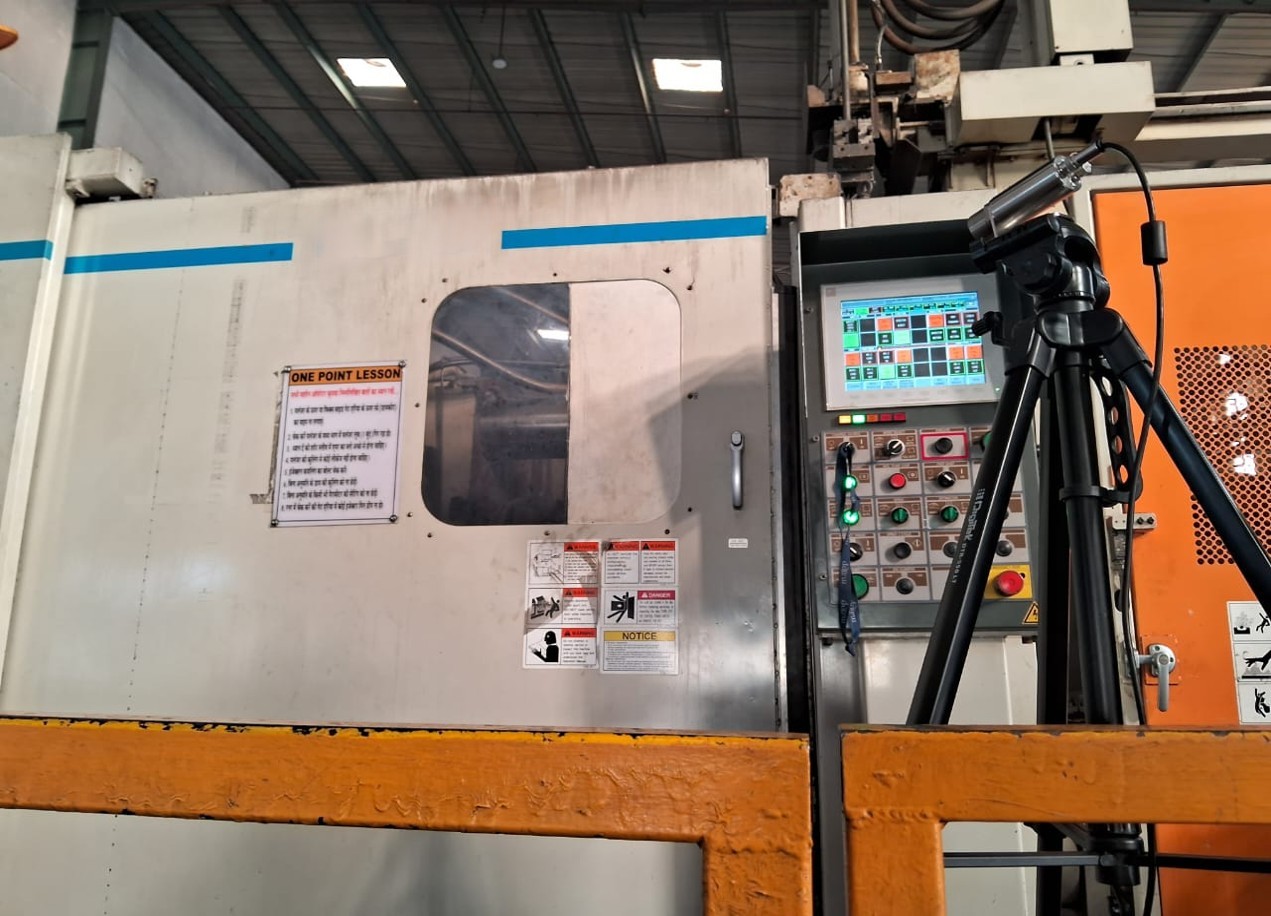
High rejection rate due to inaccurate temperature. Due to moving process difficult define measuring point, where the temperature has to measured. Thermal camera provides multiple ROIs (areas) for full profile measurement. Auto HOT SPOT tracker for max process temperature. Home Case Studies Profile (Multi-point) Temperature on Induction Heating Cost Effective Temperature Measurement in Infrared Heaters using compact pyrometers Home Case Studies Pilger mill in tube rolling mills – hot and cold pipe detection Pilger mill in tube rolling mills – hot and cold pipe detection Special Features of CT LT Pyrometer : It is equipped with one of the world’s smallest infrared sensors. It boasts a high optic resolution of 22:1, ensuring precise and accurate measurements Additionally, it offers a high level of variability. This is due to selectable analog outputs, as well as several digital interfaces in the electronics box. Customers Benefits : Cost-Effective: Our products offer a cost-effective solution for your needs. Plug and Play: Easy to set up and use, requiring minimal installation time. Immediate Availability: Products are readily available for immediate use. Products start at an affordable price point of Rs 12,500 Specifications Temperature range: -50°C to 975°C Spectral range: 8 to 14 µm Response time: 150 ms Products and Accessories Pyrometer Case Study Number TP3 Challenge The increasing flexibility of production lines requires a high adaptability of sensors. Continually changing object geometries, different temperatures and very high radiation or surrounding temperatures are no rarity. In a pilger mill those rough conditions can be found, among others in the production of seemless steel pipes. The raw steel blocks, each weighing a few tons are heated up first in a round oven at a temperature of 1300 °C. After descaling of the surface, the steel block is prepunched in a hole press with a strength from a converted 2000 t. In the next sloping rolling mill the growing pipe rotates between two rollers that are positioned at an angle to each other. The punching is widened to the size of the mandrel diameter. Previous solution / Competitor product N/A Solution The sensor that was installed at this application is the HMD OKA 2038.38 G with tube OL 19. The signal of the infrared sensors controls the movement of centering device and abutment. The point of view is restricted by the tube and prevents disturbances by steam in the cooling phase. An optimum adaptation to the operating conditions is given due to the adjustable response temperature. The HMD with self-learning response temperature (Auto-Teach function) is suited to continually changing conditions. The compact sensor with a stainless steel housing can withstand surrounding temperatures of up to 75° C. The use of a cooling jacket raises this up to 200° C. Alternatively sensors with fibre optic cables are available which permit an application at ambient temperatures up to 600° C without cooling. Customer Benefits Maintenance-free High temperature stability Recognition of hot objects at big distances Self adjustment with Auto-Teach or step switch for the response temperature Product Part number OKA 2038.38 G Brand Proxitron Accessories Piros swivel stand HM2 Tube OL 19 Pilot light unit (for alignment) DAK 308 + OL 26 Different cable lengths (e.g. 15 m) Customer Testimonial compared to previous solution or competition Case Studies Other Solutions in Casting and Forging Sample case study title lorem ipsum here Short description of the problem solved, maybe include the client name. READ MORE Sample case study title lorem ipsum here Short description of the problem solved, maybe include the client name. READ MORE Sample case study title lorem ipsum here Short description of the problem solved, maybe include the client name. READ MORE View All

Tags: Foundry
March 12, 2024
Hot Axle Box/ Wheel Temperature Detection using High Speed Pyrometers
Monitoring and detection of the hot axle box bearing temperature (detection of bearings presenting a risk of failure). Task was to measure temperature of the the running train axle box / wheel Home Case Studies Hot axle box/ wheel temperature detection Hot Axle Box/ Wheel Temperature Detection using High Speed Pyrometers Home Case Studies Pilger mill in tube rolling mills – hot and cold pipe detection Pilger mill in tube rolling mills – hot and cold pipe detection Challenges Monitoring and detection of the hot axle box bearing temperature (detection of bearings presenting a risk of failure) Running train axel box / wheel temp measurement Solution High-speed pyrometer for low-temp, high-speed measurements Quick exposure time of only 90 μs due to its short measuring wavelength Temperature range from 0°C to 500 °C Housing design for open area Products and Accessories Pyrometer Case Study Number TP3 Challenge The increasing flexibility of production lines requires a high adaptability of sensors. Continually changing object geometries, different temperatures and very high radiation or surrounding temperatures are no rarity. In a pilger mill those rough conditions can be found, among others in the production of seemless steel pipes. The raw steel blocks, each weighing a few tons are heated up first in a round oven at a temperature of 1300 °C. After descaling of the surface, the steel block is prepunched in a hole press with a strength from a converted 2000 t. In the next sloping rolling mill the growing pipe rotates between two rollers that are positioned at an angle to each other. The punching is widened to the size of the mandrel diameter. Previous solution / Competitor product N/A Solution The sensor that was installed at this application is the HMD OKA 2038.38 G with tube OL 19. The signal of the infrared sensors controls the movement of centering device and abutment. The point of view is restricted by the tube and prevents disturbances by steam in the cooling phase. An optimum adaptation to the operating conditions is given due to the adjustable response temperature. The HMD with self-learning response temperature (Auto-Teach function) is suited to continually changing conditions. The compact sensor with a stainless steel housing can withstand surrounding temperatures of up to 75° C. The use of a cooling jacket raises this up to 200° C. Alternatively sensors with fibre optic cables are available which permit an application at ambient temperatures up to 600° C without cooling. Customer Benefits Maintenance-free High temperature stability Recognition of hot objects at big distances Self adjustment with Auto-Teach or step switch for the response temperature Product Part number OKA 2038.38 G Brand Proxitron Accessories Piros swivel stand HM2 Tube OL 19 Pilot light unit (for alignment) DAK 308 + OL 26 Different cable lengths (e.g. 15 m) Customer Testimonial compared to previous solution or competition Case Studies Other Solutions Sample case study title lorem ipsum here Short description of the problem solved, maybe include the client name. READ MORE Sample case study title lorem ipsum here Short description of the problem solved, maybe include the client name. READ MORE Sample case study title lorem ipsum here Short description of the problem solved, maybe include the client name. READ MORE View All
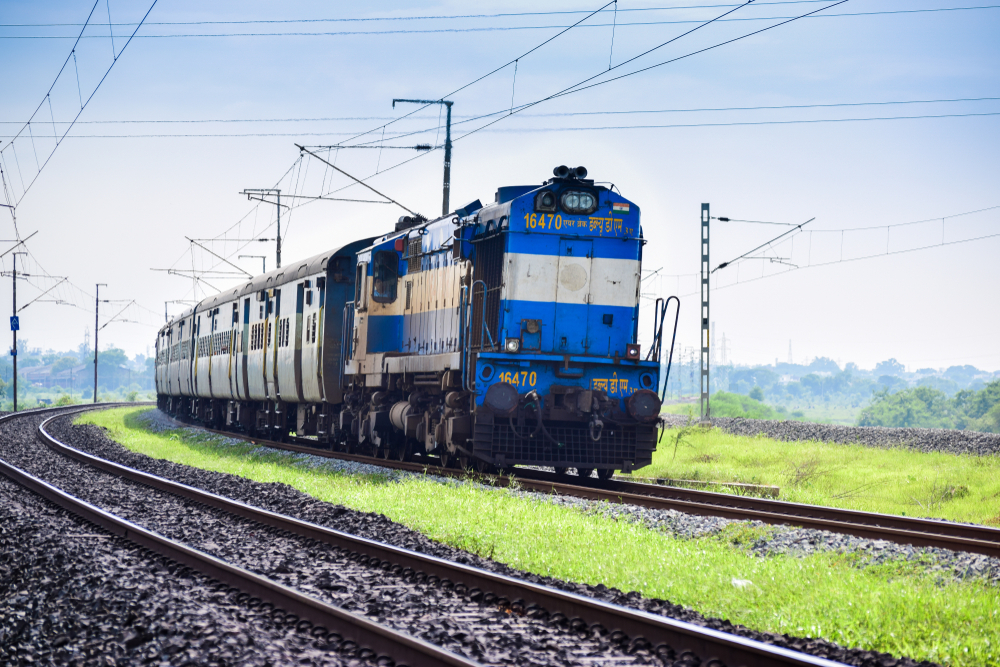
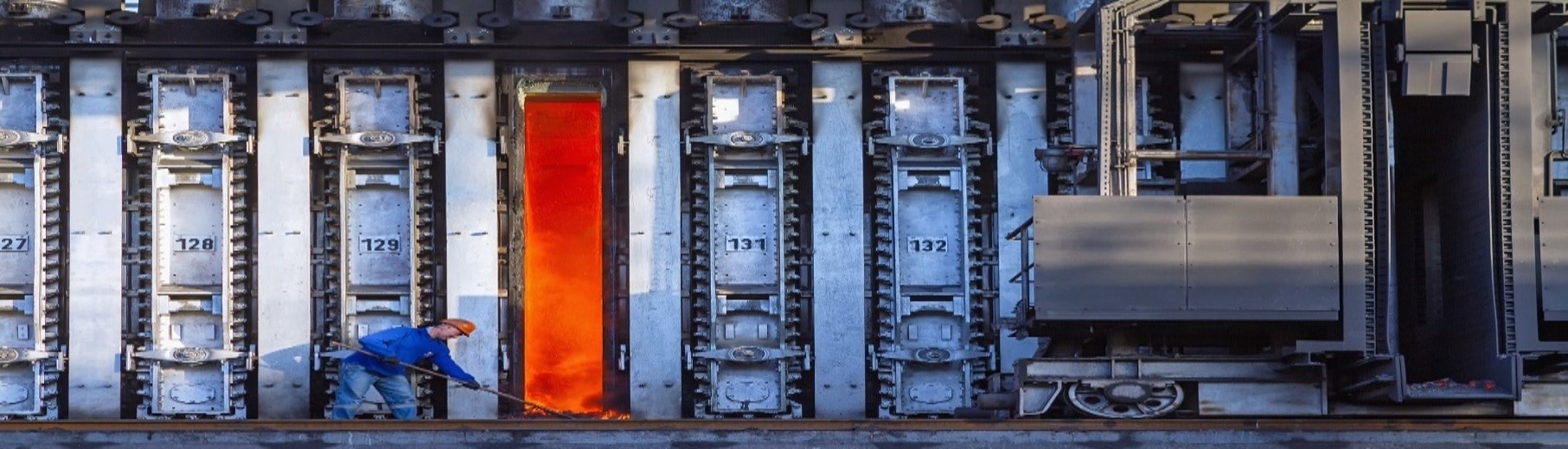
Temperature Monitoring of the Pusher Arm Wall using Ratio Pyrometer
Effectively maintaining temperature of the heating chambers in the coke oven battery is essential for high yield and optimum quality of the coke. The narrow width of the flue makes it challenging for the accurate measurement of the flue temperature using a portable pyrometer inside the pusher arm as the hot coke is pushed out of the oven. Successfully monitoring the temperature of the heating chambers also reduces risk of damage to the oven wall. Home Case Studies Temperature Ctratio Temperature monitoring of the pusher arm wall Home Case Studies Pilger mill in tube rolling mills – hot and cold pipe detection Pilger mill in tube rolling mills – hot and cold pipe detection Fibre optic based pyrometer installed inside the pusher arm to measure the temperature of coke oven walls profile as the hot coke is pushed out. Typically six numbers are fitted to pusher arm (three each side). Ratio Technology The 2-color ratio technology allows accurate and repeatable temperature measurements free from dependence on absolute radiated energy values. 2-color sensors measure closer to the highest temperature within the measured spot (spatial peak picking) instead of an average temperature. Customer Benefit Increased quality: High quality metallurgical coke improves iron and steel making process. High Coke Yield: Critical for good quality coke, the oven and heating chambers in coke oven battery are controlled. Environmental conditions Hot Strip Mill: Presence of steam, dust, dirt, clogged viewports Bar Mill: Small diameter of bar that keeps fluttering Hot metal casting or pouring: When target emissivity are low or changing by the same factor in both wavelength bands. Installation Challenge In high ambient temperature, water cooling is required and sensor is installed far away thus reducing the impact of IR energy received by the sensor. Advantages Able to look through dust and dirt and steam. Only 5% FOV to be covered for accurate temperature. Emissivity has less effect on Temperature measurement. Optical sensor head can withstand 200°C (315°C on special request) without water cooling. As the sensor can be mounted closer to the hot object thus improving the preciseness in temperature measurement. Products and Accessories Next Generation Pyrometer: Dirt & Steam Resistant, for high ambient environment Case Study Number TP3 Challenge The increasing flexibility of production lines requires a high adaptability of sensors. Continually changing object geometries, different temperatures and very high radiation or surrounding temperatures are no rarity. In a pilger mill those rough conditions can be found, among others in the production of seemless steel pipes. The raw steel blocks, each weighing a few tons are heated up first in a round oven at a temperature of 1300 °C. After descaling of the surface, the steel block is prepunched in a hole press with a strength from a converted 2000 t. In the next sloping rolling mill the growing pipe rotates between two rollers that are positioned at an angle to each other. The punching is widened to the size of the mandrel diameter. Previous solution / Competitor product N/A Solution The sensor that was installed at this application is the HMD OKA 2038.38 G with tube OL 19. The signal of the infrared sensors controls the movement of centering device and abutment. The point of view is restricted by the tube and prevents disturbances by steam in the cooling phase. An optimum adaptation to the operating conditions is given due to the adjustable response temperature. The HMD with self-learning response temperature (Auto-Teach function) is suited to continually changing conditions. The compact sensor with a stainless steel housing can withstand surrounding temperatures of up to 75° C. The use of a cooling jacket raises this up to 200° C. Alternatively sensors with fibre optic cables are available which permit an application at ambient temperatures up to 600° C without cooling. Customer Benefits Maintenance-free High temperature stability Recognition of hot objects at big distances Self adjustment with Auto-Teach or step switch for the response temperature Product Part number OKA 2038.38 G Brand Proxitron Accessories Piros swivel stand HM2 Tube OL 19 Pilot light unit (for alignment) DAK 308 + OL 26 Different cable lengths (e.g. 15 m) Customer Testimonial compared to previous solution or competition Case Studies Sample case study title lorem ipsum here Short description of the problem solved, maybe include the client name. READ MORE Sample case study title lorem ipsum here Short description of the problem solved, maybe include the client name. READ MORE Sample case study title lorem ipsum here Short description of the problem solved, maybe include the client name. READ MORE View All Advantages in harsh working environment
Tags: Coke Oven, Iron Making, Pusher arm, Pyrometer, Temperature
March 11, 2024
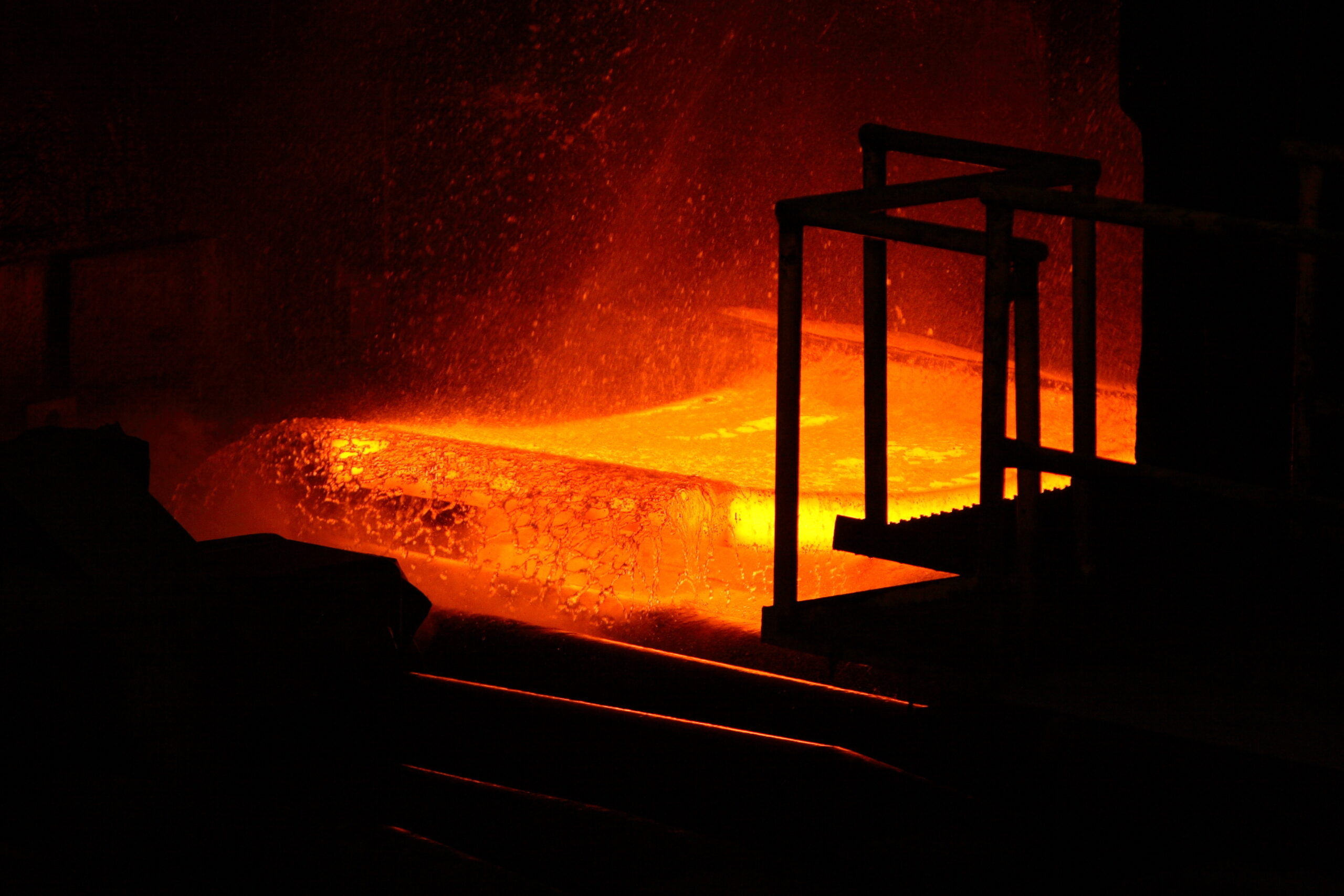
Pyromters Prevent Strip Cobble Due to Hook Up
Measure the bottom/ under-strip temperature. Measure the bottom profile temperature to prevent hook-up / cobble. Technology now available for both point and profile bottom side temperature measurement. Compare the edge temperature difference between operator and drive side Home Case Studies Prevent strip cobble due to hook-up Pyromters Prevent Strip Cobble Due to Hook Up Home Case Studies Pilger mill in tube rolling mills – hot and cold pipe detection Pilger mill in tube rolling mills – hot and cold pipe detection Measure the Bottom/ Under-Strip Temperature using Non Contact Ratio Pyrometers or Thermal Imaging Camera Bottom Temperature Profile: Comparing drive and operator side variation: Measuring range 450-1800°C Measure the bottom profile temperature to prevent hook-up / cobble Technology now available for both point and profile bottom side temperature measurement Compare the edge temperature difference between operator and drive side temperature. Point under-strip Temperature: Measuring range from 600 to 2000°C The ratio pyrometer is largely resistant against dust, steam and dirty observation windows. Due to its short measuring wavelength the ratio pyrometer is especially suited for measurement of high metal temperatures and the very short response time allows for surveillance of very fast processes. Products and Accesories Infrared Thermal Cameras Next Generation Pyrometer: Dirt & Steam Resistant, for high ambient environment Other Case Studies in Hot Rolling Mills Sample case study title lorem ipsum here Short description of the problem solved, maybe include the client name. READ MORE Sample case study title lorem ipsum here Short description of the problem solved, maybe include the client name. READ MORE Sample case study title lorem ipsum here Short description of the problem solved, maybe include the client name. READ MORE Case Study Number TP3 Challenge The increasing flexibility of production lines requires a high adaptability of sensors. Continually changing object geometries, different temperatures and very high radiation or surrounding temperatures are no rarity. In a pilger mill those rough conditions can be found, among others in the production of seemless steel pipes. The raw steel blocks, each weighing a few tons are heated up first in a round oven at a temperature of 1300 °C. After descaling of the surface, the steel block is prepunched in a hole press with a strength from a converted 2000 t. In the next sloping rolling mill the growing pipe rotates between two rollers that are positioned at an angle to each other. The punching is widened to the size of the mandrel diameter. Previous solution / Competitor product N/A Solution The sensor that was installed at this application is the HMD OKA 2038.38 G with tube OL 19. The signal of the infrared sensors controls the movement of centering device and abutment. The point of view is restricted by the tube and prevents disturbances by steam in the cooling phase. An optimum adaptation to the operating conditions is given due to the adjustable response temperature. The HMD with self-learning response temperature (Auto-Teach function) is suited to continually changing conditions. The compact sensor with a stainless steel housing can withstand surrounding temperatures of up to 75° C. The use of a cooling jacket raises this up to 200° C. Alternatively sensors with fibre optic cables are available which permit an application at ambient temperatures up to 600° C without cooling. Customer Benefits Maintenance-free High temperature stability Recognition of hot objects at big distances Self adjustment with Auto-Teach or step switch for the response temperature Product Part number OKA 2038.38 G Brand Proxitron Accessories Piros swivel stand HM2 Tube OL 19 Pilot light unit (for alignment) DAK 308 + OL 26 Different cable lengths (e.g. 15 m) Customer Testimonial compared to previous solution or competition High Temperature sensing proximity for Hot Rolling Mills Ensuring Uniform Cooling on Cooling Bed for Billet | Bloom Caster View All
Tags: hook up, Hot Rolling Mill Flat, Hot strip mill, strip cobble, Thermal Imaging
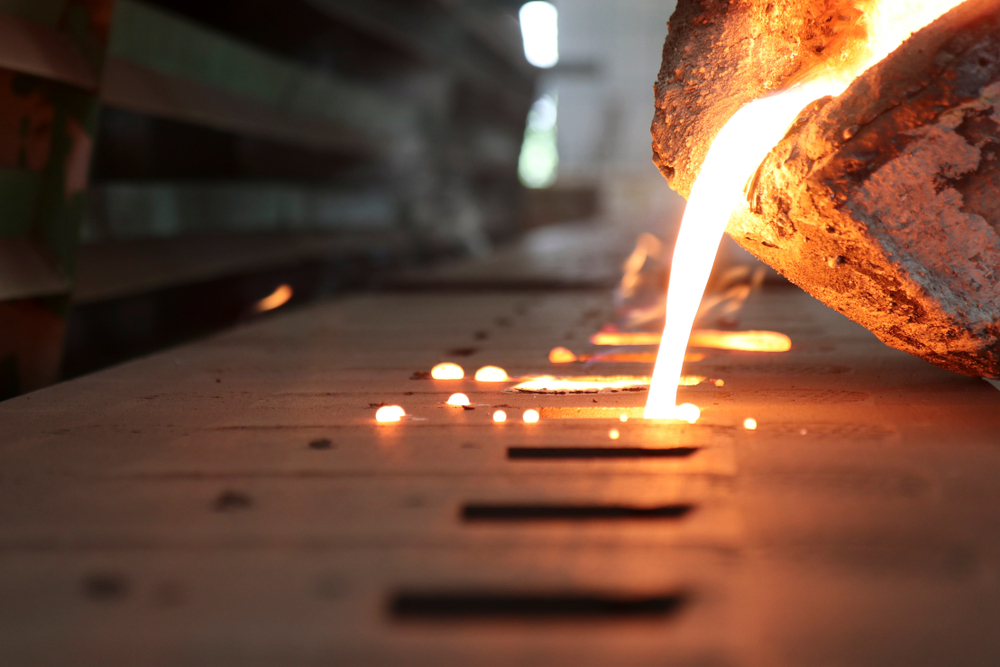
Temperature measurement of Molten Metal Stream during Auto Pour
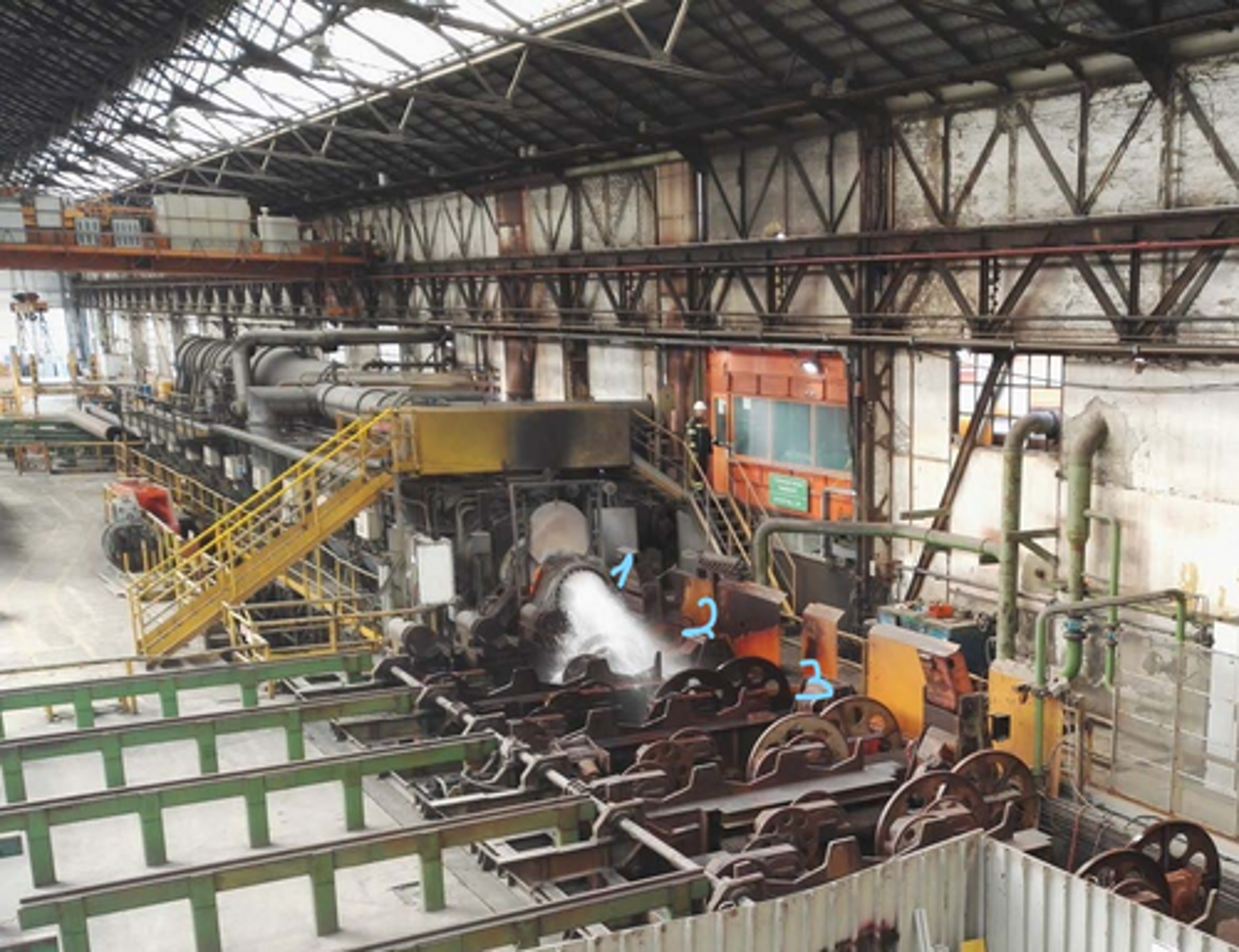
Home Case Studies Foundry: Cast Iron and Pouring of Molten Metal Temperature measurement of Molten Metal Stream during Auto Pour Online Thermal Imaging Camera provides condition based monitoring in real time Challenges Molten Metal Stream is moving and therefore continuous measurement with Pyrometer is not possible. Harsh ambient condition with presence of heat, splash, and dust making it challenging for regular temperature sensors Solution IR Thermal Imaging Camera provides online continuous temperature data in real time. Temperature value of every poured die is recorded is recorded to high accuracy even in harsh ambient conditions Products and Accessories Thermal Imaging Camera Wide measurement range from 900 °C to 2450 °C without sub-ranges. Ideal for almost all NIR and CO2 laser processing applications due to spectral response at 540 nm Special wavelength range of 500-540 nm minimizes errors due to uncertainty of emissivity High dynamic CMOS detector with up to 764 x 480 pixels resolution Up to 1 kHz frame rate for fast processes Real-time analog output with 1 ms response time with Auto Hot Spot detection. Extensive software package and SDK included Case Study Number TP3 Challenge The increasing flexibility of production lines requires a high adaptability of sensors. Continually changing object geometries, different temperatures and very high radiation or surrounding temperatures are no rarity. In a pilger mill those rough conditions can be found, among others in the production of seemless steel pipes. The raw steel blocks, each weighing a few tons are heated up first in a round oven at a temperature of 1300 °C. After descaling of the surface, the steel block is prepunched in a hole press with a strength from a converted 2000 t. In the next sloping rolling mill the growing pipe rotates between two rollers that are positioned at an angle to each other. The punching is widened to the size of the mandrel diameter. Previous solution / Competitor product N/A Solution The sensor that was installed at this application is the HMD OKA 2038.38 G with tube OL 19. The signal of the infrared sensors controls the movement of centering device and abutment. The point of view is restricted by the tube and prevents disturbances by steam in the cooling phase. An optimum adaptation to the operating conditions is given due to the adjustable response temperature. The HMD with self-learning response temperature (Auto-Teach function) is suited to continually changing conditions. The compact sensor with a stainless steel housing can withstand surrounding temperatures of up to 75° C. The use of a cooling jacket raises this up to 200° C. Alternatively sensors with fibre optic cables are available which permit an application at ambient temperatures up to 600° C without cooling. Customer Benefits Maintenance-free High temperature stability Recognition of hot objects at big distances Self adjustment with Auto-Teach or step switch for the response temperature Product Part number OKA 2038.38 G Brand Proxitron Accessories Piros swivel stand HM2 Tube OL 19 Pilot light unit (for alignment) DAK 308 + OL 26 Different cable lengths (e.g. 15 m) Customer Testimonial compared to previous solution or competition Case Studies in Foundry and Forging Sample case study title lorem ipsum here Short description of the problem solved, maybe include the client name. READ MORE Sample case study title lorem ipsum here Short description of the problem solved, maybe include the client name. READ MORE Sample case study title lorem ipsum here Short description of the problem solved, maybe include the client name. READ MORE Tapping Temperature Measurement in Cast Iron Foundry Object position detection at the different stages of hot forging process Cast Iron Foundry: Temperature tracking during pouring of Molten Metal View All
Tags: Foundry, Pouring Temperature
February 28, 2024
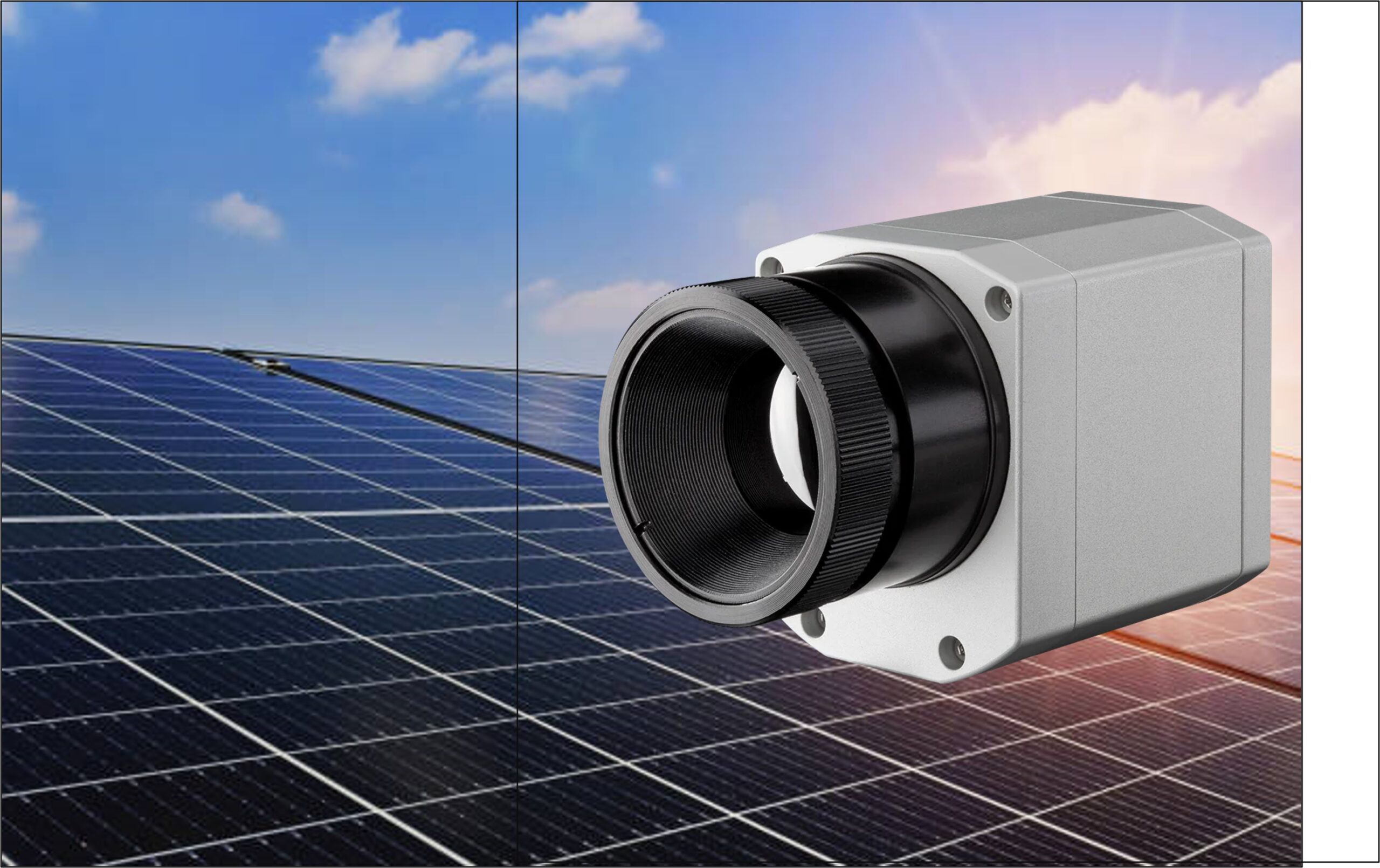
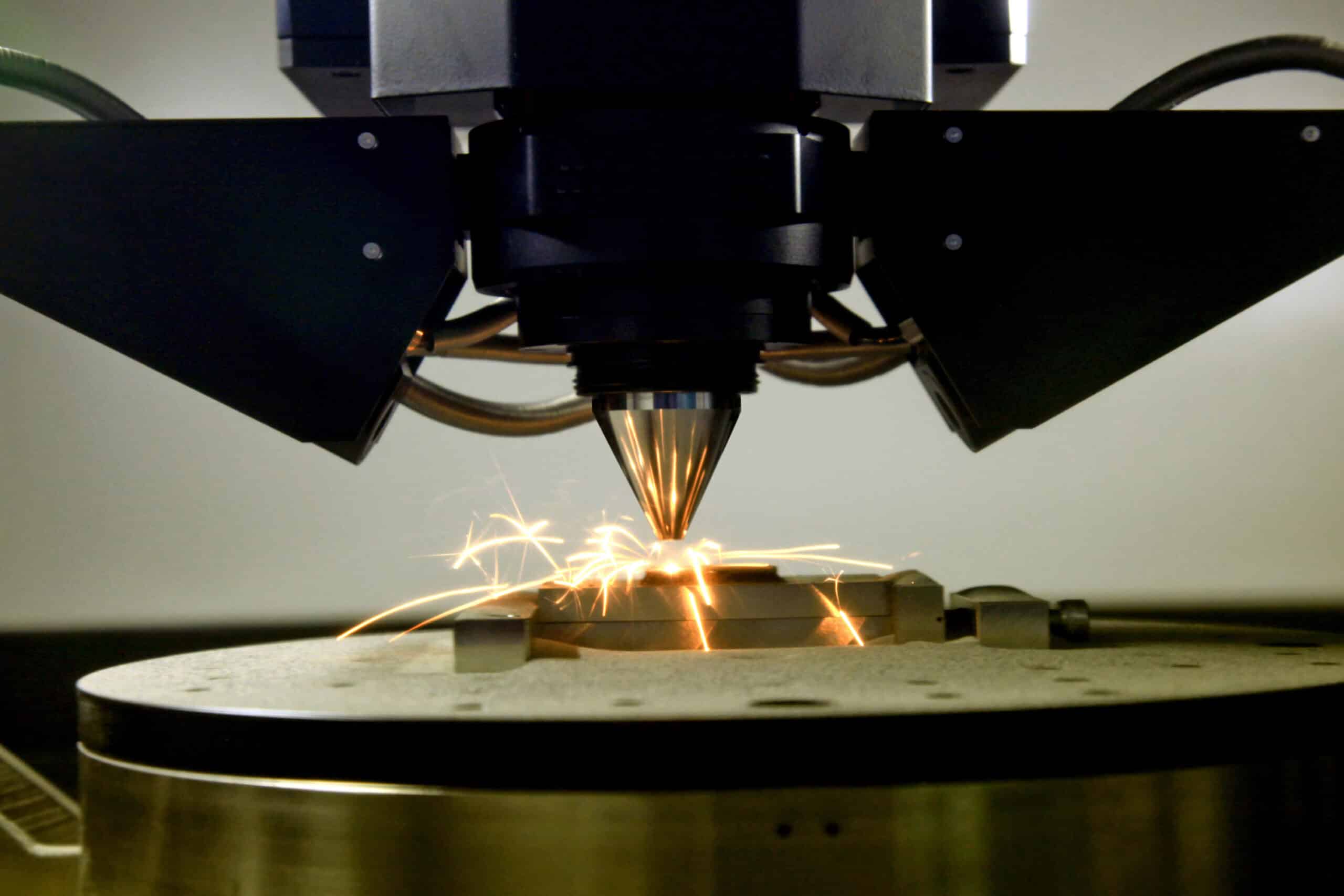
Quality Control of Solar Cell Modules
Fundamentally improve the operating reliability and positioning accuracy of the ladle crane hoist used in steel production. Installation of the modular universal encoder system U-ONE, which offers the following special characteristics • Basic unit mounted directly at the hoist drum by using a double joint coupling on a tailor-made base plate construction • Signal transmission via fiber optic cable prevents EMC problems Home Case Studies Next Generation Infrared Camera for ultra high resolution imaging of electronic circuit boards Home Case Studies Pilger mill in tube rolling mills – hot and cold pipe detection Pilger mill in tube rolling mills – hot and cold pipe detection Current Solution with 0.6x magnification Next Generation Advanced Optics with 2.4x magnification Solution Benefits Combination of multiple optical lens resulting in highest ever magnification level Extreme high resolution to detect over heating on very small components Specifications FOV : 3.5 mm x 4.5 mm Temperature range: -20 °C to 900 °C (optional up to 1 500 °C) Spectral range: 8 to 14 µm Frame rate: up to 125 Hz Products and Accessories Thermal Imaging Camera Case Study Number TP3 Challenge The increasing flexibility of production lines requires a high adaptability of sensors. Continually changing object geometries, different temperatures and very high radiation or surrounding temperatures are no rarity. In a pilger mill those rough conditions can be found, among others in the production of seemless steel pipes. The raw steel blocks, each weighing a few tons are heated up first in a round oven at a temperature of 1300 °C. After descaling of the surface, the steel block is prepunched in a hole press with a strength from a converted 2000 t. In the next sloping rolling mill the growing pipe rotates between two rollers that are positioned at an angle to each other. The punching is widened to the size of the mandrel diameter. Previous solution / Competitor product N/A Solution The sensor that was installed at this application is the HMD OKA 2038.38 G with tube OL 19. The signal of the infrared sensors controls the movement of centering device and abutment. The point of view is restricted by the tube and prevents disturbances by steam in the cooling phase. An optimum adaptation to the operating conditions is given due to the adjustable response temperature. The HMD with self-learning response temperature (Auto-Teach function) is suited to continually changing conditions. The compact sensor with a stainless steel housing can withstand surrounding temperatures of up to 75° C. The use of a cooling jacket raises this up to 200° C. Alternatively sensors with fibre optic cables are available which permit an application at ambient temperatures up to 600° C without cooling. Customer Benefits Maintenance-free High temperature stability Recognition of hot objects at big distances Self adjustment with Auto-Teach or step switch for the response temperature Product Part number OKA 2038.38 G Brand Proxitron Accessories Piros swivel stand HM2 Tube OL 19 Pilot light unit (for alignment) DAK 308 + OL 26 Different cable lengths (e.g. 15 m) Customer Testimonial compared to previous solution or competition Case Studies Other Solutions in R&D Sample case study title lorem ipsum here Short description of the problem solved, maybe include the client name. READ MORE Sample case study title lorem ipsum here Short description of the problem solved, maybe include the client name. READ MORE Sample case study title lorem ipsum here Short description of the problem solved, maybe include the client name. READ MORE View All
Tags: electronics circuit board
February 16, 2024
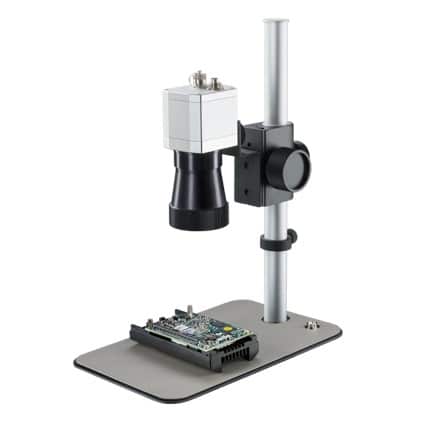
Next Gen Microscopic Optics for Thermography
Fundamentally improve the operating reliability and positioning accuracy of the ladle crane hoist used in steel production. Installation of the modular universal encoder system U-ONE, which offers the following special characteristics • Basic unit mounted directly at the hoist drum by using a double joint coupling on a tailor-made base plate construction • Signal transmission via fiber optic cable prevents EMC problems Home Case Studies Next Generation Infrared Camera for ultra high resolution imaging of electronic circuit boards Home Case Studies Pilger mill in tube rolling mills – hot and cold pipe detection Pilger mill in tube rolling mills – hot and cold pipe detection Current Solution with 0.6x magnification Next Generation Advanced Optics with 2.4x magnification Solution Benefits Combination of multiple optical lens resulting in highest ever magnification level Extreme high resolution to detect over heating on very small components Specifications FOV : 3.5 mm x 4.5 mm Temperature range: -20 °C to 900 °C (optional up to 1 500 °C) Spectral range: 8 to 14 µm Frame rate: up to 125 Hz Products and Accessories Thermal Imaging Camera Case Study Number TP3 Challenge The increasing flexibility of production lines requires a high adaptability of sensors. Continually changing object geometries, different temperatures and very high radiation or surrounding temperatures are no rarity. In a pilger mill those rough conditions can be found, among others in the production of seemless steel pipes. The raw steel blocks, each weighing a few tons are heated up first in a round oven at a temperature of 1300 °C. After descaling of the surface, the steel block is prepunched in a hole press with a strength from a converted 2000 t. In the next sloping rolling mill the growing pipe rotates between two rollers that are positioned at an angle to each other. The punching is widened to the size of the mandrel diameter. Previous solution / Competitor product N/A Solution The sensor that was installed at this application is the HMD OKA 2038.38 G with tube OL 19. The signal of the infrared sensors controls the movement of centering device and abutment. The point of view is restricted by the tube and prevents disturbances by steam in the cooling phase. An optimum adaptation to the operating conditions is given due to the adjustable response temperature. The HMD with self-learning response temperature (Auto-Teach function) is suited to continually changing conditions. The compact sensor with a stainless steel housing can withstand surrounding temperatures of up to 75° C. The use of a cooling jacket raises this up to 200° C. Alternatively sensors with fibre optic cables are available which permit an application at ambient temperatures up to 600° C without cooling. Customer Benefits Maintenance-free High temperature stability Recognition of hot objects at big distances Self adjustment with Auto-Teach or step switch for the response temperature Product Part number OKA 2038.38 G Brand Proxitron Accessories Piros swivel stand HM2 Tube OL 19 Pilot light unit (for alignment) DAK 308 + OL 26 Different cable lengths (e.g. 15 m) Customer Testimonial compared to previous solution or competition Case Studies Other Solutions in R&D Sample case study title lorem ipsum here Short description of the problem solved, maybe include the client name. READ MORE Sample case study title lorem ipsum here Short description of the problem solved, maybe include the client name. READ MORE Sample case study title lorem ipsum here Short description of the problem solved, maybe include the client name. READ MORE View All
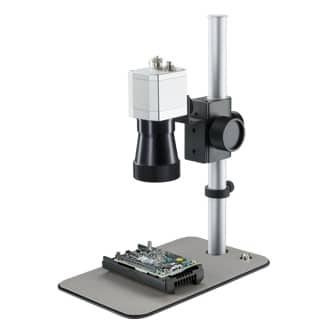
Temperature Measurement for Component Inspection
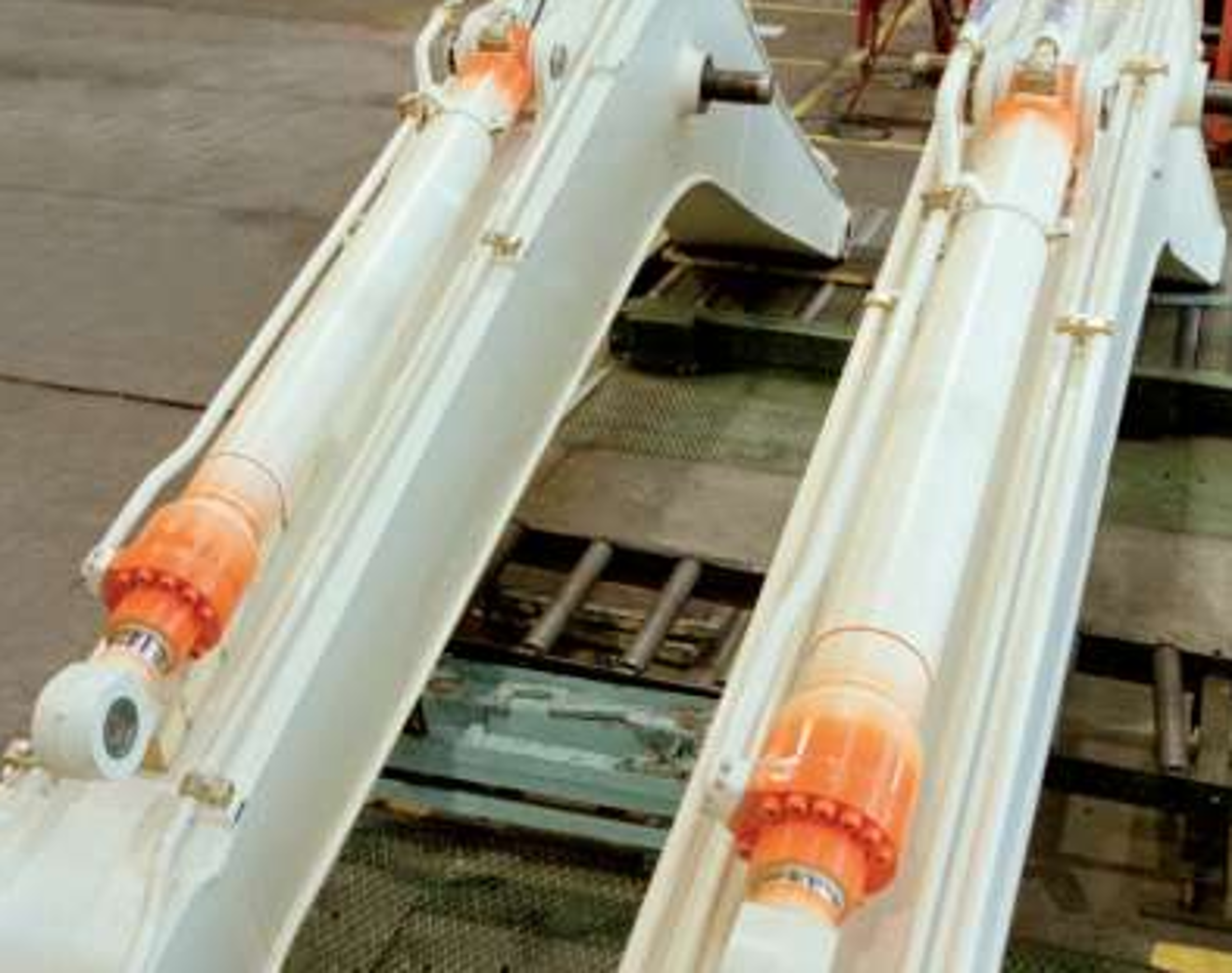
Fundamentally improve the operating reliability and positioning accuracy of the ladle crane hoist used in steel production. Installation of the modular universal encoder system U-ONE, which offers the following special characteristics • Basic unit mounted directly at the hoist drum by using a double joint coupling on a tailor-made base plate construction • Signal transmission via fiber optic cable prevents EMC problems Home Case Studies Hoist /Drum: Improved operating reliability and positioning accuracy at the ladle crane IR technology for the component inspection of semiconductors, printed circuit boards and assemblies Home Case Studies Pilger mill in tube rolling mills – hot and cold pipe detection Pilger mill in tube rolling mills – hot and cold pipe detection Lifespan of semiconductor elements is dependent on temperature – with an increase in temperature of 10 °C causes a 50% reduction in lifespan Developers of electronic assemblies are faced with the challenge of allowing for the thermal behavior of circuit boards and assemblies Challenges Increasing integration density results in high heat resulting from power loss in the components Continual miniaturization impedes efficient heat dissipation Large currents are becoming more common with the use of power electronics Solution Quick, precise and non-contact measurement allows easy hot spot detection Errors in design such as defective components, incorrectly dimensioned circuit paths or poorly soldered joints can be detected using thermal profiles Enables recording of very small components and structures on a circuit board Specifications Temperature range: -20 °C to 900 °C (optional up to 1 500 °C) Spectral range: 8 to 14 µm Frame rate: up to 125 Hz Products and Accessories Thermal Imaging Camera Case Study Number TP3 Challenge The increasing flexibility of production lines requires a high adaptability of sensors. Continually changing object geometries, different temperatures and very high radiation or surrounding temperatures are no rarity. In a pilger mill those rough conditions can be found, among others in the production of seemless steel pipes. The raw steel blocks, each weighing a few tons are heated up first in a round oven at a temperature of 1300 °C. After descaling of the surface, the steel block is prepunched in a hole press with a strength from a converted 2000 t. In the next sloping rolling mill the growing pipe rotates between two rollers that are positioned at an angle to each other. The punching is widened to the size of the mandrel diameter. Previous solution / Competitor product N/A Solution The sensor that was installed at this application is the HMD OKA 2038.38 G with tube OL 19. The signal of the infrared sensors controls the movement of centering device and abutment. The point of view is restricted by the tube and prevents disturbances by steam in the cooling phase. An optimum adaptation to the operating conditions is given due to the adjustable response temperature. The HMD with self-learning response temperature (Auto-Teach function) is suited to continually changing conditions. The compact sensor with a stainless steel housing can withstand surrounding temperatures of up to 75° C. The use of a cooling jacket raises this up to 200° C. Alternatively sensors with fibre optic cables are available which permit an application at ambient temperatures up to 600° C without cooling. Customer Benefits Maintenance-free High temperature stability Recognition of hot objects at big distances Self adjustment with Auto-Teach or step switch for the response temperature Product Part number OKA 2038.38 G Brand Proxitron Accessories Piros swivel stand HM2 Tube OL 19 Pilot light unit (for alignment) DAK 308 + OL 26 Different cable lengths (e.g. 15 m) Customer Testimonial compared to previous solution or competition Case Studies Other Solutions in R&D Sample case study title lorem ipsum here Short description of the problem solved, maybe include the client name. READ MORE Sample case study title lorem ipsum here Short description of the problem solved, maybe include the client name. READ MORE Sample case study title lorem ipsum here Short description of the problem solved, maybe include the client name. READ MORE View All

Design Validation in Electronics Research
Fundamentally improve the operating reliability and positioning accuracy of the ladle crane hoist used in steel production. Installation of the modular universal encoder system U-ONE, which offers the following special characteristics • Basic unit mounted directly at the hoist drum by using a double joint coupling on a tailor-made base plate construction • Signal transmission via fiber optic cable prevents EMC problems Home Case Studies Hoist /Drum: Improved operating reliability and positioning accuracy at the ladle crane Non-Contact Temperature Profiling to troubleshoot PCB and electronic chip design Home Case Studies Pilger mill in tube rolling mills – hot and cold pipe detection Pilger mill in tube rolling mills – hot and cold pipe detection Thermal Model Calculations Infrared cameras are ideal for benchtop testing – validate thermal models of prototypes and for quality control during production Solution Benefits Thermal imaging to validate design concepts and adjust temperature simulation model of prototype / printed circuit boards Identify components which consume excessive amount of energy Spot and fix errors in the circuit design at an early stage Detect mutual interference of components on the circuit board Specifications Temperature range:-20 °C to 900 °C(optional up to 1 500 °C) Spectral range: 8 to 14 µm Frame rate: up to 125 Hz Products and Accessories Thermal Imaging Camera Case Study Number TP3 Challenge The increasing flexibility of production lines requires a high adaptability of sensors. Continually changing object geometries, different temperatures and very high radiation or surrounding temperatures are no rarity. In a pilger mill those rough conditions can be found, among others in the production of seemless steel pipes. The raw steel blocks, each weighing a few tons are heated up first in a round oven at a temperature of 1300 °C. After descaling of the surface, the steel block is prepunched in a hole press with a strength from a converted 2000 t. In the next sloping rolling mill the growing pipe rotates between two rollers that are positioned at an angle to each other. The punching is widened to the size of the mandrel diameter. Previous solution / Competitor product N/A Solution The sensor that was installed at this application is the HMD OKA 2038.38 G with tube OL 19. The signal of the infrared sensors controls the movement of centering device and abutment. The point of view is restricted by the tube and prevents disturbances by steam in the cooling phase. An optimum adaptation to the operating conditions is given due to the adjustable response temperature. The HMD with self-learning response temperature (Auto-Teach function) is suited to continually changing conditions. The compact sensor with a stainless steel housing can withstand surrounding temperatures of up to 75° C. The use of a cooling jacket raises this up to 200° C. Alternatively sensors with fibre optic cables are available which permit an application at ambient temperatures up to 600° C without cooling. Customer Benefits Maintenance-free High temperature stability Recognition of hot objects at big distances Self adjustment with Auto-Teach or step switch for the response temperature Product Part number OKA 2038.38 G Brand Proxitron Accessories Piros swivel stand HM2 Tube OL 19 Pilot light unit (for alignment) DAK 308 + OL 26 Different cable lengths (e.g. 15 m) Customer Testimonial compared to previous solution or competition Case Studies Other Solutions in R&D Sample case study title lorem ipsum here Short description of the problem solved, maybe include the client name. READ MORE Sample case study title lorem ipsum here Short description of the problem solved, maybe include the client name. READ MORE Sample case study title lorem ipsum here Short description of the problem solved, maybe include the client name. READ MORE View All
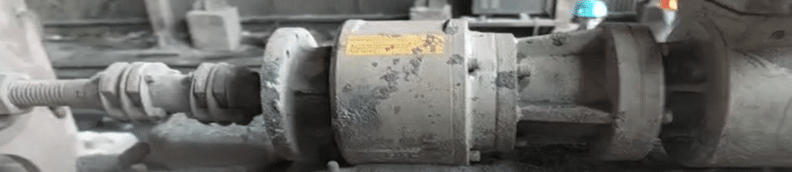
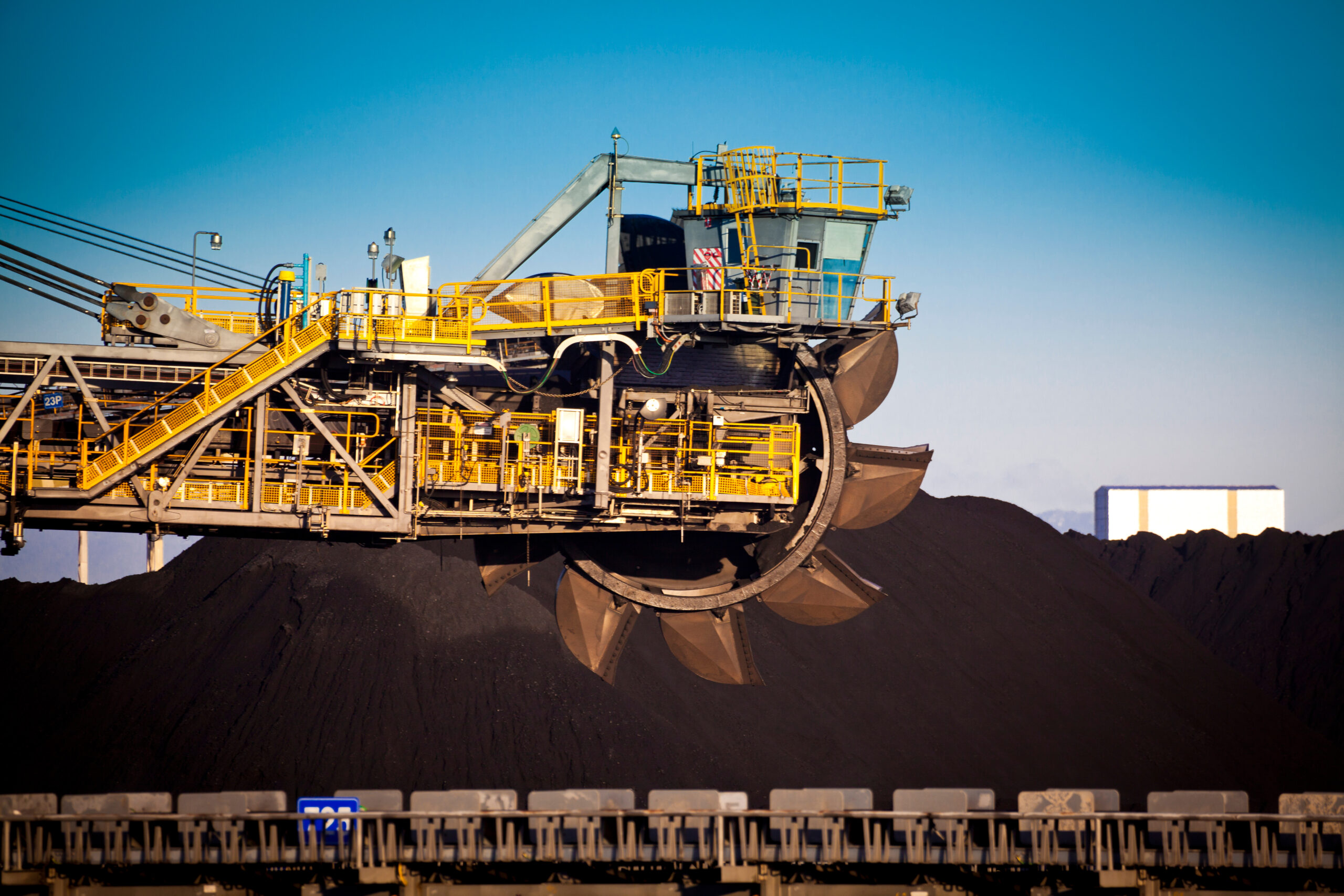
Accurate Position Measurement during Raw Material Handling at Wagon Tippler
Fundamentally improve the operating reliability and positioning accuracy of the ladle crane hoist used in steel production. Installation of the modular universal encoder system U-ONE, which offers the following special characteristics • Basic unit mounted directly at the hoist drum by using a double joint coupling on a tailor-made base plate construction • Signal transmission via fiber optic cable prevents EMC problems Home Case Studies Hoist /Drum: Improved operating reliability and positioning accuracy at the ladle crane Accurate Position Measurement during Raw Material Handling at Wagon Tippler Home Case Studies Pilger mill in tube rolling mills – hot and cold pipe detection Pilger mill in tube rolling mills – hot and cold pipe detection Accurate Position Measurement during Raw Material Handling at Wagon Tippler using Electronic Position Switch – Accurate | Modular | Easy to Set High position accuracy Multiple switching positions Challenges Customers inclinometer failed to give accurate position Obtaining initial position of tripler i.e., zero degree was key challenge when using the inclinometer Additionally customer needed 5 switching positions Solution Electronic position switch offering monitors position ranges Modular, easy to set Calibration via preset; Intuitive configuration Replacement solution for mechanical rotary cam limit switches Real-time position data Specifications Supply voltage: 15-27 VDC Temperature range: -25 °C to +70 °C Degree of protection: IP66 Resolution: Multiturn 15 bit; Single turn 13 bit Maximum rotation Solid shaft: up to 2800 rpm Solid shaft: Ø 14 mm with feather key Interface: None (switching relay only) Accessories: Pillow block, spacer flange and adapter shaft Products and Accessories Encoder Adapter Shaft Spacer Flange Pillow Block Case Study Number TP3 Challenge The increasing flexibility of production lines requires a high adaptability of sensors. Continually changing object geometries, different temperatures and very high radiation or surrounding temperatures are no rarity. In a pilger mill those rough conditions can be found, among others in the production of seemless steel pipes. The raw steel blocks, each weighing a few tons are heated up first in a round oven at a temperature of 1300 °C. After descaling of the surface, the steel block is prepunched in a hole press with a strength from a converted 2000 t. In the next sloping rolling mill the growing pipe rotates between two rollers that are positioned at an angle to each other. The punching is widened to the size of the mandrel diameter. Previous solution / Competitor product N/A Solution The sensor that was installed at this application is the HMD OKA 2038.38 G with tube OL 19. The signal of the infrared sensors controls the movement of centering device and abutment. The point of view is restricted by the tube and prevents disturbances by steam in the cooling phase. An optimum adaptation to the operating conditions is given due to the adjustable response temperature. The HMD with self-learning response temperature (Auto-Teach function) is suited to continually changing conditions. The compact sensor with a stainless steel housing can withstand surrounding temperatures of up to 75° C. The use of a cooling jacket raises this up to 200° C. Alternatively sensors with fibre optic cables are available which permit an application at ambient temperatures up to 600° C without cooling. Customer Benefits Maintenance-free High temperature stability Recognition of hot objects at big distances Self adjustment with Auto-Teach or step switch for the response temperature Product Part number OKA 2038.38 G Brand Proxitron Accessories Piros swivel stand HM2 Tube OL 19 Pilot light unit (for alignment) DAK 308 + OL 26 Different cable lengths (e.g. 15 m) Customer Testimonial compared to previous solution or competition Case Studies Other Solutions in Mining & Material Handling Sample case study title lorem ipsum here Short description of the problem solved, maybe include the client name. READ MORE Sample case study title lorem ipsum here Short description of the problem solved, maybe include the client name. READ MORE Sample case study title lorem ipsum here Short description of the problem solved, maybe include the client name. READ MORE View All
Tags: material handling
May 15, 2023
Page 4 of 14
Case Studies

Found 139 Results
Page 4 of 14
Page 4 of 14
Page 4 of 14
Cost Effective Temperature Measurement in Infrared Heaters using Compact Pyrometers
High rejection rate due to inaccurate temperature. Due to moving process difficult define measuring point, where the temperature has to measured. Thermal camera provides multiple ROIs (areas) for full profile measurement. Auto HOT SPOT tracker for max process temperature. Home Case Studies Profile (Multi-point) Temperature on Induction Heating Cost Effective Temperature Measurement in Infrared Heaters using compact pyrometers Home Case Studies Pilger mill in tube rolling mills – hot and cold pipe detection Pilger mill in tube rolling mills – hot and cold pipe detection Special Features of CT LT Pyrometer : It is equipped with one of the world’s smallest infrared sensors. It boasts a high optic resolution of 22:1, ensuring precise and accurate measurements Additionally, it offers a high level of variability. This is due to selectable analog outputs, as well as several digital interfaces in the electronics box. Customers Benefits : Cost-Effective: Our products offer a cost-effective solution for your needs. Plug and Play: Easy to set up and use, requiring minimal installation time. Immediate Availability: Products are readily available for immediate use. Products start at an affordable price point of Rs 12,500 Specifications Temperature range: -50°C to 975°C Spectral range: 8 to 14 µm Response time: 150 ms Products and Accessories Pyrometer Case Study Number TP3 Challenge The increasing flexibility of production lines requires a high adaptability of sensors. Continually changing object geometries, different temperatures and very high radiation or surrounding temperatures are no rarity. In a pilger mill those rough conditions can be found, among others in the production of seemless steel pipes. The raw steel blocks, each weighing a few tons are heated up first in a round oven at a temperature of 1300 °C. After descaling of the surface, the steel block is prepunched in a hole press with a strength from a converted 2000 t. In the next sloping rolling mill the growing pipe rotates between two rollers that are positioned at an angle to each other. The punching is widened to the size of the mandrel diameter. Previous solution / Competitor product N/A Solution The sensor that was installed at this application is the HMD OKA 2038.38 G with tube OL 19. The signal of the infrared sensors controls the movement of centering device and abutment. The point of view is restricted by the tube and prevents disturbances by steam in the cooling phase. An optimum adaptation to the operating conditions is given due to the adjustable response temperature. The HMD with self-learning response temperature (Auto-Teach function) is suited to continually changing conditions. The compact sensor with a stainless steel housing can withstand surrounding temperatures of up to 75° C. The use of a cooling jacket raises this up to 200° C. Alternatively sensors with fibre optic cables are available which permit an application at ambient temperatures up to 600° C without cooling. Customer Benefits Maintenance-free High temperature stability Recognition of hot objects at big distances Self adjustment with Auto-Teach or step switch for the response temperature Product Part number OKA 2038.38 G Brand Proxitron Accessories Piros swivel stand HM2 Tube OL 19 Pilot light unit (for alignment) DAK 308 + OL 26 Different cable lengths (e.g. 15 m) Customer Testimonial compared to previous solution or competition Case Studies Other Solutions in Casting and Forging Sample case study title lorem ipsum here Short description of the problem solved, maybe include the client name. READ MORE Sample case study title lorem ipsum here Short description of the problem solved, maybe include the client name. READ MORE Sample case study title lorem ipsum here Short description of the problem solved, maybe include the client name. READ MORE View All
Tags: Foundry
March 12, 2024
Hot Axle Box/ Wheel Temperature Detection using High Speed Pyrometers
Monitoring and detection of the hot axle box bearing temperature (detection of bearings presenting a risk of failure). Task was to measure temperature of the the running train axle box / wheel Home Case Studies Hot axle box/ wheel temperature detection Hot Axle Box/ Wheel Temperature Detection using High Speed Pyrometers Home Case Studies Pilger mill in tube rolling mills – hot and cold pipe detection Pilger mill in tube rolling mills – hot and cold pipe detection Challenges Monitoring and detection of the hot axle box bearing temperature (detection of bearings presenting a risk of failure) Running train axel box / wheel temp measurement Solution High-speed pyrometer for low-temp, high-speed measurements Quick exposure time of only 90 μs due to its short measuring wavelength Temperature range from 0°C to 500 °C Housing design for open area Products and Accessories Pyrometer Case Study Number TP3 Challenge The increasing flexibility of production lines requires a high adaptability of sensors. Continually changing object geometries, different temperatures and very high radiation or surrounding temperatures are no rarity. In a pilger mill those rough conditions can be found, among others in the production of seemless steel pipes. The raw steel blocks, each weighing a few tons are heated up first in a round oven at a temperature of 1300 °C. After descaling of the surface, the steel block is prepunched in a hole press with a strength from a converted 2000 t. In the next sloping rolling mill the growing pipe rotates between two rollers that are positioned at an angle to each other. The punching is widened to the size of the mandrel diameter. Previous solution / Competitor product N/A Solution The sensor that was installed at this application is the HMD OKA 2038.38 G with tube OL 19. The signal of the infrared sensors controls the movement of centering device and abutment. The point of view is restricted by the tube and prevents disturbances by steam in the cooling phase. An optimum adaptation to the operating conditions is given due to the adjustable response temperature. The HMD with self-learning response temperature (Auto-Teach function) is suited to continually changing conditions. The compact sensor with a stainless steel housing can withstand surrounding temperatures of up to 75° C. The use of a cooling jacket raises this up to 200° C. Alternatively sensors with fibre optic cables are available which permit an application at ambient temperatures up to 600° C without cooling. Customer Benefits Maintenance-free High temperature stability Recognition of hot objects at big distances Self adjustment with Auto-Teach or step switch for the response temperature Product Part number OKA 2038.38 G Brand Proxitron Accessories Piros swivel stand HM2 Tube OL 19 Pilot light unit (for alignment) DAK 308 + OL 26 Different cable lengths (e.g. 15 m) Customer Testimonial compared to previous solution or competition Case Studies Other Solutions Sample case study title lorem ipsum here Short description of the problem solved, maybe include the client name. READ MORE Sample case study title lorem ipsum here Short description of the problem solved, maybe include the client name. READ MORE Sample case study title lorem ipsum here Short description of the problem solved, maybe include the client name. READ MORE View All
Temperature Monitoring of the Pusher Arm Wall using Ratio Pyrometer
Effectively maintaining temperature of the heating chambers in the coke oven battery is essential for high yield and optimum quality of the coke. The narrow width of the flue makes it challenging for the accurate measurement of the flue temperature using a portable pyrometer inside the pusher arm as the hot coke is pushed out of the oven. Successfully monitoring the temperature of the heating chambers also reduces risk of damage to the oven wall. Home Case Studies Temperature Ctratio Temperature monitoring of the pusher arm wall Home Case Studies Pilger mill in tube rolling mills – hot and cold pipe detection Pilger mill in tube rolling mills – hot and cold pipe detection Fibre optic based pyrometer installed inside the pusher arm to measure the temperature of coke oven walls profile as the hot coke is pushed out. Typically six numbers are fitted to pusher arm (three each side). Ratio Technology The 2-color ratio technology allows accurate and repeatable temperature measurements free from dependence on absolute radiated energy values. 2-color sensors measure closer to the highest temperature within the measured spot (spatial peak picking) instead of an average temperature. Customer Benefit Increased quality: High quality metallurgical coke improves iron and steel making process. High Coke Yield: Critical for good quality coke, the oven and heating chambers in coke oven battery are controlled. Environmental conditions Hot Strip Mill: Presence of steam, dust, dirt, clogged viewports Bar Mill: Small diameter of bar that keeps fluttering Hot metal casting or pouring: When target emissivity are low or changing by the same factor in both wavelength bands. Installation Challenge In high ambient temperature, water cooling is required and sensor is installed far away thus reducing the impact of IR energy received by the sensor. Advantages Able to look through dust and dirt and steam. Only 5% FOV to be covered for accurate temperature. Emissivity has less effect on Temperature measurement. Optical sensor head can withstand 200°C (315°C on special request) without water cooling. As the sensor can be mounted closer to the hot object thus improving the preciseness in temperature measurement. Products and Accessories Next Generation Pyrometer: Dirt & Steam Resistant, for high ambient environment Case Study Number TP3 Challenge The increasing flexibility of production lines requires a high adaptability of sensors. Continually changing object geometries, different temperatures and very high radiation or surrounding temperatures are no rarity. In a pilger mill those rough conditions can be found, among others in the production of seemless steel pipes. The raw steel blocks, each weighing a few tons are heated up first in a round oven at a temperature of 1300 °C. After descaling of the surface, the steel block is prepunched in a hole press with a strength from a converted 2000 t. In the next sloping rolling mill the growing pipe rotates between two rollers that are positioned at an angle to each other. The punching is widened to the size of the mandrel diameter. Previous solution / Competitor product N/A Solution The sensor that was installed at this application is the HMD OKA 2038.38 G with tube OL 19. The signal of the infrared sensors controls the movement of centering device and abutment. The point of view is restricted by the tube and prevents disturbances by steam in the cooling phase. An optimum adaptation to the operating conditions is given due to the adjustable response temperature. The HMD with self-learning response temperature (Auto-Teach function) is suited to continually changing conditions. The compact sensor with a stainless steel housing can withstand surrounding temperatures of up to 75° C. The use of a cooling jacket raises this up to 200° C. Alternatively sensors with fibre optic cables are available which permit an application at ambient temperatures up to 600° C without cooling. Customer Benefits Maintenance-free High temperature stability Recognition of hot objects at big distances Self adjustment with Auto-Teach or step switch for the response temperature Product Part number OKA 2038.38 G Brand Proxitron Accessories Piros swivel stand HM2 Tube OL 19 Pilot light unit (for alignment) DAK 308 + OL 26 Different cable lengths (e.g. 15 m) Customer Testimonial compared to previous solution or competition Case Studies Sample case study title lorem ipsum here Short description of the problem solved, maybe include the client name. READ MORE Sample case study title lorem ipsum here Short description of the problem solved, maybe include the client name. READ MORE Sample case study title lorem ipsum here Short description of the problem solved, maybe include the client name. READ MORE View All Advantages in harsh working environment
Tags: Coke Oven, Iron Making, Pusher arm, Pyrometer, Temperature
March 11, 2024
Pyromters Prevent Strip Cobble Due to Hook Up
Measure the bottom/ under-strip temperature. Measure the bottom profile temperature to prevent hook-up / cobble. Technology now available for both point and profile bottom side temperature measurement. Compare the edge temperature difference between operator and drive side Home Case Studies Prevent strip cobble due to hook-up Pyromters Prevent Strip Cobble Due to Hook Up Home Case Studies Pilger mill in tube rolling mills – hot and cold pipe detection Pilger mill in tube rolling mills – hot and cold pipe detection Measure the Bottom/ Under-Strip Temperature using Non Contact Ratio Pyrometers or Thermal Imaging Camera Bottom Temperature Profile: Comparing drive and operator side variation: Measuring range 450-1800°C Measure the bottom profile temperature to prevent hook-up / cobble Technology now available for both point and profile bottom side temperature measurement Compare the edge temperature difference between operator and drive side temperature. Point under-strip Temperature: Measuring range from 600 to 2000°C The ratio pyrometer is largely resistant against dust, steam and dirty observation windows. Due to its short measuring wavelength the ratio pyrometer is especially suited for measurement of high metal temperatures and the very short response time allows for surveillance of very fast processes. Products and Accesories Infrared Thermal Cameras Next Generation Pyrometer: Dirt & Steam Resistant, for high ambient environment Other Case Studies in Hot Rolling Mills Sample case study title lorem ipsum here Short description of the problem solved, maybe include the client name. READ MORE Sample case study title lorem ipsum here Short description of the problem solved, maybe include the client name. READ MORE Sample case study title lorem ipsum here Short description of the problem solved, maybe include the client name. READ MORE Case Study Number TP3 Challenge The increasing flexibility of production lines requires a high adaptability of sensors. Continually changing object geometries, different temperatures and very high radiation or surrounding temperatures are no rarity. In a pilger mill those rough conditions can be found, among others in the production of seemless steel pipes. The raw steel blocks, each weighing a few tons are heated up first in a round oven at a temperature of 1300 °C. After descaling of the surface, the steel block is prepunched in a hole press with a strength from a converted 2000 t. In the next sloping rolling mill the growing pipe rotates between two rollers that are positioned at an angle to each other. The punching is widened to the size of the mandrel diameter. Previous solution / Competitor product N/A Solution The sensor that was installed at this application is the HMD OKA 2038.38 G with tube OL 19. The signal of the infrared sensors controls the movement of centering device and abutment. The point of view is restricted by the tube and prevents disturbances by steam in the cooling phase. An optimum adaptation to the operating conditions is given due to the adjustable response temperature. The HMD with self-learning response temperature (Auto-Teach function) is suited to continually changing conditions. The compact sensor with a stainless steel housing can withstand surrounding temperatures of up to 75° C. The use of a cooling jacket raises this up to 200° C. Alternatively sensors with fibre optic cables are available which permit an application at ambient temperatures up to 600° C without cooling. Customer Benefits Maintenance-free High temperature stability Recognition of hot objects at big distances Self adjustment with Auto-Teach or step switch for the response temperature Product Part number OKA 2038.38 G Brand Proxitron Accessories Piros swivel stand HM2 Tube OL 19 Pilot light unit (for alignment) DAK 308 + OL 26 Different cable lengths (e.g. 15 m) Customer Testimonial compared to previous solution or competition High Temperature sensing proximity for Hot Rolling Mills Ensuring Uniform Cooling on Cooling Bed for Billet | Bloom Caster View All
Tags: hook up, Hot Rolling Mill Flat, Hot strip mill, strip cobble, Thermal Imaging
Temperature measurement of Molten Metal Stream during Auto Pour
Home Case Studies Foundry: Cast Iron and Pouring of Molten Metal Temperature measurement of Molten Metal Stream during Auto Pour Online Thermal Imaging Camera provides condition based monitoring in real time Challenges Molten Metal Stream is moving and therefore continuous measurement with Pyrometer is not possible. Harsh ambient condition with presence of heat, splash, and dust making it challenging for regular temperature sensors Solution IR Thermal Imaging Camera provides online continuous temperature data in real time. Temperature value of every poured die is recorded is recorded to high accuracy even in harsh ambient conditions Products and Accessories Thermal Imaging Camera Wide measurement range from 900 °C to 2450 °C without sub-ranges. Ideal for almost all NIR and CO2 laser processing applications due to spectral response at 540 nm Special wavelength range of 500-540 nm minimizes errors due to uncertainty of emissivity High dynamic CMOS detector with up to 764 x 480 pixels resolution Up to 1 kHz frame rate for fast processes Real-time analog output with 1 ms response time with Auto Hot Spot detection. Extensive software package and SDK included Case Study Number TP3 Challenge The increasing flexibility of production lines requires a high adaptability of sensors. Continually changing object geometries, different temperatures and very high radiation or surrounding temperatures are no rarity. In a pilger mill those rough conditions can be found, among others in the production of seemless steel pipes. The raw steel blocks, each weighing a few tons are heated up first in a round oven at a temperature of 1300 °C. After descaling of the surface, the steel block is prepunched in a hole press with a strength from a converted 2000 t. In the next sloping rolling mill the growing pipe rotates between two rollers that are positioned at an angle to each other. The punching is widened to the size of the mandrel diameter. Previous solution / Competitor product N/A Solution The sensor that was installed at this application is the HMD OKA 2038.38 G with tube OL 19. The signal of the infrared sensors controls the movement of centering device and abutment. The point of view is restricted by the tube and prevents disturbances by steam in the cooling phase. An optimum adaptation to the operating conditions is given due to the adjustable response temperature. The HMD with self-learning response temperature (Auto-Teach function) is suited to continually changing conditions. The compact sensor with a stainless steel housing can withstand surrounding temperatures of up to 75° C. The use of a cooling jacket raises this up to 200° C. Alternatively sensors with fibre optic cables are available which permit an application at ambient temperatures up to 600° C without cooling. Customer Benefits Maintenance-free High temperature stability Recognition of hot objects at big distances Self adjustment with Auto-Teach or step switch for the response temperature Product Part number OKA 2038.38 G Brand Proxitron Accessories Piros swivel stand HM2 Tube OL 19 Pilot light unit (for alignment) DAK 308 + OL 26 Different cable lengths (e.g. 15 m) Customer Testimonial compared to previous solution or competition Case Studies in Foundry and Forging Sample case study title lorem ipsum here Short description of the problem solved, maybe include the client name. READ MORE Sample case study title lorem ipsum here Short description of the problem solved, maybe include the client name. READ MORE Sample case study title lorem ipsum here Short description of the problem solved, maybe include the client name. READ MORE Tapping Temperature Measurement in Cast Iron Foundry Object position detection at the different stages of hot forging process Cast Iron Foundry: Temperature tracking during pouring of Molten Metal View All
Tags: Foundry, Pouring Temperature
February 28, 2024
Quality Control of Solar Cell Modules
Fundamentally improve the operating reliability and positioning accuracy of the ladle crane hoist used in steel production. Installation of the modular universal encoder system U-ONE, which offers the following special characteristics • Basic unit mounted directly at the hoist drum by using a double joint coupling on a tailor-made base plate construction • Signal transmission via fiber optic cable prevents EMC problems Home Case Studies Next Generation Infrared Camera for ultra high resolution imaging of electronic circuit boards Home Case Studies Pilger mill in tube rolling mills – hot and cold pipe detection Pilger mill in tube rolling mills – hot and cold pipe detection Current Solution with 0.6x magnification Next Generation Advanced Optics with 2.4x magnification Solution Benefits Combination of multiple optical lens resulting in highest ever magnification level Extreme high resolution to detect over heating on very small components Specifications FOV : 3.5 mm x 4.5 mm Temperature range: -20 °C to 900 °C (optional up to 1 500 °C) Spectral range: 8 to 14 µm Frame rate: up to 125 Hz Products and Accessories Thermal Imaging Camera Case Study Number TP3 Challenge The increasing flexibility of production lines requires a high adaptability of sensors. Continually changing object geometries, different temperatures and very high radiation or surrounding temperatures are no rarity. In a pilger mill those rough conditions can be found, among others in the production of seemless steel pipes. The raw steel blocks, each weighing a few tons are heated up first in a round oven at a temperature of 1300 °C. After descaling of the surface, the steel block is prepunched in a hole press with a strength from a converted 2000 t. In the next sloping rolling mill the growing pipe rotates between two rollers that are positioned at an angle to each other. The punching is widened to the size of the mandrel diameter. Previous solution / Competitor product N/A Solution The sensor that was installed at this application is the HMD OKA 2038.38 G with tube OL 19. The signal of the infrared sensors controls the movement of centering device and abutment. The point of view is restricted by the tube and prevents disturbances by steam in the cooling phase. An optimum adaptation to the operating conditions is given due to the adjustable response temperature. The HMD with self-learning response temperature (Auto-Teach function) is suited to continually changing conditions. The compact sensor with a stainless steel housing can withstand surrounding temperatures of up to 75° C. The use of a cooling jacket raises this up to 200° C. Alternatively sensors with fibre optic cables are available which permit an application at ambient temperatures up to 600° C without cooling. Customer Benefits Maintenance-free High temperature stability Recognition of hot objects at big distances Self adjustment with Auto-Teach or step switch for the response temperature Product Part number OKA 2038.38 G Brand Proxitron Accessories Piros swivel stand HM2 Tube OL 19 Pilot light unit (for alignment) DAK 308 + OL 26 Different cable lengths (e.g. 15 m) Customer Testimonial compared to previous solution or competition Case Studies Other Solutions in R&D Sample case study title lorem ipsum here Short description of the problem solved, maybe include the client name. READ MORE Sample case study title lorem ipsum here Short description of the problem solved, maybe include the client name. READ MORE Sample case study title lorem ipsum here Short description of the problem solved, maybe include the client name. READ MORE View All
Tags: electronics circuit board
February 16, 2024
Next Gen Microscopic Optics for Thermography
Fundamentally improve the operating reliability and positioning accuracy of the ladle crane hoist used in steel production. Installation of the modular universal encoder system U-ONE, which offers the following special characteristics • Basic unit mounted directly at the hoist drum by using a double joint coupling on a tailor-made base plate construction • Signal transmission via fiber optic cable prevents EMC problems Home Case Studies Next Generation Infrared Camera for ultra high resolution imaging of electronic circuit boards Home Case Studies Pilger mill in tube rolling mills – hot and cold pipe detection Pilger mill in tube rolling mills – hot and cold pipe detection Current Solution with 0.6x magnification Next Generation Advanced Optics with 2.4x magnification Solution Benefits Combination of multiple optical lens resulting in highest ever magnification level Extreme high resolution to detect over heating on very small components Specifications FOV : 3.5 mm x 4.5 mm Temperature range: -20 °C to 900 °C (optional up to 1 500 °C) Spectral range: 8 to 14 µm Frame rate: up to 125 Hz Products and Accessories Thermal Imaging Camera Case Study Number TP3 Challenge The increasing flexibility of production lines requires a high adaptability of sensors. Continually changing object geometries, different temperatures and very high radiation or surrounding temperatures are no rarity. In a pilger mill those rough conditions can be found, among others in the production of seemless steel pipes. The raw steel blocks, each weighing a few tons are heated up first in a round oven at a temperature of 1300 °C. After descaling of the surface, the steel block is prepunched in a hole press with a strength from a converted 2000 t. In the next sloping rolling mill the growing pipe rotates between two rollers that are positioned at an angle to each other. The punching is widened to the size of the mandrel diameter. Previous solution / Competitor product N/A Solution The sensor that was installed at this application is the HMD OKA 2038.38 G with tube OL 19. The signal of the infrared sensors controls the movement of centering device and abutment. The point of view is restricted by the tube and prevents disturbances by steam in the cooling phase. An optimum adaptation to the operating conditions is given due to the adjustable response temperature. The HMD with self-learning response temperature (Auto-Teach function) is suited to continually changing conditions. The compact sensor with a stainless steel housing can withstand surrounding temperatures of up to 75° C. The use of a cooling jacket raises this up to 200° C. Alternatively sensors with fibre optic cables are available which permit an application at ambient temperatures up to 600° C without cooling. Customer Benefits Maintenance-free High temperature stability Recognition of hot objects at big distances Self adjustment with Auto-Teach or step switch for the response temperature Product Part number OKA 2038.38 G Brand Proxitron Accessories Piros swivel stand HM2 Tube OL 19 Pilot light unit (for alignment) DAK 308 + OL 26 Different cable lengths (e.g. 15 m) Customer Testimonial compared to previous solution or competition Case Studies Other Solutions in R&D Sample case study title lorem ipsum here Short description of the problem solved, maybe include the client name. READ MORE Sample case study title lorem ipsum here Short description of the problem solved, maybe include the client name. READ MORE Sample case study title lorem ipsum here Short description of the problem solved, maybe include the client name. READ MORE View All
Temperature Measurement for Component Inspection
Fundamentally improve the operating reliability and positioning accuracy of the ladle crane hoist used in steel production. Installation of the modular universal encoder system U-ONE, which offers the following special characteristics • Basic unit mounted directly at the hoist drum by using a double joint coupling on a tailor-made base plate construction • Signal transmission via fiber optic cable prevents EMC problems Home Case Studies Hoist /Drum: Improved operating reliability and positioning accuracy at the ladle crane IR technology for the component inspection of semiconductors, printed circuit boards and assemblies Home Case Studies Pilger mill in tube rolling mills – hot and cold pipe detection Pilger mill in tube rolling mills – hot and cold pipe detection Lifespan of semiconductor elements is dependent on temperature – with an increase in temperature of 10 °C causes a 50% reduction in lifespan Developers of electronic assemblies are faced with the challenge of allowing for the thermal behavior of circuit boards and assemblies Challenges Increasing integration density results in high heat resulting from power loss in the components Continual miniaturization impedes efficient heat dissipation Large currents are becoming more common with the use of power electronics Solution Quick, precise and non-contact measurement allows easy hot spot detection Errors in design such as defective components, incorrectly dimensioned circuit paths or poorly soldered joints can be detected using thermal profiles Enables recording of very small components and structures on a circuit board Specifications Temperature range: -20 °C to 900 °C (optional up to 1 500 °C) Spectral range: 8 to 14 µm Frame rate: up to 125 Hz Products and Accessories Thermal Imaging Camera Case Study Number TP3 Challenge The increasing flexibility of production lines requires a high adaptability of sensors. Continually changing object geometries, different temperatures and very high radiation or surrounding temperatures are no rarity. In a pilger mill those rough conditions can be found, among others in the production of seemless steel pipes. The raw steel blocks, each weighing a few tons are heated up first in a round oven at a temperature of 1300 °C. After descaling of the surface, the steel block is prepunched in a hole press with a strength from a converted 2000 t. In the next sloping rolling mill the growing pipe rotates between two rollers that are positioned at an angle to each other. The punching is widened to the size of the mandrel diameter. Previous solution / Competitor product N/A Solution The sensor that was installed at this application is the HMD OKA 2038.38 G with tube OL 19. The signal of the infrared sensors controls the movement of centering device and abutment. The point of view is restricted by the tube and prevents disturbances by steam in the cooling phase. An optimum adaptation to the operating conditions is given due to the adjustable response temperature. The HMD with self-learning response temperature (Auto-Teach function) is suited to continually changing conditions. The compact sensor with a stainless steel housing can withstand surrounding temperatures of up to 75° C. The use of a cooling jacket raises this up to 200° C. Alternatively sensors with fibre optic cables are available which permit an application at ambient temperatures up to 600° C without cooling. Customer Benefits Maintenance-free High temperature stability Recognition of hot objects at big distances Self adjustment with Auto-Teach or step switch for the response temperature Product Part number OKA 2038.38 G Brand Proxitron Accessories Piros swivel stand HM2 Tube OL 19 Pilot light unit (for alignment) DAK 308 + OL 26 Different cable lengths (e.g. 15 m) Customer Testimonial compared to previous solution or competition Case Studies Other Solutions in R&D Sample case study title lorem ipsum here Short description of the problem solved, maybe include the client name. READ MORE Sample case study title lorem ipsum here Short description of the problem solved, maybe include the client name. READ MORE Sample case study title lorem ipsum here Short description of the problem solved, maybe include the client name. READ MORE View All
Design Validation in Electronics Research
Fundamentally improve the operating reliability and positioning accuracy of the ladle crane hoist used in steel production. Installation of the modular universal encoder system U-ONE, which offers the following special characteristics • Basic unit mounted directly at the hoist drum by using a double joint coupling on a tailor-made base plate construction • Signal transmission via fiber optic cable prevents EMC problems Home Case Studies Hoist /Drum: Improved operating reliability and positioning accuracy at the ladle crane Non-Contact Temperature Profiling to troubleshoot PCB and electronic chip design Home Case Studies Pilger mill in tube rolling mills – hot and cold pipe detection Pilger mill in tube rolling mills – hot and cold pipe detection Thermal Model Calculations Infrared cameras are ideal for benchtop testing – validate thermal models of prototypes and for quality control during production Solution Benefits Thermal imaging to validate design concepts and adjust temperature simulation model of prototype / printed circuit boards Identify components which consume excessive amount of energy Spot and fix errors in the circuit design at an early stage Detect mutual interference of components on the circuit board Specifications Temperature range:-20 °C to 900 °C(optional up to 1 500 °C) Spectral range: 8 to 14 µm Frame rate: up to 125 Hz Products and Accessories Thermal Imaging Camera Case Study Number TP3 Challenge The increasing flexibility of production lines requires a high adaptability of sensors. Continually changing object geometries, different temperatures and very high radiation or surrounding temperatures are no rarity. In a pilger mill those rough conditions can be found, among others in the production of seemless steel pipes. The raw steel blocks, each weighing a few tons are heated up first in a round oven at a temperature of 1300 °C. After descaling of the surface, the steel block is prepunched in a hole press with a strength from a converted 2000 t. In the next sloping rolling mill the growing pipe rotates between two rollers that are positioned at an angle to each other. The punching is widened to the size of the mandrel diameter. Previous solution / Competitor product N/A Solution The sensor that was installed at this application is the HMD OKA 2038.38 G with tube OL 19. The signal of the infrared sensors controls the movement of centering device and abutment. The point of view is restricted by the tube and prevents disturbances by steam in the cooling phase. An optimum adaptation to the operating conditions is given due to the adjustable response temperature. The HMD with self-learning response temperature (Auto-Teach function) is suited to continually changing conditions. The compact sensor with a stainless steel housing can withstand surrounding temperatures of up to 75° C. The use of a cooling jacket raises this up to 200° C. Alternatively sensors with fibre optic cables are available which permit an application at ambient temperatures up to 600° C without cooling. Customer Benefits Maintenance-free High temperature stability Recognition of hot objects at big distances Self adjustment with Auto-Teach or step switch for the response temperature Product Part number OKA 2038.38 G Brand Proxitron Accessories Piros swivel stand HM2 Tube OL 19 Pilot light unit (for alignment) DAK 308 + OL 26 Different cable lengths (e.g. 15 m) Customer Testimonial compared to previous solution or competition Case Studies Other Solutions in R&D Sample case study title lorem ipsum here Short description of the problem solved, maybe include the client name. READ MORE Sample case study title lorem ipsum here Short description of the problem solved, maybe include the client name. READ MORE Sample case study title lorem ipsum here Short description of the problem solved, maybe include the client name. READ MORE View All
Accurate Position Measurement during Raw Material Handling at Wagon Tippler
Fundamentally improve the operating reliability and positioning accuracy of the ladle crane hoist used in steel production. Installation of the modular universal encoder system U-ONE, which offers the following special characteristics • Basic unit mounted directly at the hoist drum by using a double joint coupling on a tailor-made base plate construction • Signal transmission via fiber optic cable prevents EMC problems Home Case Studies Hoist /Drum: Improved operating reliability and positioning accuracy at the ladle crane Accurate Position Measurement during Raw Material Handling at Wagon Tippler Home Case Studies Pilger mill in tube rolling mills – hot and cold pipe detection Pilger mill in tube rolling mills – hot and cold pipe detection Accurate Position Measurement during Raw Material Handling at Wagon Tippler using Electronic Position Switch – Accurate | Modular | Easy to Set High position accuracy Multiple switching positions Challenges Customers inclinometer failed to give accurate position Obtaining initial position of tripler i.e., zero degree was key challenge when using the inclinometer Additionally customer needed 5 switching positions Solution Electronic position switch offering monitors position ranges Modular, easy to set Calibration via preset; Intuitive configuration Replacement solution for mechanical rotary cam limit switches Real-time position data Specifications Supply voltage: 15-27 VDC Temperature range: -25 °C to +70 °C Degree of protection: IP66 Resolution: Multiturn 15 bit; Single turn 13 bit Maximum rotation Solid shaft: up to 2800 rpm Solid shaft: Ø 14 mm with feather key Interface: None (switching relay only) Accessories: Pillow block, spacer flange and adapter shaft Products and Accessories Encoder Adapter Shaft Spacer Flange Pillow Block Case Study Number TP3 Challenge The increasing flexibility of production lines requires a high adaptability of sensors. Continually changing object geometries, different temperatures and very high radiation or surrounding temperatures are no rarity. In a pilger mill those rough conditions can be found, among others in the production of seemless steel pipes. The raw steel blocks, each weighing a few tons are heated up first in a round oven at a temperature of 1300 °C. After descaling of the surface, the steel block is prepunched in a hole press with a strength from a converted 2000 t. In the next sloping rolling mill the growing pipe rotates between two rollers that are positioned at an angle to each other. The punching is widened to the size of the mandrel diameter. Previous solution / Competitor product N/A Solution The sensor that was installed at this application is the HMD OKA 2038.38 G with tube OL 19. The signal of the infrared sensors controls the movement of centering device and abutment. The point of view is restricted by the tube and prevents disturbances by steam in the cooling phase. An optimum adaptation to the operating conditions is given due to the adjustable response temperature. The HMD with self-learning response temperature (Auto-Teach function) is suited to continually changing conditions. The compact sensor with a stainless steel housing can withstand surrounding temperatures of up to 75° C. The use of a cooling jacket raises this up to 200° C. Alternatively sensors with fibre optic cables are available which permit an application at ambient temperatures up to 600° C without cooling. Customer Benefits Maintenance-free High temperature stability Recognition of hot objects at big distances Self adjustment with Auto-Teach or step switch for the response temperature Product Part number OKA 2038.38 G Brand Proxitron Accessories Piros swivel stand HM2 Tube OL 19 Pilot light unit (for alignment) DAK 308 + OL 26 Different cable lengths (e.g. 15 m) Customer Testimonial compared to previous solution or competition Case Studies Other Solutions in Mining & Material Handling Sample case study title lorem ipsum here Short description of the problem solved, maybe include the client name. READ MORE Sample case study title lorem ipsum here Short description of the problem solved, maybe include the client name. READ MORE Sample case study title lorem ipsum here Short description of the problem solved, maybe include the client name. READ MORE View All
Tags: material handling
May 15, 2023
Page 4 of 14