
Found 139 Results
Page 6 of 14
Page 6 of 14
Page 6 of 14
Robust encoders ensure more precision and less downtimes
For precise speed control in rolling mills the main drives of the roll stands and the coilers need to be equipped with an encoder. In addition, it is often necessary to provide increased protection for personnel during special operating modes, such as: For this application Johannes Hübner Giessen has been working with Motor OEMs for many decades to provide complete solution ie. Electrical and mechanical components. Home Case Studies Robust encoders ensure more precision and less downtimes Robust encoders ensure more precision and less downtimes Home Case Studies Pilger mill in tube rolling mills – hot and cold pipe detection Pilger mill in tube rolling mills – hot and cold pipe detection Greater functional component reliability Higher converter plant availability More precise measurement signals despite shock and vibration loads Easy and time-saving programming Before: Old skip-car control mechanism with two mechanical geared cam limit switches. Challenges The skip-car control mechanism utilised to date included two mechanical, geared cam limit switches that are time consuming to program. The mechanical overspeed switch utilized can prove problematical when subjected to shock and vibration loads. Neither of these components exhibits the required precision and as such are not suitable to meet the modern-day requirements of steel mill operations. After: More precise signals because of robust combination of bearing block and heavy duty encoders. Solution Upgrading to meet modern demands required suitable components for measuring actual values that are not only characterized by their high accuracy and functional reliability, but are also easy to program. Hübner Giessen replaced one of the geared cam limit switches with a series FG 4 K incremental encoder and an AMS 4 K type absolute encoder with integrated SSI interface. Fitting the devices to a bearing block increases their resistance to shock and vibration loads and compensates the mechanical tolerances of the installed, previous transfer gearbox. The other cam limit switch will also be replaced in a second modernizing step as will the mechanical overspeed switch be replaced by a programmable electronic overspeed switch. Products and Accessories Heavy duty programmable overspeed switch 1:1 Replacement for Mechanical Cam Limit Switch Speed feedback for main drives Couplings Magnetic Bearingless Tether Adapter Shaft Case Study Number TP3 Challenge The increasing flexibility of production lines requires a high adaptability of sensors. Continually changing object geometries, different temperatures and very high radiation or surrounding temperatures are no rarity. In a pilger mill those rough conditions can be found, among others in the production of seemless steel pipes. The raw steel blocks, each weighing a few tons are heated up first in a round oven at a temperature of 1300 °C. After descaling of the surface, the steel block is prepunched in a hole press with a strength from a converted 2000 t. In the next sloping rolling mill the growing pipe rotates between two rollers that are positioned at an angle to each other. The punching is widened to the size of the mandrel diameter. Previous solution / Competitor product N/A Solution The sensor that was installed at this application is the HMD OKA 2038.38 G with tube OL 19. The signal of the infrared sensors controls the movement of centering device and abutment. The point of view is restricted by the tube and prevents disturbances by steam in the cooling phase. An optimum adaptation to the operating conditions is given due to the adjustable response temperature. The HMD with self-learning response temperature (Auto-Teach function) is suited to continually changing conditions. The compact sensor with a stainless steel housing can withstand surrounding temperatures of up to 75° C. The use of a cooling jacket raises this up to 200° C. Alternatively sensors with fibre optic cables are available which permit an application at ambient temperatures up to 600° C without cooling. Customer Benefits Maintenance-free High temperature stability Recognition of hot objects at big distances Self adjustment with Auto-Teach or step switch for the response temperature Product Part number OKA 2038.38 G Brand Proxitron Accessories Piros swivel stand HM2 Tube OL 19 Pilot light unit (for alignment) DAK 308 + OL 26 Different cable lengths (e.g. 15 m) Customer Testimonial compared to previous solution or competition Case Studies Other Solutions in Hot Rolling Mills – Roughing Mills View All
December 14, 2021
Bearingless encoder system MAG withstands permanently extreme environmental conditions in the roll stand
For precise speed control in rolling mills the main drives of the roll stands and the coilers need to be equipped with an encoder. In addition, it is often necessary to provide increased protection for personnel during special operating modes, such as: For this application Johannes Hübner Giessen has been working with Motor OEMs for many decades to provide complete solution ie. Electrical and mechanical components. Home Case Studies Bearingless encoder system MAG withstands permanently extreme environmental conditions in the roll stand Bearingless encoder system MAG withstands permanently extreme environmental conditions in the roll stand Home Case Studies Pilger mill in tube rolling mills – hot and cold pipe detection Pilger mill in tube rolling mills – hot and cold pipe detection Designed for high shock and vibration loads, aggressive cooling emulsions Tailor-made solution features an installation width of just 10 mm Special stainless-steel ring ensure a long service life Interference-free speed measurements of the metal strip for optimum drive control Sensors for strip speed measurement are exposed to extreme ambient conditions in the area of the measuring roll. Challenges The actual feedback value of the effective speed of the metal strip is required to effectively regulate the roll stand drives. It is possible to measure this value using suitable sensors located at the drive measuring roller between the stands. Shock and vibration loads as well as aggressive cooling emulsions mean the devices need to withstand extreme environmental conditions. In addition, limited installation space made it necessary to adapt the sensor system. Due to the loads mentioned above a measuring system installed to date was unable to supply interference-free speed signals. Tailor-made MAG system solution with extremely slim design and special Stainless steel bandage to protect the MAG pulse wheel. Solution Following discussions with the end customer Johannes Hübner Giessen installed a suitable measuring system with magnetic sensor technology that could be adapted to suit the conditions. The selected MAG 260 consists of a pulse wheel with an outside diameter of 260 mm as well as a scanning head with completely encapsulated electronics sealed to IP67. The bearingless system is unaffected by shock and vibration; it supplies interference-free signals even when exposed to extreme high quantities of aggressive liquids and vapours. Without using the reference pulse it was possible to implement the extremely slim 10 mm design width as needed. Products and Accessories Magnetic Bearingless Heavy duty programmable overspeed switch Speed feedback for main drives Adapter Shaft Tether 1:1 Replacement for Mechanical Cam Limit Switch Couplings Case Study Number TP3 Challenge The increasing flexibility of production lines requires a high adaptability of sensors. Continually changing object geometries, different temperatures and very high radiation or surrounding temperatures are no rarity. In a pilger mill those rough conditions can be found, among others in the production of seemless steel pipes. The raw steel blocks, each weighing a few tons are heated up first in a round oven at a temperature of 1300 °C. After descaling of the surface, the steel block is prepunched in a hole press with a strength from a converted 2000 t. In the next sloping rolling mill the growing pipe rotates between two rollers that are positioned at an angle to each other. The punching is widened to the size of the mandrel diameter. Previous solution / Competitor product N/A Solution The sensor that was installed at this application is the HMD OKA 2038.38 G with tube OL 19. The signal of the infrared sensors controls the movement of centering device and abutment. The point of view is restricted by the tube and prevents disturbances by steam in the cooling phase. An optimum adaptation to the operating conditions is given due to the adjustable response temperature. The HMD with self-learning response temperature (Auto-Teach function) is suited to continually changing conditions. The compact sensor with a stainless steel housing can withstand surrounding temperatures of up to 75° C. The use of a cooling jacket raises this up to 200° C. Alternatively sensors with fibre optic cables are available which permit an application at ambient temperatures up to 600° C without cooling. Customer Benefits Maintenance-free High temperature stability Recognition of hot objects at big distances Self adjustment with Auto-Teach or step switch for the response temperature Product Part number OKA 2038.38 G Brand Proxitron Accessories Piros swivel stand HM2 Tube OL 19 Pilot light unit (for alignment) DAK 308 + OL 26 Different cable lengths (e.g. 15 m) Customer Testimonial compared to previous solution or competition Case Studies Other Solutions in Hot Rolling Mills – Roughing Mills View All
December 13, 2021
Encoder retrofitted directly to the tandem drive ensures trouble-free rolling mill operations
For precise speed control in rolling mills the main drives of the roll stands and the coilers need to be equipped with an encoder. In addition, it is often necessary to provide increased protection for personnel during special operating modes, such as: For this application Johannes Hübner Giessen has been working with Motor OEMs for many decades to provide complete solution ie. Electrical and mechanical components. Home Case Studies Encoder retrofitted directly to the tandem drive ensures trouble-free rolling mill operations Encoder retrofitted directly to the tandem drive ensures trouble-free rolling mill operations Home Case Studies Pilger mill in tube rolling mills – hot and cold pipe detection Pilger mill in tube rolling mills – hot and cold pipe detection Straightforward retrofit without free shaft end Bearingless magnetic encoder with split pulse wheel and narrow construction Replacement for belt drive that required intensive maintenance Also suitable for high speed and rapid reversing movements Motor shaft of a rolling mill tandem motor with mounted MAG-G system. Challenges Only the rear motor of tandem drives has a shaft end available to which an encoder can be attached. However, a speed signal is also required from the front motor for synchronizing purposes in tandem operations or as motor feedback in single-motor operations (decoupled mode of operation). This is often generated by an encoder driven by a toothed belt, but typical disadvantages of this solution (tension, alignment, wear etc.) have a negative impact on the quality of the signal and lead to increased servicing costs. The better solution is a special encoder that can be attached directly to the shaft of the front motor without having to separate the tandem motors. Bearingless magnetic encoder system MAG-G with split pulse wheel and scanning head. Solution To be able to mount an encoder where there is no shaft end available Johannes Hübner Giessen installed its bearingless, magnetic type encoders MAG-G. Consisting of two half shells they can be retrofi tted at any point of a rotating shaft. The staggered design of the two half shells ensures the construction is suitable for applications with high speed and rapid reversing movements. The bearingless version o ers protection against shaft currents, it is wear free and also suitable for large shaft diameters. Thanks to its slim design width of just 30 mm the MAG-G system is easy to integrate in existing solutions. Products and Accessories Magnetic Bearingless Heavy duty programmable overspeed switch Speed feedback for main drives Adapter Shaft Tether 1:1 Replacement for Mechanical Cam Limit Switch Couplings Case Study Number TP3 Challenge The increasing flexibility of production lines requires a high adaptability of sensors. Continually changing object geometries, different temperatures and very high radiation or surrounding temperatures are no rarity. In a pilger mill those rough conditions can be found, among others in the production of seemless steel pipes. The raw steel blocks, each weighing a few tons are heated up first in a round oven at a temperature of 1300 °C. After descaling of the surface, the steel block is prepunched in a hole press with a strength from a converted 2000 t. In the next sloping rolling mill the growing pipe rotates between two rollers that are positioned at an angle to each other. The punching is widened to the size of the mandrel diameter. Previous solution / Competitor product N/A Solution The sensor that was installed at this application is the HMD OKA 2038.38 G with tube OL 19. The signal of the infrared sensors controls the movement of centering device and abutment. The point of view is restricted by the tube and prevents disturbances by steam in the cooling phase. An optimum adaptation to the operating conditions is given due to the adjustable response temperature. The HMD with self-learning response temperature (Auto-Teach function) is suited to continually changing conditions. The compact sensor with a stainless steel housing can withstand surrounding temperatures of up to 75° C. The use of a cooling jacket raises this up to 200° C. Alternatively sensors with fibre optic cables are available which permit an application at ambient temperatures up to 600° C without cooling. Customer Benefits Maintenance-free High temperature stability Recognition of hot objects at big distances Self adjustment with Auto-Teach or step switch for the response temperature Product Part number OKA 2038.38 G Brand Proxitron Accessories Piros swivel stand HM2 Tube OL 19 Pilot light unit (for alignment) DAK 308 + OL 26 Different cable lengths (e.g. 15 m) Customer Testimonial compared to previous solution or competition Case Studies Other Solutions in Hot Rolling Mills – Roughing Mills View All
December 2, 2021
Electronic overspeed switch EGS 41 ensures safe rolling mill operations
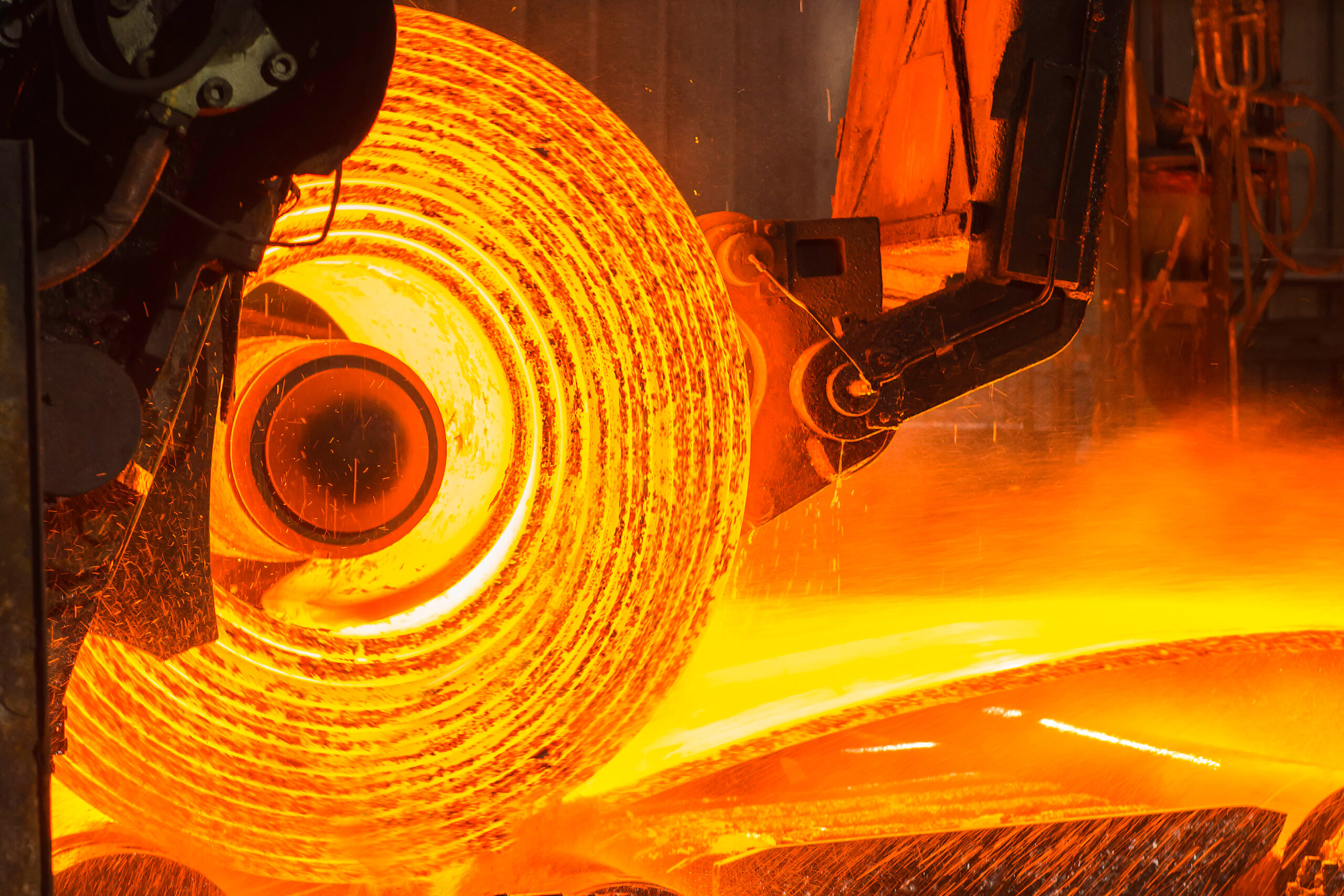
For precise speed control in rolling mills the main drives of the roll stands and the coilers need to be equipped with an encoder. In addition, it is often necessary to provide increased protection for personnel during special operating modes, such as: For this application Johannes Hübner Giessen has been working with Motor OEMs for many decades to provide complete solution ie. Electrical and mechanical components. Home Case Studies Electronic overspeed switch EGS 41 ensures safe rolling mill operations Electronic overspeed switch EGS 41 ensures safe rolling mill operations Home Case Studies Pilger mill in tube rolling mills – hot and cold pipe detection Pilger mill in tube rolling mills – hot and cold pipe detection Safely-Limited Speed (SLS) during maintenance and setup procedures Adhering to provisions in the Machinery Directive relating to the protection of persons Straightforward implementation with certified EGS 41 (SIL 2 / PL d) User-friendly configuration, storage and switch tests Rolling mill in a hot rolling mill. Challenges For precise speed control in rolling mills the main drives of the roll stands and the coilers need to be equipped with an encoder. In addition, it is often necessary to provide increased protection for personnel during special operating modes, such as: Setup procedures with rotating rollers Maintenance work under electrical voltage The risks of such situations can be significantly reduced by implementing the safety function “Safely-Limited Speed” (SLS). SLS can be realized by using an overspeed switch that operates independent of the encoder and fulfils the special safety requirements (Safety Integrity Level SIL / Performance Level PL). Electronic overspeed switch EGS 41 mounted on an incremental encoder FGH 6. Solution To meet these requirements Johannes Hübner Giessen supplies the overspeed switch EGS 41, which is certified up to SIL 2 to IEC 61508 and PL d to DIN EN ISO 13849. In addition to two safe switching outputs for speed monitoring of overspeeds and underspeeds it offers integrated standstill functionality as well as an integrated diagnostics switch to monitor safety functions integrated in the device. The programming software included in the scope of supply supports user-friendly parameterization via a USB interface. Products and Accessories Heavy duty programmable overspeed switch Adapter Shaft Tether 1:1 Replacement for Mechanical Cam Limit Switch Speed feedback for main drives Couplings Case Study Number TP3 Challenge The increasing flexibility of production lines requires a high adaptability of sensors. Continually changing object geometries, different temperatures and very high radiation or surrounding temperatures are no rarity. In a pilger mill those rough conditions can be found, among others in the production of seemless steel pipes. The raw steel blocks, each weighing a few tons are heated up first in a round oven at a temperature of 1300 °C. After descaling of the surface, the steel block is prepunched in a hole press with a strength from a converted 2000 t. In the next sloping rolling mill the growing pipe rotates between two rollers that are positioned at an angle to each other. The punching is widened to the size of the mandrel diameter. Previous solution / Competitor product N/A Solution The sensor that was installed at this application is the HMD OKA 2038.38 G with tube OL 19. The signal of the infrared sensors controls the movement of centering device and abutment. The point of view is restricted by the tube and prevents disturbances by steam in the cooling phase. An optimum adaptation to the operating conditions is given due to the adjustable response temperature. The HMD with self-learning response temperature (Auto-Teach function) is suited to continually changing conditions. The compact sensor with a stainless steel housing can withstand surrounding temperatures of up to 75° C. The use of a cooling jacket raises this up to 200° C. Alternatively sensors with fibre optic cables are available which permit an application at ambient temperatures up to 600° C without cooling. Customer Benefits Maintenance-free High temperature stability Recognition of hot objects at big distances Self adjustment with Auto-Teach or step switch for the response temperature Product Part number OKA 2038.38 G Brand Proxitron Accessories Piros swivel stand HM2 Tube OL 19 Pilot light unit (for alignment) DAK 308 + OL 26 Different cable lengths (e.g. 15 m) Customer Testimonial compared to previous solution or competition Case Studies Other Solutions in Hot Rolling Mills – Roughing Mills View All
Tags: Hot Rolling Mills
November 29, 2021
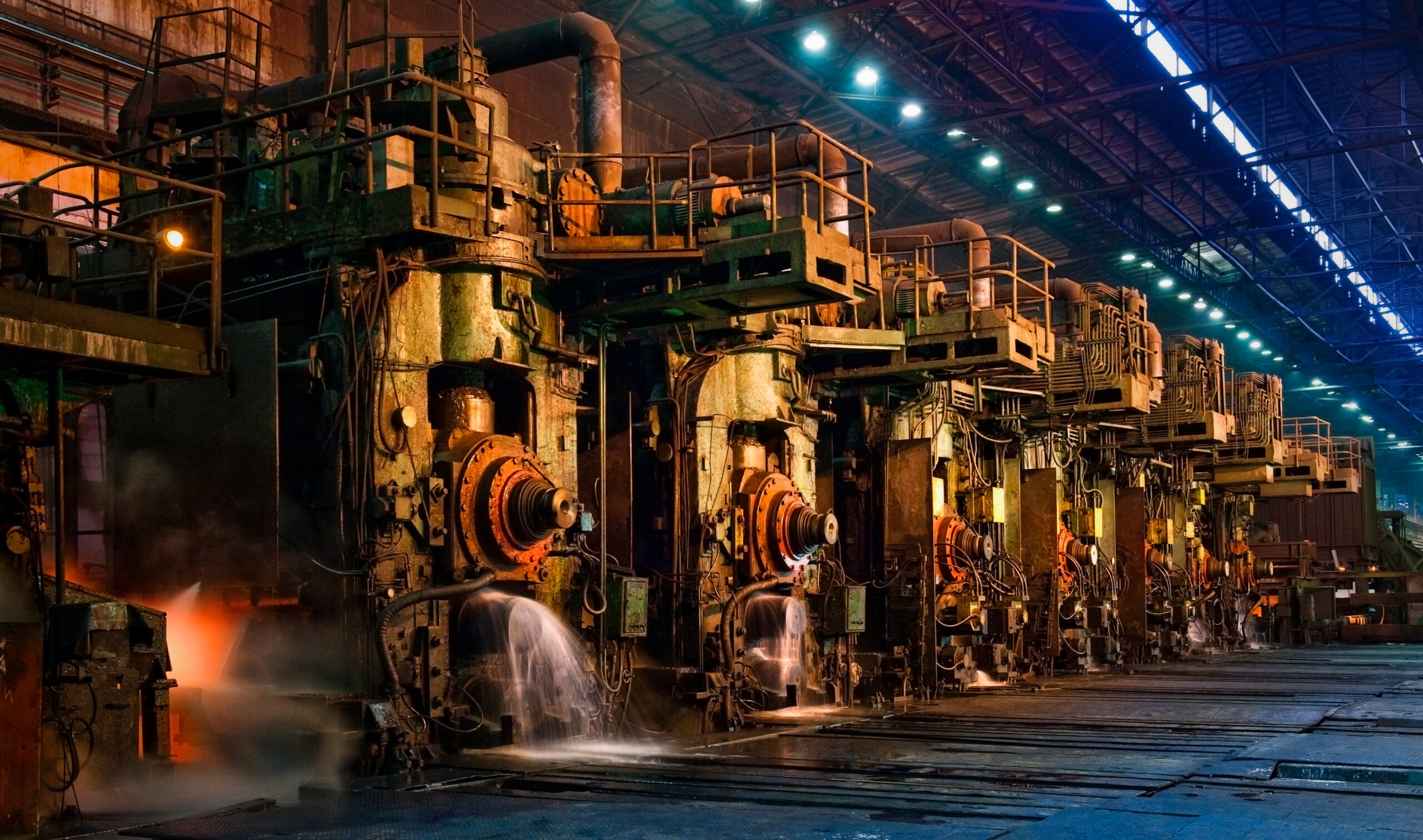
Special looper encoders withstand the most extreme operating conditions in hot roll stands
Compact IR thermal imaging camera was installed to provide a temperature map of the bottom shell. The cameral scans the full bottom of the shell giving options to define multiple areas /ROI to get 4-20mA output. Software automatically finds hot spots enable timely preventative maintenance. Home Case Studies Special looper encoders withstand the most extreme operating conditions in hot roll stands Special looper encoders withstand the most extreme operating conditions in hot roll stands Home Case Studies Pilger mill in tube rolling mills – hot and cold pipe detection Pilger mill in tube rolling mills – hot and cold pipe detection Subject to high loads from shock, temperature and cooling emulsions Heavy-duty ball bearings with special lubrication Increased lifetime Reduced downtime Loopers in hot rolling mills are working under extremely rough conditions. Challenges Loopers are normally used to control the tension of the metal strip between roll stands. The rotational angle of the looper is measured by a feedback encoder that is exposed to special demands. The setting angle up to only about 45° results in a partial load on the encoder bearings in conjunction with insufficient bearing lubrication. The encoder is subject to high levels of shock and temperature loads as well as oil / cooling emulsions / water at the place of installation. Formerly used standard encoders have not reached the required lifetime. Looper encoder with heavy-duty ball bearings and special lubrication for long lifetime. Solution For this application Johannes Hübner Giessen developed a special looper encoder, which boasts a considerably longer lifetime thanks to especially designed-in features. These contain oversized bearings with the dynamic load rating increased by 40 % as well as a special radial shaft sealing ring with an additional protective lip. To guarantee the best signal quality the bearings are not primarily designed for high speeds, but rather for high shock loads up to 450 g. The min. degree of protection is IP66 / IP67 with an operating temperature up to 100 °C. Products and Accessories Looper Encoder Coupling Connector Case Study Number TP3 Challenge The increasing flexibility of production lines requires a high adaptability of sensors. Continually changing object geometries, different temperatures and very high radiation or surrounding temperatures are no rarity. In a pilger mill those rough conditions can be found, among others in the production of seemless steel pipes. The raw steel blocks, each weighing a few tons are heated up first in a round oven at a temperature of 1300 °C. After descaling of the surface, the steel block is prepunched in a hole press with a strength from a converted 2000 t. In the next sloping rolling mill the growing pipe rotates between two rollers that are positioned at an angle to each other. The punching is widened to the size of the mandrel diameter. Previous solution / Competitor product N/A Solution The sensor that was installed at this application is the HMD OKA 2038.38 G with tube OL 19. The signal of the infrared sensors controls the movement of centering device and abutment. The point of view is restricted by the tube and prevents disturbances by steam in the cooling phase. An optimum adaptation to the operating conditions is given due to the adjustable response temperature. The HMD with self-learning response temperature (Auto-Teach function) is suited to continually changing conditions. The compact sensor with a stainless steel housing can withstand surrounding temperatures of up to 75° C. The use of a cooling jacket raises this up to 200° C. Alternatively sensors with fibre optic cables are available which permit an application at ambient temperatures up to 600° C without cooling. Customer Benefits Maintenance-free High temperature stability Recognition of hot objects at big distances Self adjustment with Auto-Teach or step switch for the response temperature Product Part number OKA 2038.38 G Brand Proxitron Accessories Piros swivel stand HM2 Tube OL 19 Pilot light unit (for alignment) DAK 308 + OL 26 Different cable lengths (e.g. 15 m) Customer Testimonial compared to previous solution or competition Case Studies Other applications in Steel Making Sample case study title lorem ipsum here Short description of the problem solved, maybe include the client name. READ MORE Sample case study title lorem ipsum here Short description of the problem solved, maybe include the client name. READ MORE Sample case study title lorem ipsum here Short description of the problem solved, maybe include the client name. READ MORE View All
Tags: Steel Making
November 25, 2021
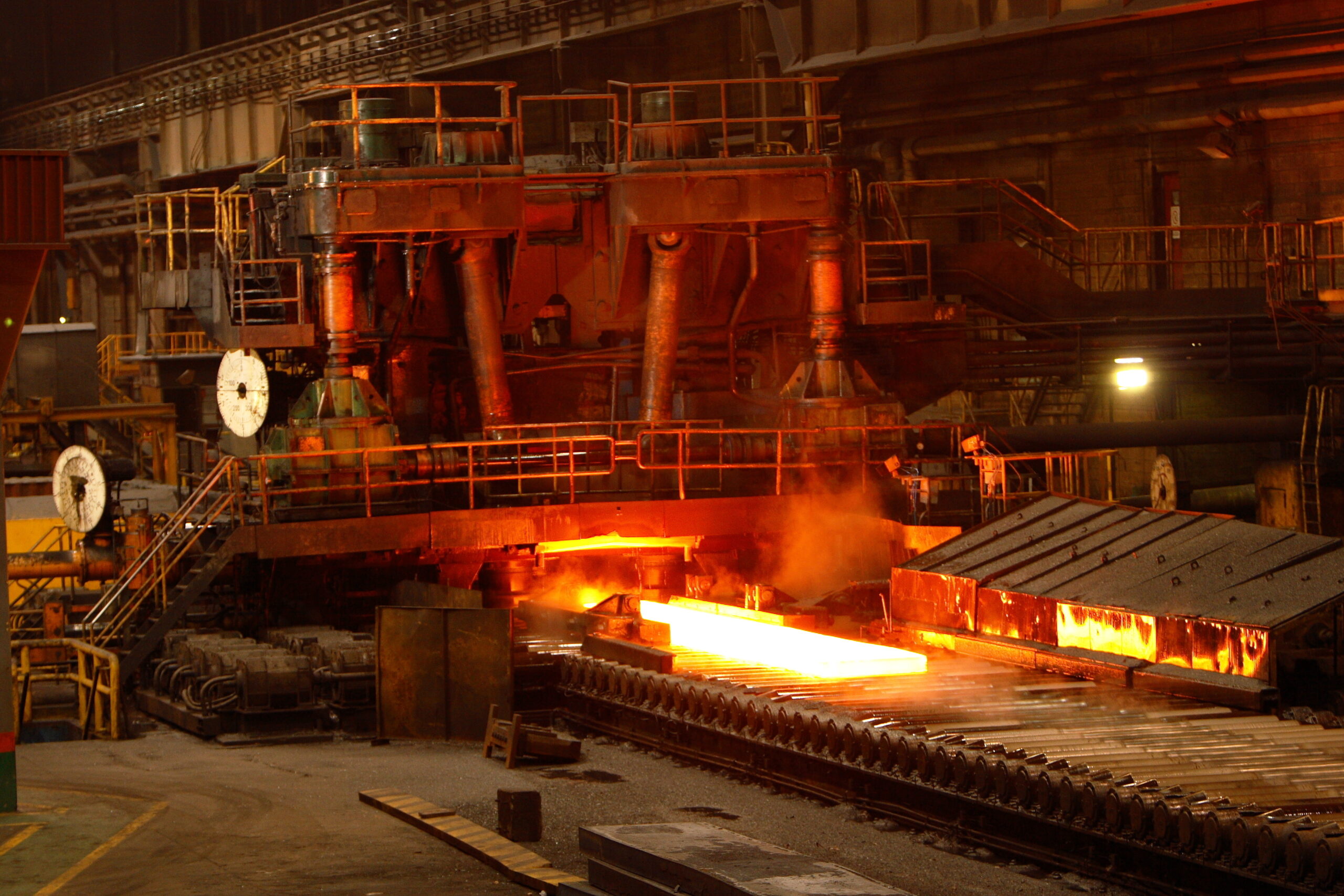
Higher control accuracy in hot rolling mill due to direct encoder attachment
Home Case Studies Higher control accuracy in hot rolling mill due to direct encoder attachment The blast furnace skip hoist is protected against overspeed on the motor side by a mechanical overspeed switch with integrated speed increasing gear. The universal encoder system U-ONE® is to replace the outdated sensor systems on both the motor and drum sides. Thanks to its modular design it is possible to adapt the system to meet all of the customer requirements. Direct attachment of the basic unit eliminates mechanical inaccuracies resulting from gearbox backlash and supports improved control response. Higher control accuracy in hot rolling mill due to direct encoder attachment Home Case Studies Pilger mill in tube rolling mills – hot and cold pipe detection Pilger mill in tube rolling mills – hot and cold pipe detection No mechanical play because solution requires no transfer gearbox or additional couplings Directly attachable compact U-ONE basic unit EMI safe signal transmission via fiber optic cable Improved material quality due to higher control accuracy Before: The assembly of encoder and mechanical cam limit switches with transfer gearbox and additional couplings produces control inaccuracies cause of mechanical play. Challenges Side guides are used to centre the metal strips upstream of the roll stands. In some cases, mechanical cam limit switches and / or absolute encoders are still used for position detection and control. Attachment to the available shaft end of the drive is a widespread solution. To improve control accuracy and, as a consequence, the quality of the material the customer desires a directly mounted, compact solution without a downstream transfer gearbox (gear backlash). The same demands apply to adjusting the screw downs for thickness control. Modular U-ONE-System with directly attachable basic unit creates greater control accuracy. Solution The advantage of the modular U-ONE® system from Johannes Hübner Giessen is that just the universal basic device is mounted to the side-guide, while the functional modules are housed externally in the switchboard. A fiber optic cable is used to achieve the EMI safe connection, a solution that offers considerable savings with regard to cabling time and costs. The system is programmed via a central USB interface. The system is easily extended with the series (side-by-side) plug-in function modules in conjunction with the low-cost of spare parts. Products and Accessories Universal Encoder Case Study Number TP3 Challenge The increasing flexibility of production lines requires a high adaptability of sensors. Continually changing object geometries, different temperatures and very high radiation or surrounding temperatures are no rarity. In a pilger mill those rough conditions can be found, among others in the production of seemless steel pipes. The raw steel blocks, each weighing a few tons are heated up first in a round oven at a temperature of 1300 °C. After descaling of the surface, the steel block is prepunched in a hole press with a strength from a converted 2000 t. In the next sloping rolling mill the growing pipe rotates between two rollers that are positioned at an angle to each other. The punching is widened to the size of the mandrel diameter. Previous solution / Competitor product N/A Solution The sensor that was installed at this application is the HMD OKA 2038.38 G with tube OL 19. The signal of the infrared sensors controls the movement of centering device and abutment. The point of view is restricted by the tube and prevents disturbances by steam in the cooling phase. An optimum adaptation to the operating conditions is given due to the adjustable response temperature. The HMD with self-learning response temperature (Auto-Teach function) is suited to continually changing conditions. The compact sensor with a stainless steel housing can withstand surrounding temperatures of up to 75° C. The use of a cooling jacket raises this up to 200° C. Alternatively sensors with fibre optic cables are available which permit an application at ambient temperatures up to 600° C without cooling. Customer Benefits Maintenance-free High temperature stability Recognition of hot objects at big distances Self adjustment with Auto-Teach or step switch for the response temperature Product Part number OKA 2038.38 G Brand Proxitron Accessories Piros swivel stand HM2 Tube OL 19 Pilot light unit (for alignment) DAK 308 + OL 26 Different cable lengths (e.g. 15 m) Customer Testimonial compared to previous solution or competition Case Studies Other Solutions in Hot Rolling Mills Sample case study title lorem ipsum here Short description of the problem solved, maybe include the client name. READ MORE Sample case study title lorem ipsum here Short description of the problem solved, maybe include the client name. READ MORE Sample case study title lorem ipsum here Short description of the problem solved, maybe include the client name. READ MORE View All
Tags: Hot Rolling Mills
November 24, 2021
Overspeed switch EGSH 41 ensures safely limited speed in the mill stand
For precise speed control in rolling mills the main drives of the roll stands and the coilers need to be equipped with an encoder. In addition, it is often necessary to provide increased protection for personnel during special operating modes, such as: For this application Johannes Hübner Giessen has been working with Motor OEMs for many decades to provide complete solution ie. Electrical and mechanical components. Home Case Studies Overspeed switch EGSH 41 ensures safely limited speed in the mill stand Overspeed switch EGSH 41 ensures safely limited speed in the mill stand Home Case Studies Pilger mill in tube rolling mills – hot and cold pipe detection Pilger mill in tube rolling mills – hot and cold pipe detection Safeguards personnel carrying out necessary work in the danger zone Switching points set without intervening in the PLC programming Safety certified encoder simplifies risk assessment Complete solution including safety mechanical parts and installation service Safety certified system solution consisting of heavy duty encoders and tailor-made mechanical attachments. Challenges In addition to sensing speeds for motor control and protection it is also necessary to implement the safety function SLS (Safely-Limited Speed) for the main drive and for each coiler. The purpose behind this measure is to safeguard personnel in the danger zone as they carry out necessary inspection and maintenance work on machinery. The conceptual solution designed to implement SLS should also take into consideration reliable mechanical assembly. Solution The first step was to document the requirements and the installation conditions at the customer’s site before drawing up an overarching concept for the different points of installation. System solutions consisting of safety-certified, hollow-shaft type overspeed switches EGSH 41 (SIL 2 / PL d) as well as attachments calculated for safety and guaranteed fault exclusion are at the core of our customized solutions. An additional encoder with incremental output for motor control and a speed switching output for motor protection were integrated in the system solution as required. Hübner specialists installed all of the system components and carried out control measurements to verify the accuracy of the installed equipment and documented the results. Turnkey encoder modernization by engineering support package with site measuring, construction, mounting and commissioning support. Products and Accessories Heavy duty programmable overspeed switch Speed feedback for main drives Adapter Shaft Tether 1:1 Replacement for Mechanical Cam Limit Switch Couplings Case Study Number TP3 Challenge The increasing flexibility of production lines requires a high adaptability of sensors. Continually changing object geometries, different temperatures and very high radiation or surrounding temperatures are no rarity. In a pilger mill those rough conditions can be found, among others in the production of seemless steel pipes. The raw steel blocks, each weighing a few tons are heated up first in a round oven at a temperature of 1300 °C. After descaling of the surface, the steel block is prepunched in a hole press with a strength from a converted 2000 t. In the next sloping rolling mill the growing pipe rotates between two rollers that are positioned at an angle to each other. The punching is widened to the size of the mandrel diameter. Previous solution / Competitor product N/A Solution The sensor that was installed at this application is the HMD OKA 2038.38 G with tube OL 19. The signal of the infrared sensors controls the movement of centering device and abutment. The point of view is restricted by the tube and prevents disturbances by steam in the cooling phase. An optimum adaptation to the operating conditions is given due to the adjustable response temperature. The HMD with self-learning response temperature (Auto-Teach function) is suited to continually changing conditions. The compact sensor with a stainless steel housing can withstand surrounding temperatures of up to 75° C. The use of a cooling jacket raises this up to 200° C. Alternatively sensors with fibre optic cables are available which permit an application at ambient temperatures up to 600° C without cooling. Customer Benefits Maintenance-free High temperature stability Recognition of hot objects at big distances Self adjustment with Auto-Teach or step switch for the response temperature Product Part number OKA 2038.38 G Brand Proxitron Accessories Piros swivel stand HM2 Tube OL 19 Pilot light unit (for alignment) DAK 308 + OL 26 Different cable lengths (e.g. 15 m) Customer Testimonial compared to previous solution or competition Case Studies Other Solutions in Hot Rolling Mills – Roughing Mills View All
November 22, 2021
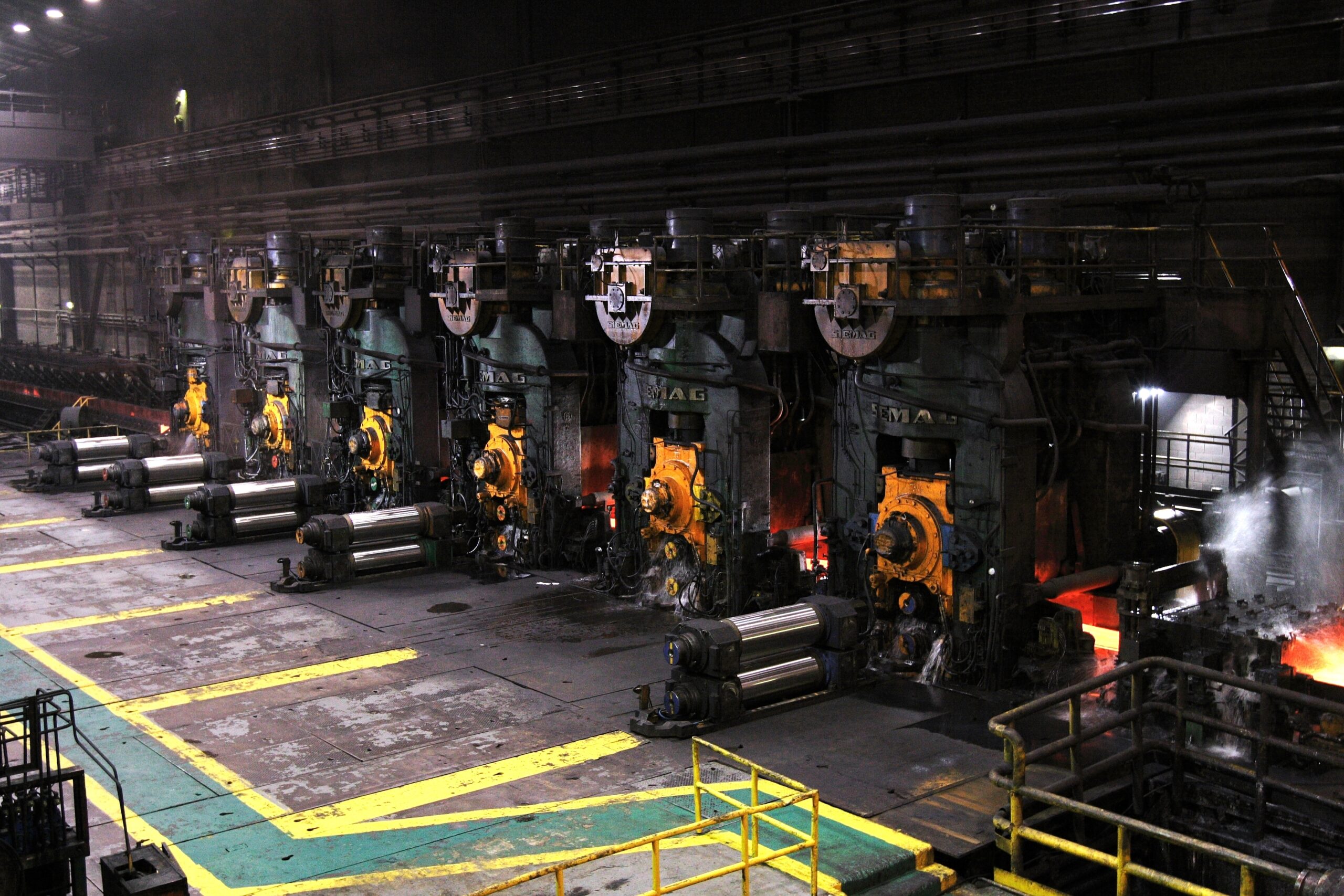
Hot Rolling Mill / Screw downs: Replacing of old resolver technology
For precise speed control in rolling mills the main drives of the roll stands and the coilers need to be equipped with an encoder. In addition, it is often necessary to provide increased protection for personnel during special operating modes, such as: For this application Johannes Hübner Giessen has been working with Motor OEMs for many decades to provide complete solution ie. Electrical and mechanical components. Home Case Studies Hot Rolling Mill / Screw downs: Replacing of old resolver technology Hot Rolling Mill / Screw downs: Replacing of old resolver technology Home Case Studies Pilger mill in tube rolling mills – hot and cold pipe detection Pilger mill in tube rolling mills – hot and cold pipe detection Assembly of hollow shaft absolute encoder ASSH 60 K-16 / 50P (SSI interface) Improved final quality of the rolled material due to increased thickness accuracy Direct assembly to the screw down spindle Before: The old resolver transducer Challenges The customer needed to replace the old resolver technology to improve the thickness control precision and thereby, the material quality. For this purpose they attempted a solution using a linear transducer, which did not give satisfactory results due to its mechanical weakness. Finally, they came to the conclusion to use a high resolution absolute encoder suitable for heavy duty applications. Solution Due to the required robustness, a hollow shaft absolute encoder model ASSH 60 K-16 / 50P with corresponding torque bracket was chosen. The SSI interface with a resolution of 16 bit provides highly accurate signals for the thickness control. At the customer‘s request, the Hübner Giessen engineering department helped in the design of the mounting materials, which were produced by themself. After: Hollow shaft absolute encoder type ASSH 60 K-16 / 50Pwith torque bracket (directly mounted) Products and Accessories Main mill motor encoder Tether Adapter Shaft Heavy duty programmable overspeed switch Speed feedback for main drives Case Study Number TP3 Challenge The increasing flexibility of production lines requires a high adaptability of sensors. Continually changing object geometries, different temperatures and very high radiation or surrounding temperatures are no rarity. In a pilger mill those rough conditions can be found, among others in the production of seemless steel pipes. The raw steel blocks, each weighing a few tons are heated up first in a round oven at a temperature of 1300 °C. After descaling of the surface, the steel block is prepunched in a hole press with a strength from a converted 2000 t. In the next sloping rolling mill the growing pipe rotates between two rollers that are positioned at an angle to each other. The punching is widened to the size of the mandrel diameter. Previous solution / Competitor product N/A Solution The sensor that was installed at this application is the HMD OKA 2038.38 G with tube OL 19. The signal of the infrared sensors controls the movement of centering device and abutment. The point of view is restricted by the tube and prevents disturbances by steam in the cooling phase. An optimum adaptation to the operating conditions is given due to the adjustable response temperature. The HMD with self-learning response temperature (Auto-Teach function) is suited to continually changing conditions. The compact sensor with a stainless steel housing can withstand surrounding temperatures of up to 75° C. The use of a cooling jacket raises this up to 200° C. Alternatively sensors with fibre optic cables are available which permit an application at ambient temperatures up to 600° C without cooling. Customer Benefits Maintenance-free High temperature stability Recognition of hot objects at big distances Self adjustment with Auto-Teach or step switch for the response temperature Product Part number OKA 2038.38 G Brand Proxitron Accessories Piros swivel stand HM2 Tube OL 19 Pilot light unit (for alignment) DAK 308 + OL 26 Different cable lengths (e.g. 15 m) Customer Testimonial compared to previous solution or competition Case Studies Other Solutions in Hot Rolling Mills – Roughing Mills View All
Tags: Hot Rolling Mills
November 19, 2021
Conveyor bridge/Hoist: Higher accuracy and less comissioning time by retrofitting mechanical to electronic position switches
Electronic position switch ERC 40 enclosed in robust housing for use in extreme ambient conditions. The new solution offers customers the following benefits: Higher switching accuracy when approaching end position limits, Less downtimes, User-friendly calibration via preset input, Save and import parameter data sets, Time-saving safety check (switch test function), Additional real-time position data (4 – 20 mA output), Reduced type variety and costs for backup devices, Integrated status monitoring (temperature, speed, voltage, system limits and so on) with active signal output for time-saving identification in the event of a fault condition Home Case Studies Conveyor bridge/Hoist: Higher accuracy and less comissioning time by retrofitting mechanical to electronic position switches strip quality Conveyor bridge/Hoist: Higher accuracy and less comissioning time by retrofitting mechanical to electronic position switches Home Case Studies Pilger mill in tube rolling mills – hot and cold pipe detection Pilger mill in tube rolling mills – hot and cold pipe detection Less setup and maintenance time Direct mounting without distribution gear Higher switching accuracy Additional real-time position data Before: Mechanical cam limit switches limit movement and end positions on hoisting and slewing gear. Challenges Replacement of existing mechanical cam limit switches limiting the end position of movable plant components on a large conveyor bridge in open-pit mining. This is intended to eliminate the following problems: Inaccurate switching points due to backlash and hysteresis High maintenance, installation and start-up times with standstill and disruption to the value creation chain Mandatory inspections require a lot of time and effort High costs for backup devices and maintenance Lack of approval for safety functions in line with current standards and directives After: Electronic position switch ERC 40 replaces mechanical cam limit switches. The Hübner Giessen solution Electronic position switch ERC 40 enclosed in robust housing for use in extreme ambient conditions. The new solution offers customers the following benefits: Higher switching accuracy when approaching end position limits Less downtimes User-friendly calibration via preset input Save and import parameter data sets Time-saving safety check (switch test function) Additional real-time position data (4 – 20 mA output) Reduced type variety and costs for backup devices Integrated status monitoring (temperature, speed, voltage, system limits and so on) with active signal output for time-saving identification in the event of a fault condition Products and Accessories Electronic position switch Heavy duty absolute encoder Heavy duty programmable overspeed switch Case Study Number TP3 Challenge The increasing flexibility of production lines requires a high adaptability of sensors. Continually changing object geometries, different temperatures and very high radiation or surrounding temperatures are no rarity. In a pilger mill those rough conditions can be found, among others in the production of seemless steel pipes. The raw steel blocks, each weighing a few tons are heated up first in a round oven at a temperature of 1300 °C. After descaling of the surface, the steel block is prepunched in a hole press with a strength from a converted 2000 t. In the next sloping rolling mill the growing pipe rotates between two rollers that are positioned at an angle to each other. The punching is widened to the size of the mandrel diameter. Previous solution / Competitor product N/A Solution The sensor that was installed at this application is the HMD OKA 2038.38 G with tube OL 19. The signal of the infrared sensors controls the movement of centering device and abutment. The point of view is restricted by the tube and prevents disturbances by steam in the cooling phase. An optimum adaptation to the operating conditions is given due to the adjustable response temperature. The HMD with self-learning response temperature (Auto-Teach function) is suited to continually changing conditions. The compact sensor with a stainless steel housing can withstand surrounding temperatures of up to 75° C. The use of a cooling jacket raises this up to 200° C. Alternatively sensors with fibre optic cables are available which permit an application at ambient temperatures up to 600° C without cooling. Customer Benefits Maintenance-free High temperature stability Recognition of hot objects at big distances Self adjustment with Auto-Teach or step switch for the response temperature Product Part number OKA 2038.38 G Brand Proxitron Accessories Piros swivel stand HM2 Tube OL 19 Pilot light unit (for alignment) DAK 308 + OL 26 Different cable lengths (e.g. 15 m) Customer Testimonial compared to previous solution or competition Case Studies Other Solutions in Mining & Material Handling Sample case study title lorem ipsum here Short description of the problem solved, maybe include the client name. READ MORE Sample case study title lorem ipsum here Short description of the problem solved, maybe include the client name. READ MORE Sample case study title lorem ipsum here Short description of the problem solved, maybe include the client name. READ MORE View All
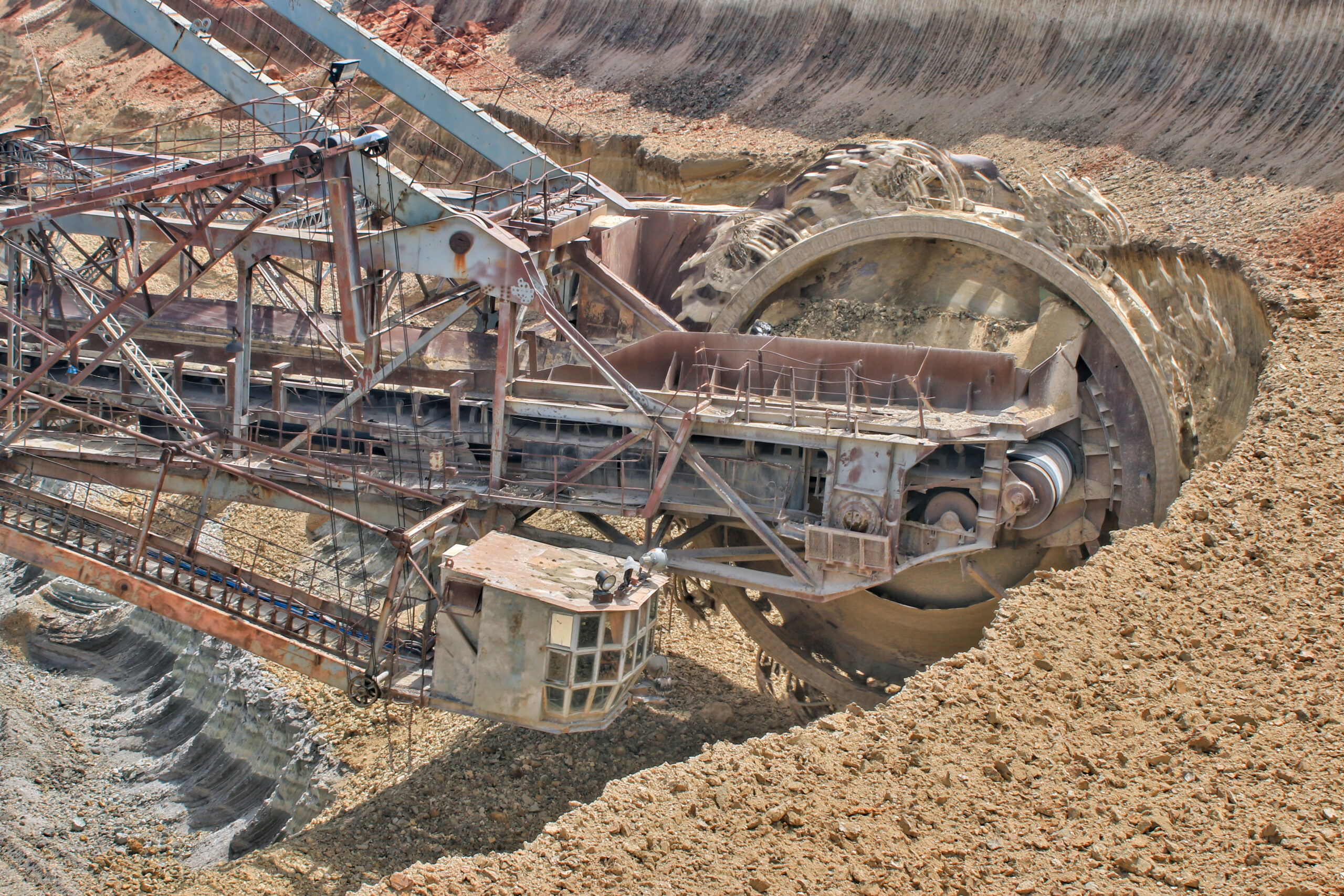
Tags: Crane, Large Machinery, material handling
October 26, 2021
Excavator/Hoist: U-ONE-SAFETY-Compact implements safety functions in open cast mining even without a safety PLC
The universal encoder system U-ONE®-SAFETY-Compact consists of a basic unit and directly attached switch or bus modules. All functions are integrated in a robust housing designed to meet the specific demands of heavy industry. Safety switching signals are provided according to position and speed based on a 13 / 15 bit resolution (max. 32768 rotations). It is possible to combine diverse bus interfaces as well as a 4 – 20 mA analog output or an incremental output according to application requirements. As a consequence, it is possible to replace several individual devices with a single compact device. The system-wide two channel architecture facilitates the implementation of safety functions up to Category 3 and Performance Level (PL) d as well as SIL 2. Home Case Studies Excavator/Hoist: U-ONE-SAFETY-Compact implements safety functions in open cast mining even without a safety PLC Excavator/Hoist: U-ONE-SAFETY-Compact implements safety functions in open cast mining even without a safety PLC Home Case Studies Pilger mill in tube rolling mills – hot and cold pipe detection Pilger mill in tube rolling mills – hot and cold pipe detection Replaces several individual devices with a single, compact system incl. additional functions Safe position and end position monitoring Easy to configure, no need to modify with the control software Certified safety ensures uncomplicated acceptance test Before: Mechanical spindle limit switches were driven by gearwheel and used for monitoring and switching of end positions. Challenges Absolute encoders and mechanical limit switches (levers and / or spindle limit switches) characterize state-of-the-art solutions for position detection and limiting the end position of moving system components in relation to one another on large machinery in open-cast mining applications. To ensure the safety of personnel and safeguard machinery it is essential that limit switches are reliably actuated when end positions are reached. Consequently, highly reliable monitoring technology is necessary to comply with the corresponding safety requirements – in particular when implementing modernization or automation measures. To meet the required performance level, two-channel architectures or diverse redundant systems are needed. After: The direct driven universal encoder system U-ONE-SAFETY-Compact allows high precise and safety certified monitoring and switching of end positions. Solution The universal encoder system U-ONE®-SAFETY-Compact consists of a basic unit and directly attached switch or bus modules. All functions are integrated in a robust housing designed to meet the specific demands of heavy industry. Safety switching signals are provided according to position and speed based on a 13 / 15 bit resolution (max. 32768 rotations). It is possible to combine diverse bus interfaces as well as a 4 – 20 mA analog output or an incremental output according to application requirements. As a consequence, it is possible to replace several individual devices with a single compact device. The system-wide two channel architecture facilitates the implementation of safety functions up to Category 3 and Performance Level (PL) d as well as SIL 2. Products and Accessories Universal Encoder Heavy duty absolute encoder Heavy duty programmable overspeed switch Case Study Number TP3 Challenge The increasing flexibility of production lines requires a high adaptability of sensors. Continually changing object geometries, different temperatures and very high radiation or surrounding temperatures are no rarity. In a pilger mill those rough conditions can be found, among others in the production of seemless steel pipes. The raw steel blocks, each weighing a few tons are heated up first in a round oven at a temperature of 1300 °C. After descaling of the surface, the steel block is prepunched in a hole press with a strength from a converted 2000 t. In the next sloping rolling mill the growing pipe rotates between two rollers that are positioned at an angle to each other. The punching is widened to the size of the mandrel diameter. Previous solution / Competitor product N/A Solution The sensor that was installed at this application is the HMD OKA 2038.38 G with tube OL 19. The signal of the infrared sensors controls the movement of centering device and abutment. The point of view is restricted by the tube and prevents disturbances by steam in the cooling phase. An optimum adaptation to the operating conditions is given due to the adjustable response temperature. The HMD with self-learning response temperature (Auto-Teach function) is suited to continually changing conditions. The compact sensor with a stainless steel housing can withstand surrounding temperatures of up to 75° C. The use of a cooling jacket raises this up to 200° C. Alternatively sensors with fibre optic cables are available which permit an application at ambient temperatures up to 600° C without cooling. Customer Benefits Maintenance-free High temperature stability Recognition of hot objects at big distances Self adjustment with Auto-Teach or step switch for the response temperature Product Part number OKA 2038.38 G Brand Proxitron Accessories Piros swivel stand HM2 Tube OL 19 Pilot light unit (for alignment) DAK 308 + OL 26 Different cable lengths (e.g. 15 m) Customer Testimonial compared to previous solution or competition Case Studies Other Solutions in Mining & Material Handling Sample case study title lorem ipsum here Short description of the problem solved, maybe include the client name. READ MORE Sample case study title lorem ipsum here Short description of the problem solved, maybe include the client name. READ MORE Sample case study title lorem ipsum here Short description of the problem solved, maybe include the client name. READ MORE View All

Tags: Crane, Large Machinery, material handling
Page 6 of 14
Case Studies

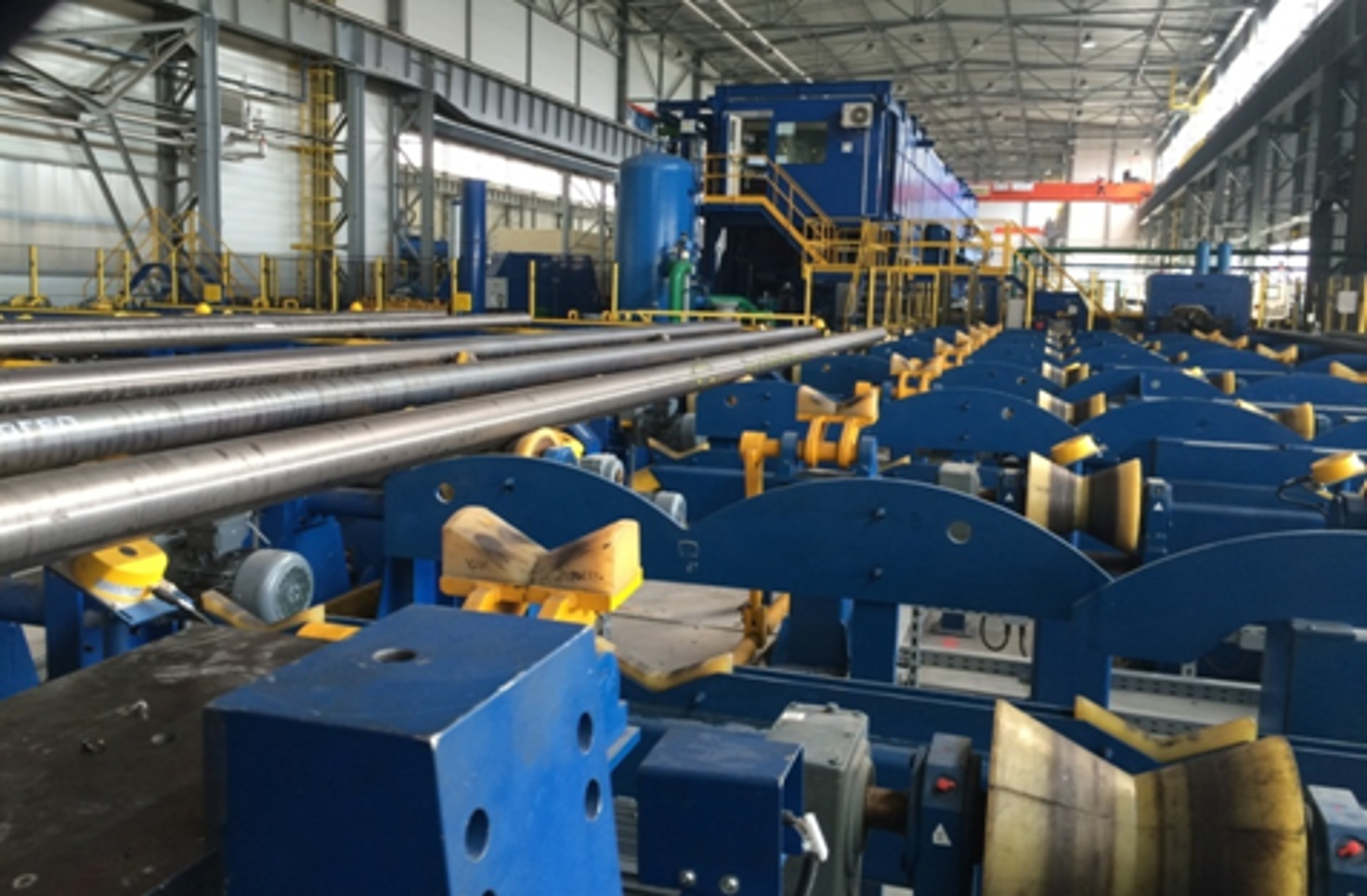
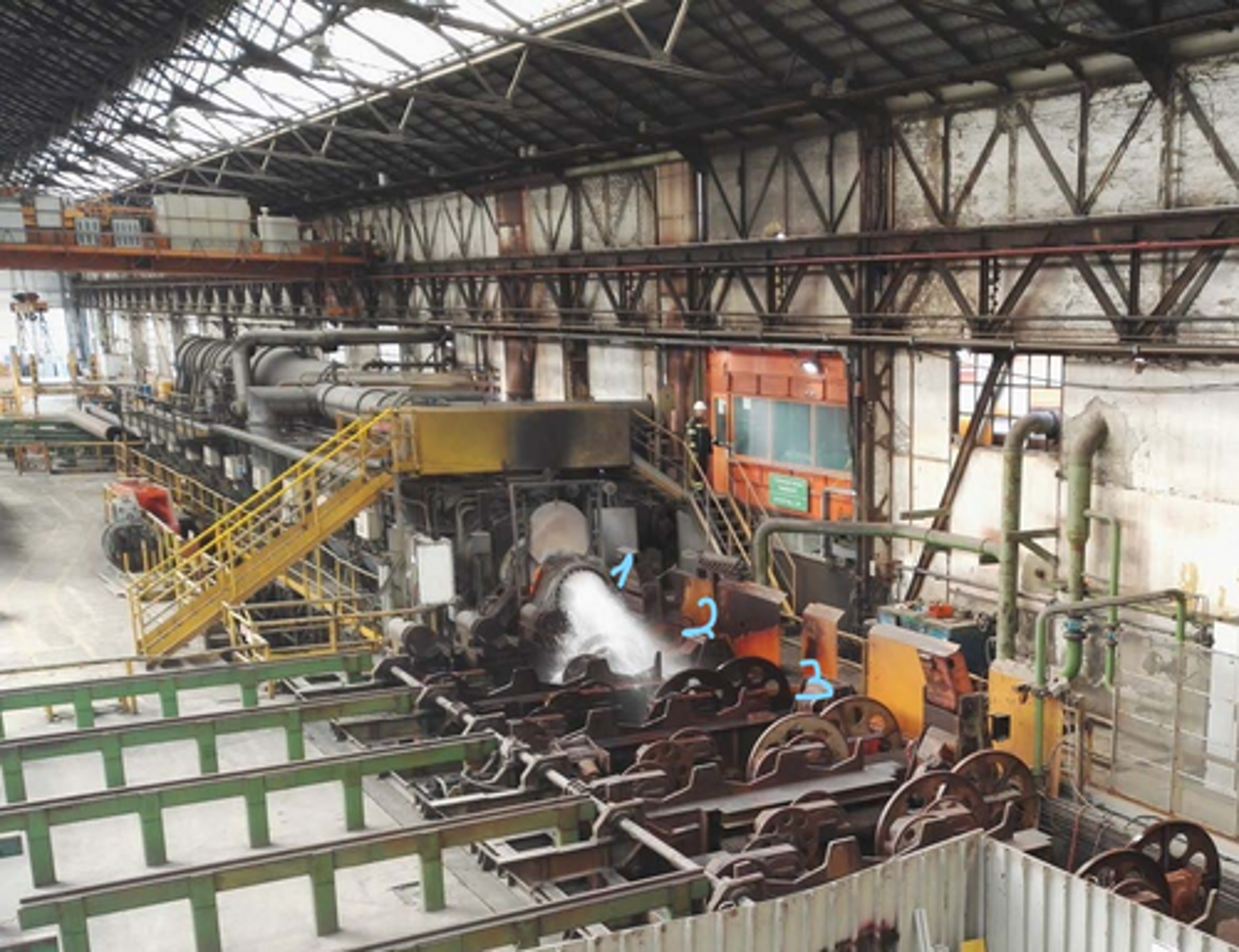
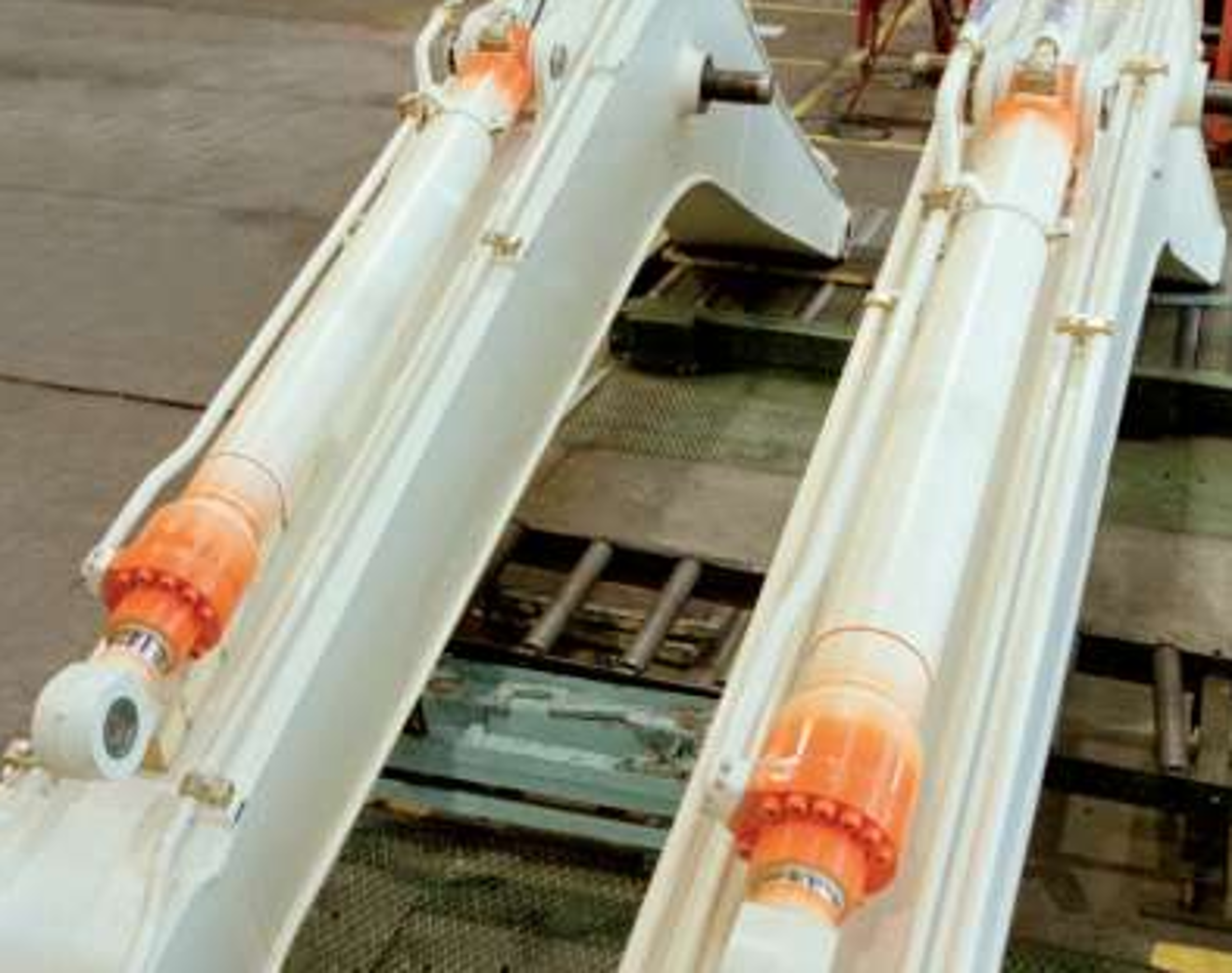
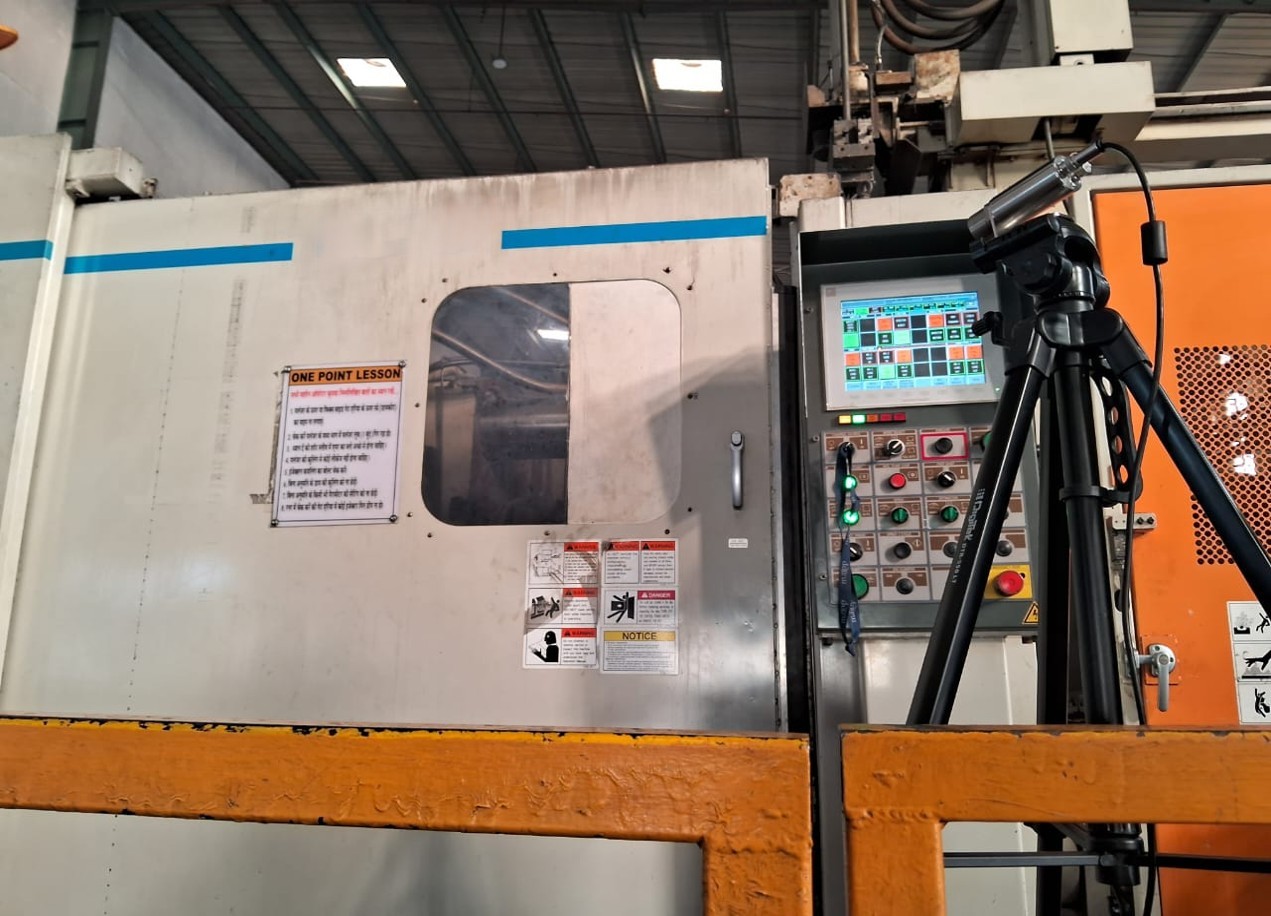

Found 139 Results
Page 6 of 14
Page 6 of 14
Page 6 of 14
Robust encoders ensure more precision and less downtimes
For precise speed control in rolling mills the main drives of the roll stands and the coilers need to be equipped with an encoder. In addition, it is often necessary to provide increased protection for personnel during special operating modes, such as: For this application Johannes Hübner Giessen has been working with Motor OEMs for many decades to provide complete solution ie. Electrical and mechanical components. Home Case Studies Robust encoders ensure more precision and less downtimes Robust encoders ensure more precision and less downtimes Home Case Studies Pilger mill in tube rolling mills – hot and cold pipe detection Pilger mill in tube rolling mills – hot and cold pipe detection Greater functional component reliability Higher converter plant availability More precise measurement signals despite shock and vibration loads Easy and time-saving programming Before: Old skip-car control mechanism with two mechanical geared cam limit switches. Challenges The skip-car control mechanism utilised to date included two mechanical, geared cam limit switches that are time consuming to program. The mechanical overspeed switch utilized can prove problematical when subjected to shock and vibration loads. Neither of these components exhibits the required precision and as such are not suitable to meet the modern-day requirements of steel mill operations. After: More precise signals because of robust combination of bearing block and heavy duty encoders. Solution Upgrading to meet modern demands required suitable components for measuring actual values that are not only characterized by their high accuracy and functional reliability, but are also easy to program. Hübner Giessen replaced one of the geared cam limit switches with a series FG 4 K incremental encoder and an AMS 4 K type absolute encoder with integrated SSI interface. Fitting the devices to a bearing block increases their resistance to shock and vibration loads and compensates the mechanical tolerances of the installed, previous transfer gearbox. The other cam limit switch will also be replaced in a second modernizing step as will the mechanical overspeed switch be replaced by a programmable electronic overspeed switch. Products and Accessories Heavy duty programmable overspeed switch 1:1 Replacement for Mechanical Cam Limit Switch Speed feedback for main drives Couplings Magnetic Bearingless Tether Adapter Shaft Case Study Number TP3 Challenge The increasing flexibility of production lines requires a high adaptability of sensors. Continually changing object geometries, different temperatures and very high radiation or surrounding temperatures are no rarity. In a pilger mill those rough conditions can be found, among others in the production of seemless steel pipes. The raw steel blocks, each weighing a few tons are heated up first in a round oven at a temperature of 1300 °C. After descaling of the surface, the steel block is prepunched in a hole press with a strength from a converted 2000 t. In the next sloping rolling mill the growing pipe rotates between two rollers that are positioned at an angle to each other. The punching is widened to the size of the mandrel diameter. Previous solution / Competitor product N/A Solution The sensor that was installed at this application is the HMD OKA 2038.38 G with tube OL 19. The signal of the infrared sensors controls the movement of centering device and abutment. The point of view is restricted by the tube and prevents disturbances by steam in the cooling phase. An optimum adaptation to the operating conditions is given due to the adjustable response temperature. The HMD with self-learning response temperature (Auto-Teach function) is suited to continually changing conditions. The compact sensor with a stainless steel housing can withstand surrounding temperatures of up to 75° C. The use of a cooling jacket raises this up to 200° C. Alternatively sensors with fibre optic cables are available which permit an application at ambient temperatures up to 600° C without cooling. Customer Benefits Maintenance-free High temperature stability Recognition of hot objects at big distances Self adjustment with Auto-Teach or step switch for the response temperature Product Part number OKA 2038.38 G Brand Proxitron Accessories Piros swivel stand HM2 Tube OL 19 Pilot light unit (for alignment) DAK 308 + OL 26 Different cable lengths (e.g. 15 m) Customer Testimonial compared to previous solution or competition Case Studies Other Solutions in Hot Rolling Mills – Roughing Mills View All
December 14, 2021
Bearingless encoder system MAG withstands permanently extreme environmental conditions in the roll stand
For precise speed control in rolling mills the main drives of the roll stands and the coilers need to be equipped with an encoder. In addition, it is often necessary to provide increased protection for personnel during special operating modes, such as: For this application Johannes Hübner Giessen has been working with Motor OEMs for many decades to provide complete solution ie. Electrical and mechanical components. Home Case Studies Bearingless encoder system MAG withstands permanently extreme environmental conditions in the roll stand Bearingless encoder system MAG withstands permanently extreme environmental conditions in the roll stand Home Case Studies Pilger mill in tube rolling mills – hot and cold pipe detection Pilger mill in tube rolling mills – hot and cold pipe detection Designed for high shock and vibration loads, aggressive cooling emulsions Tailor-made solution features an installation width of just 10 mm Special stainless-steel ring ensure a long service life Interference-free speed measurements of the metal strip for optimum drive control Sensors for strip speed measurement are exposed to extreme ambient conditions in the area of the measuring roll. Challenges The actual feedback value of the effective speed of the metal strip is required to effectively regulate the roll stand drives. It is possible to measure this value using suitable sensors located at the drive measuring roller between the stands. Shock and vibration loads as well as aggressive cooling emulsions mean the devices need to withstand extreme environmental conditions. In addition, limited installation space made it necessary to adapt the sensor system. Due to the loads mentioned above a measuring system installed to date was unable to supply interference-free speed signals. Tailor-made MAG system solution with extremely slim design and special Stainless steel bandage to protect the MAG pulse wheel. Solution Following discussions with the end customer Johannes Hübner Giessen installed a suitable measuring system with magnetic sensor technology that could be adapted to suit the conditions. The selected MAG 260 consists of a pulse wheel with an outside diameter of 260 mm as well as a scanning head with completely encapsulated electronics sealed to IP67. The bearingless system is unaffected by shock and vibration; it supplies interference-free signals even when exposed to extreme high quantities of aggressive liquids and vapours. Without using the reference pulse it was possible to implement the extremely slim 10 mm design width as needed. Products and Accessories Magnetic Bearingless Heavy duty programmable overspeed switch Speed feedback for main drives Adapter Shaft Tether 1:1 Replacement for Mechanical Cam Limit Switch Couplings Case Study Number TP3 Challenge The increasing flexibility of production lines requires a high adaptability of sensors. Continually changing object geometries, different temperatures and very high radiation or surrounding temperatures are no rarity. In a pilger mill those rough conditions can be found, among others in the production of seemless steel pipes. The raw steel blocks, each weighing a few tons are heated up first in a round oven at a temperature of 1300 °C. After descaling of the surface, the steel block is prepunched in a hole press with a strength from a converted 2000 t. In the next sloping rolling mill the growing pipe rotates between two rollers that are positioned at an angle to each other. The punching is widened to the size of the mandrel diameter. Previous solution / Competitor product N/A Solution The sensor that was installed at this application is the HMD OKA 2038.38 G with tube OL 19. The signal of the infrared sensors controls the movement of centering device and abutment. The point of view is restricted by the tube and prevents disturbances by steam in the cooling phase. An optimum adaptation to the operating conditions is given due to the adjustable response temperature. The HMD with self-learning response temperature (Auto-Teach function) is suited to continually changing conditions. The compact sensor with a stainless steel housing can withstand surrounding temperatures of up to 75° C. The use of a cooling jacket raises this up to 200° C. Alternatively sensors with fibre optic cables are available which permit an application at ambient temperatures up to 600° C without cooling. Customer Benefits Maintenance-free High temperature stability Recognition of hot objects at big distances Self adjustment with Auto-Teach or step switch for the response temperature Product Part number OKA 2038.38 G Brand Proxitron Accessories Piros swivel stand HM2 Tube OL 19 Pilot light unit (for alignment) DAK 308 + OL 26 Different cable lengths (e.g. 15 m) Customer Testimonial compared to previous solution or competition Case Studies Other Solutions in Hot Rolling Mills – Roughing Mills View All
December 13, 2021
Encoder retrofitted directly to the tandem drive ensures trouble-free rolling mill operations
For precise speed control in rolling mills the main drives of the roll stands and the coilers need to be equipped with an encoder. In addition, it is often necessary to provide increased protection for personnel during special operating modes, such as: For this application Johannes Hübner Giessen has been working with Motor OEMs for many decades to provide complete solution ie. Electrical and mechanical components. Home Case Studies Encoder retrofitted directly to the tandem drive ensures trouble-free rolling mill operations Encoder retrofitted directly to the tandem drive ensures trouble-free rolling mill operations Home Case Studies Pilger mill in tube rolling mills – hot and cold pipe detection Pilger mill in tube rolling mills – hot and cold pipe detection Straightforward retrofit without free shaft end Bearingless magnetic encoder with split pulse wheel and narrow construction Replacement for belt drive that required intensive maintenance Also suitable for high speed and rapid reversing movements Motor shaft of a rolling mill tandem motor with mounted MAG-G system. Challenges Only the rear motor of tandem drives has a shaft end available to which an encoder can be attached. However, a speed signal is also required from the front motor for synchronizing purposes in tandem operations or as motor feedback in single-motor operations (decoupled mode of operation). This is often generated by an encoder driven by a toothed belt, but typical disadvantages of this solution (tension, alignment, wear etc.) have a negative impact on the quality of the signal and lead to increased servicing costs. The better solution is a special encoder that can be attached directly to the shaft of the front motor without having to separate the tandem motors. Bearingless magnetic encoder system MAG-G with split pulse wheel and scanning head. Solution To be able to mount an encoder where there is no shaft end available Johannes Hübner Giessen installed its bearingless, magnetic type encoders MAG-G. Consisting of two half shells they can be retrofi tted at any point of a rotating shaft. The staggered design of the two half shells ensures the construction is suitable for applications with high speed and rapid reversing movements. The bearingless version o ers protection against shaft currents, it is wear free and also suitable for large shaft diameters. Thanks to its slim design width of just 30 mm the MAG-G system is easy to integrate in existing solutions. Products and Accessories Magnetic Bearingless Heavy duty programmable overspeed switch Speed feedback for main drives Adapter Shaft Tether 1:1 Replacement for Mechanical Cam Limit Switch Couplings Case Study Number TP3 Challenge The increasing flexibility of production lines requires a high adaptability of sensors. Continually changing object geometries, different temperatures and very high radiation or surrounding temperatures are no rarity. In a pilger mill those rough conditions can be found, among others in the production of seemless steel pipes. The raw steel blocks, each weighing a few tons are heated up first in a round oven at a temperature of 1300 °C. After descaling of the surface, the steel block is prepunched in a hole press with a strength from a converted 2000 t. In the next sloping rolling mill the growing pipe rotates between two rollers that are positioned at an angle to each other. The punching is widened to the size of the mandrel diameter. Previous solution / Competitor product N/A Solution The sensor that was installed at this application is the HMD OKA 2038.38 G with tube OL 19. The signal of the infrared sensors controls the movement of centering device and abutment. The point of view is restricted by the tube and prevents disturbances by steam in the cooling phase. An optimum adaptation to the operating conditions is given due to the adjustable response temperature. The HMD with self-learning response temperature (Auto-Teach function) is suited to continually changing conditions. The compact sensor with a stainless steel housing can withstand surrounding temperatures of up to 75° C. The use of a cooling jacket raises this up to 200° C. Alternatively sensors with fibre optic cables are available which permit an application at ambient temperatures up to 600° C without cooling. Customer Benefits Maintenance-free High temperature stability Recognition of hot objects at big distances Self adjustment with Auto-Teach or step switch for the response temperature Product Part number OKA 2038.38 G Brand Proxitron Accessories Piros swivel stand HM2 Tube OL 19 Pilot light unit (for alignment) DAK 308 + OL 26 Different cable lengths (e.g. 15 m) Customer Testimonial compared to previous solution or competition Case Studies Other Solutions in Hot Rolling Mills – Roughing Mills View All
December 2, 2021
Electronic overspeed switch EGS 41 ensures safe rolling mill operations
For precise speed control in rolling mills the main drives of the roll stands and the coilers need to be equipped with an encoder. In addition, it is often necessary to provide increased protection for personnel during special operating modes, such as: For this application Johannes Hübner Giessen has been working with Motor OEMs for many decades to provide complete solution ie. Electrical and mechanical components. Home Case Studies Electronic overspeed switch EGS 41 ensures safe rolling mill operations Electronic overspeed switch EGS 41 ensures safe rolling mill operations Home Case Studies Pilger mill in tube rolling mills – hot and cold pipe detection Pilger mill in tube rolling mills – hot and cold pipe detection Safely-Limited Speed (SLS) during maintenance and setup procedures Adhering to provisions in the Machinery Directive relating to the protection of persons Straightforward implementation with certified EGS 41 (SIL 2 / PL d) User-friendly configuration, storage and switch tests Rolling mill in a hot rolling mill. Challenges For precise speed control in rolling mills the main drives of the roll stands and the coilers need to be equipped with an encoder. In addition, it is often necessary to provide increased protection for personnel during special operating modes, such as: Setup procedures with rotating rollers Maintenance work under electrical voltage The risks of such situations can be significantly reduced by implementing the safety function “Safely-Limited Speed” (SLS). SLS can be realized by using an overspeed switch that operates independent of the encoder and fulfils the special safety requirements (Safety Integrity Level SIL / Performance Level PL). Electronic overspeed switch EGS 41 mounted on an incremental encoder FGH 6. Solution To meet these requirements Johannes Hübner Giessen supplies the overspeed switch EGS 41, which is certified up to SIL 2 to IEC 61508 and PL d to DIN EN ISO 13849. In addition to two safe switching outputs for speed monitoring of overspeeds and underspeeds it offers integrated standstill functionality as well as an integrated diagnostics switch to monitor safety functions integrated in the device. The programming software included in the scope of supply supports user-friendly parameterization via a USB interface. Products and Accessories Heavy duty programmable overspeed switch Adapter Shaft Tether 1:1 Replacement for Mechanical Cam Limit Switch Speed feedback for main drives Couplings Case Study Number TP3 Challenge The increasing flexibility of production lines requires a high adaptability of sensors. Continually changing object geometries, different temperatures and very high radiation or surrounding temperatures are no rarity. In a pilger mill those rough conditions can be found, among others in the production of seemless steel pipes. The raw steel blocks, each weighing a few tons are heated up first in a round oven at a temperature of 1300 °C. After descaling of the surface, the steel block is prepunched in a hole press with a strength from a converted 2000 t. In the next sloping rolling mill the growing pipe rotates between two rollers that are positioned at an angle to each other. The punching is widened to the size of the mandrel diameter. Previous solution / Competitor product N/A Solution The sensor that was installed at this application is the HMD OKA 2038.38 G with tube OL 19. The signal of the infrared sensors controls the movement of centering device and abutment. The point of view is restricted by the tube and prevents disturbances by steam in the cooling phase. An optimum adaptation to the operating conditions is given due to the adjustable response temperature. The HMD with self-learning response temperature (Auto-Teach function) is suited to continually changing conditions. The compact sensor with a stainless steel housing can withstand surrounding temperatures of up to 75° C. The use of a cooling jacket raises this up to 200° C. Alternatively sensors with fibre optic cables are available which permit an application at ambient temperatures up to 600° C without cooling. Customer Benefits Maintenance-free High temperature stability Recognition of hot objects at big distances Self adjustment with Auto-Teach or step switch for the response temperature Product Part number OKA 2038.38 G Brand Proxitron Accessories Piros swivel stand HM2 Tube OL 19 Pilot light unit (for alignment) DAK 308 + OL 26 Different cable lengths (e.g. 15 m) Customer Testimonial compared to previous solution or competition Case Studies Other Solutions in Hot Rolling Mills – Roughing Mills View All
Tags: Hot Rolling Mills
November 29, 2021
Special looper encoders withstand the most extreme operating conditions in hot roll stands
Compact IR thermal imaging camera was installed to provide a temperature map of the bottom shell. The cameral scans the full bottom of the shell giving options to define multiple areas /ROI to get 4-20mA output. Software automatically finds hot spots enable timely preventative maintenance. Home Case Studies Special looper encoders withstand the most extreme operating conditions in hot roll stands Special looper encoders withstand the most extreme operating conditions in hot roll stands Home Case Studies Pilger mill in tube rolling mills – hot and cold pipe detection Pilger mill in tube rolling mills – hot and cold pipe detection Subject to high loads from shock, temperature and cooling emulsions Heavy-duty ball bearings with special lubrication Increased lifetime Reduced downtime Loopers in hot rolling mills are working under extremely rough conditions. Challenges Loopers are normally used to control the tension of the metal strip between roll stands. The rotational angle of the looper is measured by a feedback encoder that is exposed to special demands. The setting angle up to only about 45° results in a partial load on the encoder bearings in conjunction with insufficient bearing lubrication. The encoder is subject to high levels of shock and temperature loads as well as oil / cooling emulsions / water at the place of installation. Formerly used standard encoders have not reached the required lifetime. Looper encoder with heavy-duty ball bearings and special lubrication for long lifetime. Solution For this application Johannes Hübner Giessen developed a special looper encoder, which boasts a considerably longer lifetime thanks to especially designed-in features. These contain oversized bearings with the dynamic load rating increased by 40 % as well as a special radial shaft sealing ring with an additional protective lip. To guarantee the best signal quality the bearings are not primarily designed for high speeds, but rather for high shock loads up to 450 g. The min. degree of protection is IP66 / IP67 with an operating temperature up to 100 °C. Products and Accessories Looper Encoder Coupling Connector Case Study Number TP3 Challenge The increasing flexibility of production lines requires a high adaptability of sensors. Continually changing object geometries, different temperatures and very high radiation or surrounding temperatures are no rarity. In a pilger mill those rough conditions can be found, among others in the production of seemless steel pipes. The raw steel blocks, each weighing a few tons are heated up first in a round oven at a temperature of 1300 °C. After descaling of the surface, the steel block is prepunched in a hole press with a strength from a converted 2000 t. In the next sloping rolling mill the growing pipe rotates between two rollers that are positioned at an angle to each other. The punching is widened to the size of the mandrel diameter. Previous solution / Competitor product N/A Solution The sensor that was installed at this application is the HMD OKA 2038.38 G with tube OL 19. The signal of the infrared sensors controls the movement of centering device and abutment. The point of view is restricted by the tube and prevents disturbances by steam in the cooling phase. An optimum adaptation to the operating conditions is given due to the adjustable response temperature. The HMD with self-learning response temperature (Auto-Teach function) is suited to continually changing conditions. The compact sensor with a stainless steel housing can withstand surrounding temperatures of up to 75° C. The use of a cooling jacket raises this up to 200° C. Alternatively sensors with fibre optic cables are available which permit an application at ambient temperatures up to 600° C without cooling. Customer Benefits Maintenance-free High temperature stability Recognition of hot objects at big distances Self adjustment with Auto-Teach or step switch for the response temperature Product Part number OKA 2038.38 G Brand Proxitron Accessories Piros swivel stand HM2 Tube OL 19 Pilot light unit (for alignment) DAK 308 + OL 26 Different cable lengths (e.g. 15 m) Customer Testimonial compared to previous solution or competition Case Studies Other applications in Steel Making Sample case study title lorem ipsum here Short description of the problem solved, maybe include the client name. READ MORE Sample case study title lorem ipsum here Short description of the problem solved, maybe include the client name. READ MORE Sample case study title lorem ipsum here Short description of the problem solved, maybe include the client name. READ MORE View All
Tags: Steel Making
November 25, 2021
Higher control accuracy in hot rolling mill due to direct encoder attachment
Home Case Studies Higher control accuracy in hot rolling mill due to direct encoder attachment The blast furnace skip hoist is protected against overspeed on the motor side by a mechanical overspeed switch with integrated speed increasing gear. The universal encoder system U-ONE® is to replace the outdated sensor systems on both the motor and drum sides. Thanks to its modular design it is possible to adapt the system to meet all of the customer requirements. Direct attachment of the basic unit eliminates mechanical inaccuracies resulting from gearbox backlash and supports improved control response. Higher control accuracy in hot rolling mill due to direct encoder attachment Home Case Studies Pilger mill in tube rolling mills – hot and cold pipe detection Pilger mill in tube rolling mills – hot and cold pipe detection No mechanical play because solution requires no transfer gearbox or additional couplings Directly attachable compact U-ONE basic unit EMI safe signal transmission via fiber optic cable Improved material quality due to higher control accuracy Before: The assembly of encoder and mechanical cam limit switches with transfer gearbox and additional couplings produces control inaccuracies cause of mechanical play. Challenges Side guides are used to centre the metal strips upstream of the roll stands. In some cases, mechanical cam limit switches and / or absolute encoders are still used for position detection and control. Attachment to the available shaft end of the drive is a widespread solution. To improve control accuracy and, as a consequence, the quality of the material the customer desires a directly mounted, compact solution without a downstream transfer gearbox (gear backlash). The same demands apply to adjusting the screw downs for thickness control. Modular U-ONE-System with directly attachable basic unit creates greater control accuracy. Solution The advantage of the modular U-ONE® system from Johannes Hübner Giessen is that just the universal basic device is mounted to the side-guide, while the functional modules are housed externally in the switchboard. A fiber optic cable is used to achieve the EMI safe connection, a solution that offers considerable savings with regard to cabling time and costs. The system is programmed via a central USB interface. The system is easily extended with the series (side-by-side) plug-in function modules in conjunction with the low-cost of spare parts. Products and Accessories Universal Encoder Case Study Number TP3 Challenge The increasing flexibility of production lines requires a high adaptability of sensors. Continually changing object geometries, different temperatures and very high radiation or surrounding temperatures are no rarity. In a pilger mill those rough conditions can be found, among others in the production of seemless steel pipes. The raw steel blocks, each weighing a few tons are heated up first in a round oven at a temperature of 1300 °C. After descaling of the surface, the steel block is prepunched in a hole press with a strength from a converted 2000 t. In the next sloping rolling mill the growing pipe rotates between two rollers that are positioned at an angle to each other. The punching is widened to the size of the mandrel diameter. Previous solution / Competitor product N/A Solution The sensor that was installed at this application is the HMD OKA 2038.38 G with tube OL 19. The signal of the infrared sensors controls the movement of centering device and abutment. The point of view is restricted by the tube and prevents disturbances by steam in the cooling phase. An optimum adaptation to the operating conditions is given due to the adjustable response temperature. The HMD with self-learning response temperature (Auto-Teach function) is suited to continually changing conditions. The compact sensor with a stainless steel housing can withstand surrounding temperatures of up to 75° C. The use of a cooling jacket raises this up to 200° C. Alternatively sensors with fibre optic cables are available which permit an application at ambient temperatures up to 600° C without cooling. Customer Benefits Maintenance-free High temperature stability Recognition of hot objects at big distances Self adjustment with Auto-Teach or step switch for the response temperature Product Part number OKA 2038.38 G Brand Proxitron Accessories Piros swivel stand HM2 Tube OL 19 Pilot light unit (for alignment) DAK 308 + OL 26 Different cable lengths (e.g. 15 m) Customer Testimonial compared to previous solution or competition Case Studies Other Solutions in Hot Rolling Mills Sample case study title lorem ipsum here Short description of the problem solved, maybe include the client name. READ MORE Sample case study title lorem ipsum here Short description of the problem solved, maybe include the client name. READ MORE Sample case study title lorem ipsum here Short description of the problem solved, maybe include the client name. READ MORE View All
Tags: Hot Rolling Mills
November 24, 2021
Overspeed switch EGSH 41 ensures safely limited speed in the mill stand
For precise speed control in rolling mills the main drives of the roll stands and the coilers need to be equipped with an encoder. In addition, it is often necessary to provide increased protection for personnel during special operating modes, such as: For this application Johannes Hübner Giessen has been working with Motor OEMs for many decades to provide complete solution ie. Electrical and mechanical components. Home Case Studies Overspeed switch EGSH 41 ensures safely limited speed in the mill stand Overspeed switch EGSH 41 ensures safely limited speed in the mill stand Home Case Studies Pilger mill in tube rolling mills – hot and cold pipe detection Pilger mill in tube rolling mills – hot and cold pipe detection Safeguards personnel carrying out necessary work in the danger zone Switching points set without intervening in the PLC programming Safety certified encoder simplifies risk assessment Complete solution including safety mechanical parts and installation service Safety certified system solution consisting of heavy duty encoders and tailor-made mechanical attachments. Challenges In addition to sensing speeds for motor control and protection it is also necessary to implement the safety function SLS (Safely-Limited Speed) for the main drive and for each coiler. The purpose behind this measure is to safeguard personnel in the danger zone as they carry out necessary inspection and maintenance work on machinery. The conceptual solution designed to implement SLS should also take into consideration reliable mechanical assembly. Solution The first step was to document the requirements and the installation conditions at the customer’s site before drawing up an overarching concept for the different points of installation. System solutions consisting of safety-certified, hollow-shaft type overspeed switches EGSH 41 (SIL 2 / PL d) as well as attachments calculated for safety and guaranteed fault exclusion are at the core of our customized solutions. An additional encoder with incremental output for motor control and a speed switching output for motor protection were integrated in the system solution as required. Hübner specialists installed all of the system components and carried out control measurements to verify the accuracy of the installed equipment and documented the results. Turnkey encoder modernization by engineering support package with site measuring, construction, mounting and commissioning support. Products and Accessories Heavy duty programmable overspeed switch Speed feedback for main drives Adapter Shaft Tether 1:1 Replacement for Mechanical Cam Limit Switch Couplings Case Study Number TP3 Challenge The increasing flexibility of production lines requires a high adaptability of sensors. Continually changing object geometries, different temperatures and very high radiation or surrounding temperatures are no rarity. In a pilger mill those rough conditions can be found, among others in the production of seemless steel pipes. The raw steel blocks, each weighing a few tons are heated up first in a round oven at a temperature of 1300 °C. After descaling of the surface, the steel block is prepunched in a hole press with a strength from a converted 2000 t. In the next sloping rolling mill the growing pipe rotates between two rollers that are positioned at an angle to each other. The punching is widened to the size of the mandrel diameter. Previous solution / Competitor product N/A Solution The sensor that was installed at this application is the HMD OKA 2038.38 G with tube OL 19. The signal of the infrared sensors controls the movement of centering device and abutment. The point of view is restricted by the tube and prevents disturbances by steam in the cooling phase. An optimum adaptation to the operating conditions is given due to the adjustable response temperature. The HMD with self-learning response temperature (Auto-Teach function) is suited to continually changing conditions. The compact sensor with a stainless steel housing can withstand surrounding temperatures of up to 75° C. The use of a cooling jacket raises this up to 200° C. Alternatively sensors with fibre optic cables are available which permit an application at ambient temperatures up to 600° C without cooling. Customer Benefits Maintenance-free High temperature stability Recognition of hot objects at big distances Self adjustment with Auto-Teach or step switch for the response temperature Product Part number OKA 2038.38 G Brand Proxitron Accessories Piros swivel stand HM2 Tube OL 19 Pilot light unit (for alignment) DAK 308 + OL 26 Different cable lengths (e.g. 15 m) Customer Testimonial compared to previous solution or competition Case Studies Other Solutions in Hot Rolling Mills – Roughing Mills View All
November 22, 2021
Hot Rolling Mill / Screw downs: Replacing of old resolver technology
For precise speed control in rolling mills the main drives of the roll stands and the coilers need to be equipped with an encoder. In addition, it is often necessary to provide increased protection for personnel during special operating modes, such as: For this application Johannes Hübner Giessen has been working with Motor OEMs for many decades to provide complete solution ie. Electrical and mechanical components. Home Case Studies Hot Rolling Mill / Screw downs: Replacing of old resolver technology Hot Rolling Mill / Screw downs: Replacing of old resolver technology Home Case Studies Pilger mill in tube rolling mills – hot and cold pipe detection Pilger mill in tube rolling mills – hot and cold pipe detection Assembly of hollow shaft absolute encoder ASSH 60 K-16 / 50P (SSI interface) Improved final quality of the rolled material due to increased thickness accuracy Direct assembly to the screw down spindle Before: The old resolver transducer Challenges The customer needed to replace the old resolver technology to improve the thickness control precision and thereby, the material quality. For this purpose they attempted a solution using a linear transducer, which did not give satisfactory results due to its mechanical weakness. Finally, they came to the conclusion to use a high resolution absolute encoder suitable for heavy duty applications. Solution Due to the required robustness, a hollow shaft absolute encoder model ASSH 60 K-16 / 50P with corresponding torque bracket was chosen. The SSI interface with a resolution of 16 bit provides highly accurate signals for the thickness control. At the customer‘s request, the Hübner Giessen engineering department helped in the design of the mounting materials, which were produced by themself. After: Hollow shaft absolute encoder type ASSH 60 K-16 / 50Pwith torque bracket (directly mounted) Products and Accessories Main mill motor encoder Tether Adapter Shaft Heavy duty programmable overspeed switch Speed feedback for main drives Case Study Number TP3 Challenge The increasing flexibility of production lines requires a high adaptability of sensors. Continually changing object geometries, different temperatures and very high radiation or surrounding temperatures are no rarity. In a pilger mill those rough conditions can be found, among others in the production of seemless steel pipes. The raw steel blocks, each weighing a few tons are heated up first in a round oven at a temperature of 1300 °C. After descaling of the surface, the steel block is prepunched in a hole press with a strength from a converted 2000 t. In the next sloping rolling mill the growing pipe rotates between two rollers that are positioned at an angle to each other. The punching is widened to the size of the mandrel diameter. Previous solution / Competitor product N/A Solution The sensor that was installed at this application is the HMD OKA 2038.38 G with tube OL 19. The signal of the infrared sensors controls the movement of centering device and abutment. The point of view is restricted by the tube and prevents disturbances by steam in the cooling phase. An optimum adaptation to the operating conditions is given due to the adjustable response temperature. The HMD with self-learning response temperature (Auto-Teach function) is suited to continually changing conditions. The compact sensor with a stainless steel housing can withstand surrounding temperatures of up to 75° C. The use of a cooling jacket raises this up to 200° C. Alternatively sensors with fibre optic cables are available which permit an application at ambient temperatures up to 600° C without cooling. Customer Benefits Maintenance-free High temperature stability Recognition of hot objects at big distances Self adjustment with Auto-Teach or step switch for the response temperature Product Part number OKA 2038.38 G Brand Proxitron Accessories Piros swivel stand HM2 Tube OL 19 Pilot light unit (for alignment) DAK 308 + OL 26 Different cable lengths (e.g. 15 m) Customer Testimonial compared to previous solution or competition Case Studies Other Solutions in Hot Rolling Mills – Roughing Mills View All
Tags: Hot Rolling Mills
November 19, 2021
Conveyor bridge/Hoist: Higher accuracy and less comissioning time by retrofitting mechanical to electronic position switches
Electronic position switch ERC 40 enclosed in robust housing for use in extreme ambient conditions. The new solution offers customers the following benefits: Higher switching accuracy when approaching end position limits, Less downtimes, User-friendly calibration via preset input, Save and import parameter data sets, Time-saving safety check (switch test function), Additional real-time position data (4 – 20 mA output), Reduced type variety and costs for backup devices, Integrated status monitoring (temperature, speed, voltage, system limits and so on) with active signal output for time-saving identification in the event of a fault condition Home Case Studies Conveyor bridge/Hoist: Higher accuracy and less comissioning time by retrofitting mechanical to electronic position switches strip quality Conveyor bridge/Hoist: Higher accuracy and less comissioning time by retrofitting mechanical to electronic position switches Home Case Studies Pilger mill in tube rolling mills – hot and cold pipe detection Pilger mill in tube rolling mills – hot and cold pipe detection Less setup and maintenance time Direct mounting without distribution gear Higher switching accuracy Additional real-time position data Before: Mechanical cam limit switches limit movement and end positions on hoisting and slewing gear. Challenges Replacement of existing mechanical cam limit switches limiting the end position of movable plant components on a large conveyor bridge in open-pit mining. This is intended to eliminate the following problems: Inaccurate switching points due to backlash and hysteresis High maintenance, installation and start-up times with standstill and disruption to the value creation chain Mandatory inspections require a lot of time and effort High costs for backup devices and maintenance Lack of approval for safety functions in line with current standards and directives After: Electronic position switch ERC 40 replaces mechanical cam limit switches. The Hübner Giessen solution Electronic position switch ERC 40 enclosed in robust housing for use in extreme ambient conditions. The new solution offers customers the following benefits: Higher switching accuracy when approaching end position limits Less downtimes User-friendly calibration via preset input Save and import parameter data sets Time-saving safety check (switch test function) Additional real-time position data (4 – 20 mA output) Reduced type variety and costs for backup devices Integrated status monitoring (temperature, speed, voltage, system limits and so on) with active signal output for time-saving identification in the event of a fault condition Products and Accessories Electronic position switch Heavy duty absolute encoder Heavy duty programmable overspeed switch Case Study Number TP3 Challenge The increasing flexibility of production lines requires a high adaptability of sensors. Continually changing object geometries, different temperatures and very high radiation or surrounding temperatures are no rarity. In a pilger mill those rough conditions can be found, among others in the production of seemless steel pipes. The raw steel blocks, each weighing a few tons are heated up first in a round oven at a temperature of 1300 °C. After descaling of the surface, the steel block is prepunched in a hole press with a strength from a converted 2000 t. In the next sloping rolling mill the growing pipe rotates between two rollers that are positioned at an angle to each other. The punching is widened to the size of the mandrel diameter. Previous solution / Competitor product N/A Solution The sensor that was installed at this application is the HMD OKA 2038.38 G with tube OL 19. The signal of the infrared sensors controls the movement of centering device and abutment. The point of view is restricted by the tube and prevents disturbances by steam in the cooling phase. An optimum adaptation to the operating conditions is given due to the adjustable response temperature. The HMD with self-learning response temperature (Auto-Teach function) is suited to continually changing conditions. The compact sensor with a stainless steel housing can withstand surrounding temperatures of up to 75° C. The use of a cooling jacket raises this up to 200° C. Alternatively sensors with fibre optic cables are available which permit an application at ambient temperatures up to 600° C without cooling. Customer Benefits Maintenance-free High temperature stability Recognition of hot objects at big distances Self adjustment with Auto-Teach or step switch for the response temperature Product Part number OKA 2038.38 G Brand Proxitron Accessories Piros swivel stand HM2 Tube OL 19 Pilot light unit (for alignment) DAK 308 + OL 26 Different cable lengths (e.g. 15 m) Customer Testimonial compared to previous solution or competition Case Studies Other Solutions in Mining & Material Handling Sample case study title lorem ipsum here Short description of the problem solved, maybe include the client name. READ MORE Sample case study title lorem ipsum here Short description of the problem solved, maybe include the client name. READ MORE Sample case study title lorem ipsum here Short description of the problem solved, maybe include the client name. READ MORE View All
Tags: Crane, Large Machinery, material handling
October 26, 2021
Excavator/Hoist: U-ONE-SAFETY-Compact implements safety functions in open cast mining even without a safety PLC
The universal encoder system U-ONE®-SAFETY-Compact consists of a basic unit and directly attached switch or bus modules. All functions are integrated in a robust housing designed to meet the specific demands of heavy industry. Safety switching signals are provided according to position and speed based on a 13 / 15 bit resolution (max. 32768 rotations). It is possible to combine diverse bus interfaces as well as a 4 – 20 mA analog output or an incremental output according to application requirements. As a consequence, it is possible to replace several individual devices with a single compact device. The system-wide two channel architecture facilitates the implementation of safety functions up to Category 3 and Performance Level (PL) d as well as SIL 2. Home Case Studies Excavator/Hoist: U-ONE-SAFETY-Compact implements safety functions in open cast mining even without a safety PLC Excavator/Hoist: U-ONE-SAFETY-Compact implements safety functions in open cast mining even without a safety PLC Home Case Studies Pilger mill in tube rolling mills – hot and cold pipe detection Pilger mill in tube rolling mills – hot and cold pipe detection Replaces several individual devices with a single, compact system incl. additional functions Safe position and end position monitoring Easy to configure, no need to modify with the control software Certified safety ensures uncomplicated acceptance test Before: Mechanical spindle limit switches were driven by gearwheel and used for monitoring and switching of end positions. Challenges Absolute encoders and mechanical limit switches (levers and / or spindle limit switches) characterize state-of-the-art solutions for position detection and limiting the end position of moving system components in relation to one another on large machinery in open-cast mining applications. To ensure the safety of personnel and safeguard machinery it is essential that limit switches are reliably actuated when end positions are reached. Consequently, highly reliable monitoring technology is necessary to comply with the corresponding safety requirements – in particular when implementing modernization or automation measures. To meet the required performance level, two-channel architectures or diverse redundant systems are needed. After: The direct driven universal encoder system U-ONE-SAFETY-Compact allows high precise and safety certified monitoring and switching of end positions. Solution The universal encoder system U-ONE®-SAFETY-Compact consists of a basic unit and directly attached switch or bus modules. All functions are integrated in a robust housing designed to meet the specific demands of heavy industry. Safety switching signals are provided according to position and speed based on a 13 / 15 bit resolution (max. 32768 rotations). It is possible to combine diverse bus interfaces as well as a 4 – 20 mA analog output or an incremental output according to application requirements. As a consequence, it is possible to replace several individual devices with a single compact device. The system-wide two channel architecture facilitates the implementation of safety functions up to Category 3 and Performance Level (PL) d as well as SIL 2. Products and Accessories Universal Encoder Heavy duty absolute encoder Heavy duty programmable overspeed switch Case Study Number TP3 Challenge The increasing flexibility of production lines requires a high adaptability of sensors. Continually changing object geometries, different temperatures and very high radiation or surrounding temperatures are no rarity. In a pilger mill those rough conditions can be found, among others in the production of seemless steel pipes. The raw steel blocks, each weighing a few tons are heated up first in a round oven at a temperature of 1300 °C. After descaling of the surface, the steel block is prepunched in a hole press with a strength from a converted 2000 t. In the next sloping rolling mill the growing pipe rotates between two rollers that are positioned at an angle to each other. The punching is widened to the size of the mandrel diameter. Previous solution / Competitor product N/A Solution The sensor that was installed at this application is the HMD OKA 2038.38 G with tube OL 19. The signal of the infrared sensors controls the movement of centering device and abutment. The point of view is restricted by the tube and prevents disturbances by steam in the cooling phase. An optimum adaptation to the operating conditions is given due to the adjustable response temperature. The HMD with self-learning response temperature (Auto-Teach function) is suited to continually changing conditions. The compact sensor with a stainless steel housing can withstand surrounding temperatures of up to 75° C. The use of a cooling jacket raises this up to 200° C. Alternatively sensors with fibre optic cables are available which permit an application at ambient temperatures up to 600° C without cooling. Customer Benefits Maintenance-free High temperature stability Recognition of hot objects at big distances Self adjustment with Auto-Teach or step switch for the response temperature Product Part number OKA 2038.38 G Brand Proxitron Accessories Piros swivel stand HM2 Tube OL 19 Pilot light unit (for alignment) DAK 308 + OL 26 Different cable lengths (e.g. 15 m) Customer Testimonial compared to previous solution or competition Case Studies Other Solutions in Mining & Material Handling Sample case study title lorem ipsum here Short description of the problem solved, maybe include the client name. READ MORE Sample case study title lorem ipsum here Short description of the problem solved, maybe include the client name. READ MORE Sample case study title lorem ipsum here Short description of the problem solved, maybe include the client name. READ MORE View All
Tags: Crane, Large Machinery, material handling
Page 6 of 14